

1. when passing an intersection without traffic lights, the driver finds people are crossing the street, the wrong measure for the driver to take is to __________.
A. Reduce speed or stop and yield
B. Honk to urge the pedestrians
C. Bypass
D. Weave through the pedestrians
Answer: BCD
2. Which of the following measures is incorrect when a motor vehicle stops?
A. Stop at a stipulated place
B. Avoid stopping on pedestrian streets
C. Avoid obstructing the passing of other motor vehicles and pedestrians when temporarily stops on the road
D. Stop on the non-motor vehicle lane
Answer: D
3. What is the meaning of this sign?
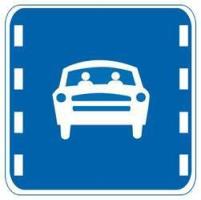
A. Special lane for small vehicles
B. Special lane for motorized vehicles
C. Special lane for taxis
D. Special lane for multi-passenger vehicles
Answer: D
4. Sounding the horn on a foggy daY can arouse the attention of the opposite side. After hearing the horn from the opposite side, the driver should also sound their own horn to respond.
A. Right
B. Wrong
Answer: A
5. The motorized vehicle driver may go through an intersection rapidly when there is no traffic signal
A. Right
B. Wrong
Answer: B
6. Serious wave will appear when the front tire blows out; the driver should release the accelerator, firmly hold the steering wheel with both hands, quickly gradually break down, and stop to yield.
A. Right
B. Wrong
Answer: A
7. When driving on a damp and slippery road, drivers should avoid using the emergency brake to his/her best ability.
A. Right
B. Wrong
Answer: A
8. What should be done by the driver who intends to overtake but finds that the vehicle in front is also overtaking?
A. Following the vehicle in front closely and finding a chance to overtake it
B. Accelerating to overtake forcefully
C. Continuously sounding the horn to urge the vehicle in front to yield
D. Refraining from overtaking and letting the vehicle in front overtake first
Answer: D
9. What is the meaning of this sign?

A. Road narrows on both sides
B. Road narrows on the right side
C. Road narrows on the left side
D. Bridge narrows
Answer: B
10. When following other vehicles on the uphill section of a mountain road, what should the driver do if the vehicle in front stops?
A. Overtake from either side of the front vehicle
B. Stop close to the vehicle in front
C. Stop with a larger space from the vehicle in front
D. Sound the horn continuously to warn the other driver
Answer: C
11. When a wounded person suffering burns is thirsty, he may drink a small quantity of slightly salty water.
A. Right
B. Wrong
Answer: A
12. When a rear tire of a motorcycle blows out, the driver should ________.
A. Swiftly turn the steering handlebar to adjust
B. Firmly hold the steering handlebar with both hands
C. Swiftly turn the steering handlebar to the opposite direction
D. Swiftly take braking measures
Answer: B
13. The main impact of rainy weather on safe driving is _______.
A. The visibility is poor
B. The tire grip decreases
C. The resistance to the vehicle increases
D. The road is wet and slippery
Answer: ABD
14. When there is bleeding at the bone fracture of a wounded person, the first thing to do is to keep it in position before stopping the bleeding and dress the wound.
A. Right
B. Wrong
Answer: B
15. A correct measure to avoid tire burst of motor vehicles is to lower the tire pressure.
A. Right
B. Wrong
Answer: B
16. What is the meaning of this sign?
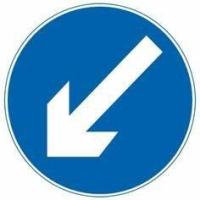
A. Stop by the left side of the road
B. Downhill section left
C. Left turn only
D. Run by the left side of the road
Answer: D
17. The continuously flashing yellow light is to warn that the driver should look and make sure it is safe to pass.
A. Right
B. Wrong
Answer: A
18. What is the meaning of this sign?
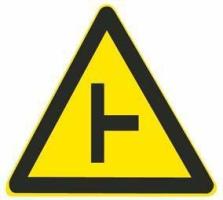
A. Y-shaped intersection
B. T-shaped intersection
C. Intersection
D. Ring intersection
Answer: B
19. When using emergency brake, be aware of keeping the body of the motorcycle being perpendicular to the ground to avoid sideslip.
A. Right
B. Wrong
Answer: A
20. The main impact of muddy roads on safe driving is that the wheels may easily spin and skid
A. Right
B. Wrong
Answer: A