

1. When driving a vehicle through an inundated road with pedestrians on both sides, the driver should ________.
A. Speed up and pass
B. Go forward normally
C. Continuously honk
D. Reduce speed and go slowly
Answer: D
2. Which part of the driver can be protected by the safety pillow when there is a rear-end collision?
A. waist
B. chest
C. head
D. neck
Answer: D
3. A motorized vehicle driver who does not hang the license plate is subject to a ________.
A. 6-point penalty
B. 12-point penalty
C. 2-point penalty
D. 3-point penalty
Answer: B
4. When a vehicle has increased its speed to more than 60 kilometers per hour on the ramp of an expressway, it may directly enter the carriageway.
A. Right
B. Wrong
Answer: B
5. How to use lights at this position?
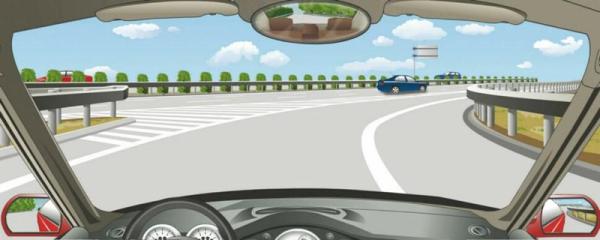
A. turn on the right-turn signal
B. turn on the left-turn signal
C. turn on the hazard lights
D. turn on the head lights
Answer: B
6. When crossing each other at night, how far should change the high beam lights to low beam lights?
A. not need to change lights
B. beyond 150m
C. within 100m
D. within 50m
Answer: B
7. What marking are the white serrated solid lines in the circle?
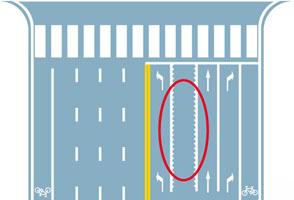
A. guide lane lines
B. direction guide line
C. variable guide lane line
D. one-way driving line
Answer: C
8. It flashes when breaking down.

A. Right
B. Wrong
Answer: B
9. In which situation the traffic police may detain the vehicle on road?
A. not hang the license plate
B. no ID card
C. no insurance contract
D. no lable of environmental protection
Answer: A
10. In this case, if it has not begun going up the slope, the vehicle going uphill should yield to the one going downhill.
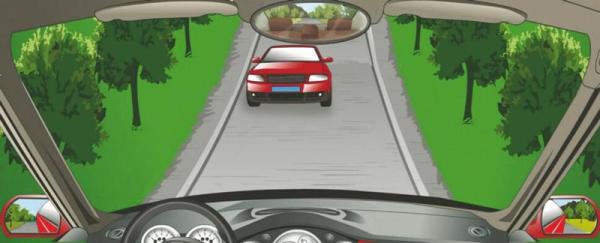
A. Right
B. Wrong
Answer: A
11. At night, the drivers observation is markedly poorer than in the daytime and the range of visibility range is _______.
A. Unchanged
B. Irregular
C. Longer
D. Shorter
Answer: D
12. As the road is wet and slippery after rain, brake application when driving can easily ___.
A. Cause sideways slide and traffic accident
B. Cause collision due to poor visibility
C. Be ignored by the drivers of other vehicles
D. Cause engine kill
Answer: A
13. Whats the meaning of this sign?
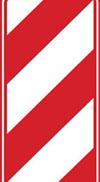
A. Passing on both sides
B. Passing by the right side
C. Passing by the left side
D. Passing is prohibited
Answer: C
14. How to do when causing a minor traffic accident with no human casualties and no dispute?
A. do not move the vehicle
B. counsel other vehicles bypass
C. leave the scene and discuss on their own
D. protect the scene and discuss
Answer: C
15. When the green light at a congested intersection is on, the vehicles _______.
A. May directly enter the intersection
B. Cannot enter the intersection
C. May pass the intersection by borrowing the opposite lane
D. Enter the intersection if it is safe to do so
Answer: B
16. How to use light in this situation at the intersection?
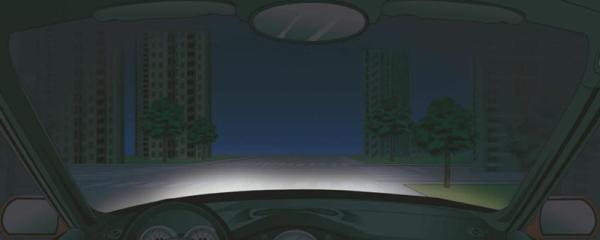
A. turn off high beam lights
B. use hazard lights
C. use the high and low beam lights alternately
D. use high beam lights
Answer: C
17. The vehicle can not run straight or turn left in this situation.

A. Right
B. Wrong
Answer: A
18. Whats the meaning of this sign?
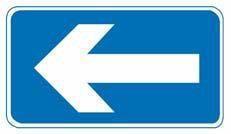
A. yield if going to turn left
B. straight one-way road
C. right one-way road
D. left one-way road
Answer: D
19. When overtaking on a mountain road, the vehicle should overtake ______.
A. By taking every possible chance
B. By selecting a wide gentle uphill section
C. By selecting a fairly long downhill section
D. By selecting a relatively gentle downhill section
Answer: B
20. Traffic Police can detain the vehicle which is suspected of using the falsified or altered license plate and vehicle license.
A. Right
B. Wrong
Answer: A