

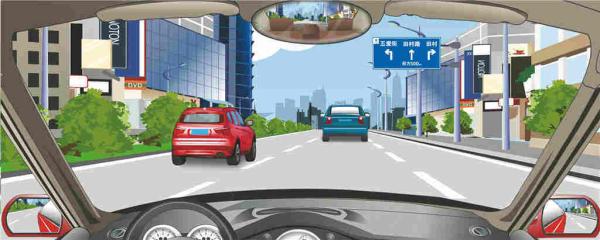
1. The sign in front is an advance announcement of the directions led by this intersection.
A. Right
B. Wrong
Answer: A
2. A driver should accelerate in advance to overtake then it is likely to meet with oncoming vehicles.
A. Right
B. Wrong
Answer: B
3. Which one of the following is the safest way when driving a motor vehicle on this road?
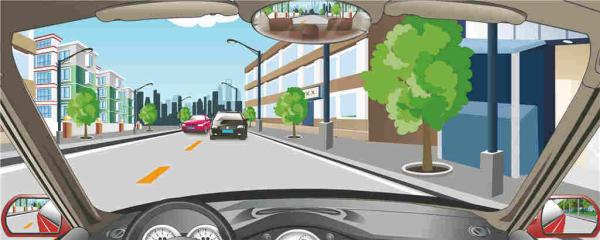
A. Cutting speed or stopping to yield
B. Driving along the center of the road
C. Keeping a normal speed
D. Approaching vehicles by taking the opposite lane
Answer: A
4. When a motor vehicle catches fire, the driver should swiftly turn off the engine and open the hood to extinguish the fire.
A. Right
B. Wrong
Answer: B
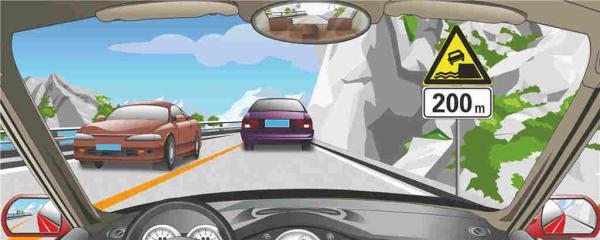
5. The sign on the right warns of an embankment road 200 meters ahead.
A. Right
B. Wrong
Answer: A
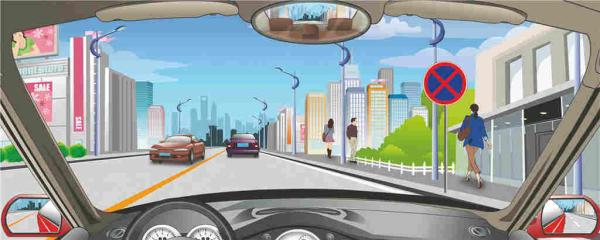
6. The sign on the right indicates that no restriction for temporary parking.
A. Right
B. Wrong
Answer: B
7. How should the driver use vehicle lights when the motor vehicle enters this intersection?
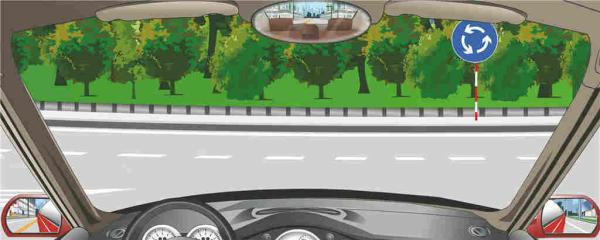
A. Turn on the right-turn indicator
B. Turn on the hazard lamps
C. No need to turn on any indicators
D. Turn on the left indicator
Answer: C
8. What is the intersection ahead indicated by the right sign?
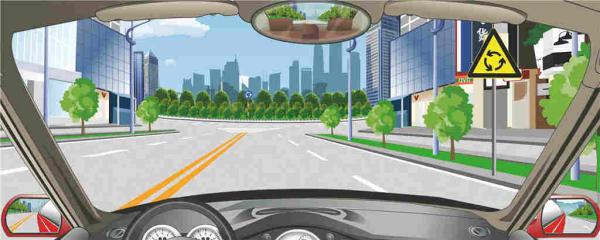
A. T-shaped intersection
B. Y-shaped intersection
C. Cross-shaped intersection
D. Roundabout
Answer: D
9. The sign on the right indicates an inspection station 100 meters ahead.
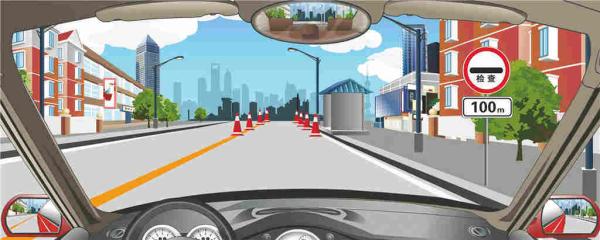
A. Right
B. Wrong
Answer: A
10. The guide arrow on the road surface of this lane indicates that only left and right turns are permitted on the lanes ahead.
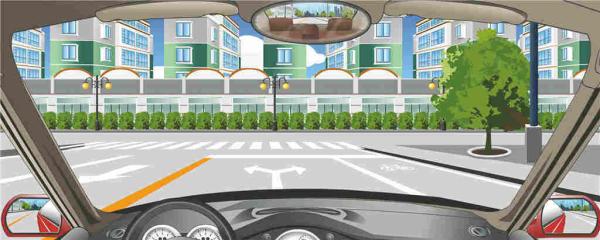
A. Right
B. Wrong
Answer: A
11. When rescuing a person sustaining full-body burns the rescue personnel may spray cool water to his body to put out the fire.
A. Right
B. Wrong
Answer: A
12. When driving on an expressway which of the following statements is correct?
A. Drivers may stop to pick up or drop off passengers in the emergency lane
B. Drives may load or unload cargo in the emergency lane
C. Drives may overtake other vehicles or stop in the deceleration or acceleration lane
D. Drives are prohibited from driving or stopping in the emergency lane in a non-emergency case
Answer: D
13. When a motor vehicle passes over an inundated road, what should the driver do for safe driving?
A. Slow down and drive with special care
B. Speed up and pass rapidly
C. Maintain a normal speed and pass through
D. Change to a low gear and speed up to pass
Answer: A
14. What should the driver do in case the public bus suddenly pulls out from this bus station?
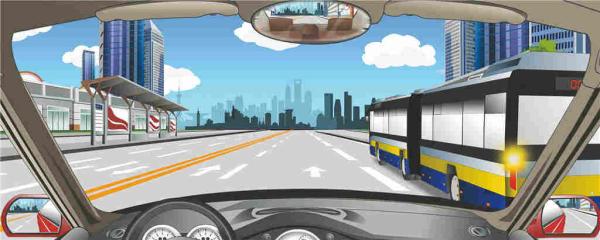
A. Stop behind the public bus
B. Overtake the public bus rapidly
C. Slow down and overtake the public bus slowly
D. Sound the horn continuously to warn the public bus
Answer: C
15. What should the driver do if he encounters this situation at the intersection when driving straight?
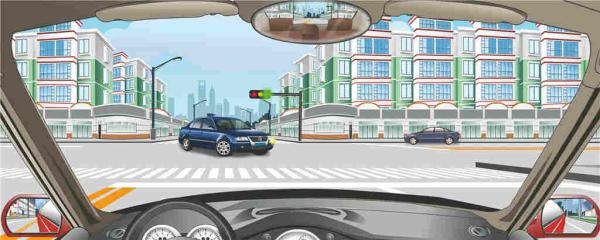
A. Sound the horn to warn the other vehicle to yield
B. Speed up and pass in the front of the vehicle
C. Turn on the headlamp to warn the other vehicle to yield
D. Slow down or stop to yield
Answer: D
16. Drivers should drive at a lower speed when traffic police give these hand signals.
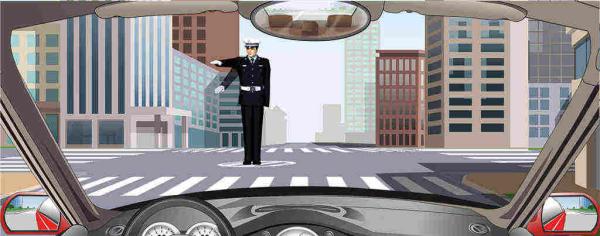
A. Right
B. Wrong
Answer: A
17. What matters need attention when driving on a rainy day?
A. Avoid using the emergency brake or making sharp turns
B. Keep a safe enough distance
C. Observe the traffic situation of non-motor vehicles and surrounding pedestrians
D. Drive at a safe speed
Answer: ABCD
18. When a motor vehicle skids sideways on a muddy road, the driver should turn the steering wheel in the direction of the rear wheel skidding to properly adjust the direction.
A. Right
B. Wrong
Answer: A
19. Before a motor vehicle enters a tunnel, the driver should adjust the speed in accordance with the indication of the traffic sign at the entrance of the tunnel.

A. Right
B. Wrong
Answer: A
20. In order to keep safe when driving on the highway, which ones of the following statements are prohibited acts?
A. Reversing, moving against regulations, making a U-turn by crossing the central divider, or stopping in the lane.
B. Riding or rolling on the lane-dividing line or driving on the shoulder
C. Overtaking on ramps, accelerations lanes, or deceleration lanes.
D. Testing vehicles or learning to drive a vehicle
Answer: ABCD