

1. Whats the meaning of the white broken line by the carriage on the right side road?
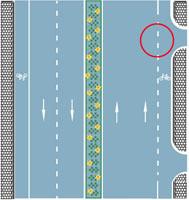
A. allowed to temporarily cross
B. prohibited from crossing
C. emergency lanes dividing line
D. crosswalk dividing line
Answer: A
2. Going though the intersection according to the traffic lights when traffic lights and command of the traffic police are inconsistency.
A. Right
B. Wrong
Answer: B
3. What does the traffic light mean?

A. allowed to pass
B. draw attention
C. intersection warning
D. prohibited from passing
Answer: D
4. When a vehicle passes a school or a residential area, the driver should observe the signs and markings, go slowly and refrain from honking.
A. Right
B. Wrong
Answer: A
5. When bicycles ahead obstruct the traffic flow, the driver may honk to remind them,speed up and bypass.
A. Right
B. Wrong
Answer: B
6. This sign warns obstacles ahead and reducing speed to bypass.
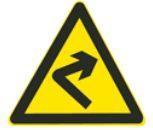
A. Right
B. Wrong
Answer: B
7. Turn on the left-turn signal in advance when making a U turn on the road.
A. Right
B. Wrong
Answer: A
8. In which situation that a driver cannot drive?
A. after drinking coffee
B. after drinking milk
C. after drinking
D. after drinking tea
Answer: C
9. What mark is the inclined yellow and black lines?
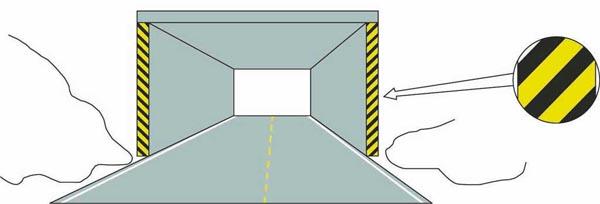
A. entity mark
B. protrusions mark
C. three-dimensional mark
D. deceleration mark
Answer: C
10. No U turn at this section.

A. Right
B. Wrong
Answer: B
11. When encountering an ambulance rushing in the same lane in the opposite direction, the driver should ________.
A. Move to the road side, reduce speed or stop to yield
B. Drive on by using another lane
C. Speed up and change lane to avoid
D. Continue to go in the original lane
Answer: A
12. How to run at this position when leaving the expressway?
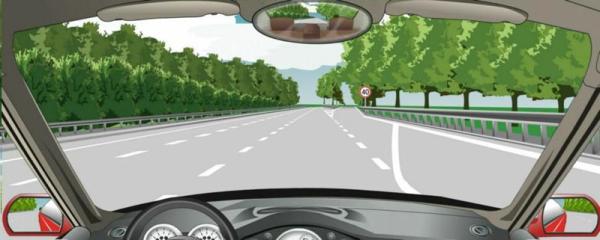
A. enter the deceleration lane
B. keep running forward
C. keep the speed at 100km/hr
D. reduce the speed to less than 40km/hr
Answer: A
13. It lights to indicate that ______
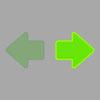
A. front and rear width lights light on
B. front and rear width lights light on
C. left-turn signal flashes
D. right-turn signal flashes
Answer: D
14. When a traffic accident causing human injuries, preserve the scene and immediately report to the police.
A. Right
B. Wrong
Answer: A
15. What is this traffic sign?
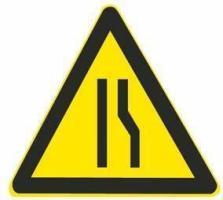
A. Road narrows on both sides
B. Road narrows on the right side
C. Road narrows on the left side
D. Bridge narrows
Answer: B
16. When a vehicle goes uphill on a mountain road, it should change to a lower gear in a timely, accurate and rapid manner so as to avoid a situation in which driving at a high gear can reduce the power of the engine.
A. Right
B. Wrong
Answer: A
17. When braking on a muddy road, the tires can easily spin or drift and cause traffic accidents.
A. Right
B. Wrong
Answer: A
18. Whats the meaning of this sign?
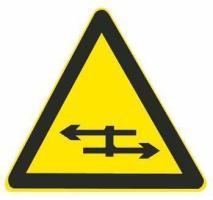
A. flat intersection
B. flat ring intersection
C. attention to interactive intersection
D. attention to separate intersection
Answer: D
19. A motorized vehicle that will turn right at an intersection but has a vehicle in front in the same lane waiting for the green light should ______________.
A. Stop and wait for his turn
B. Honk to indicate the vehicle in front to yield
C. Bypass the vehicle in front from the right side and go through the intersection
D. Bypass the vehicle in front from the left side and go through the intersection
Answer: A
20. It lights to indicate that ______

A. the hazard lights flash
B. right-turn signal flashes
C. left-turn signal flashes
D. front and rear width lights flash
Answer: A