

1. When a vehicle enters a two-way tunnel, the driver should turn on ________.
A. The hazard lights
B. The high beam light
C. The fog light
D. The width light or the low beam light
Answer: D
2. How to do first when encountering such kind of bridge?
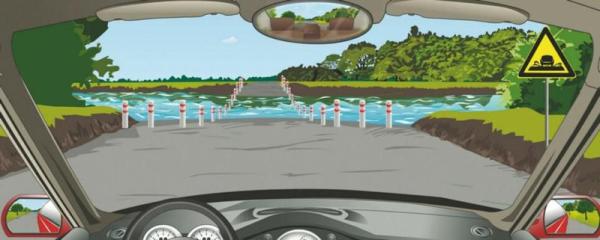
A. maintain the speed and pass
B. speed up and pass as soon as possible
C. stop and observe
D. pass slowly
Answer: C
3. You have the priviledged passing right of way at the intersection in this situation.
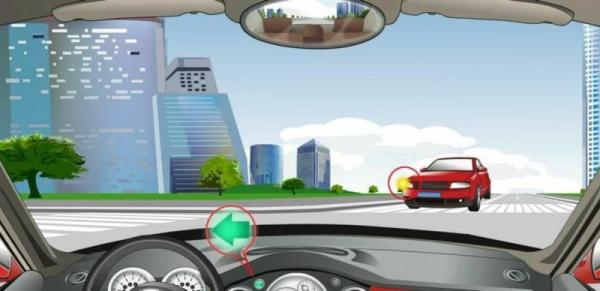
A. Right
B. Wrong
Answer: A
4. How to run when encountering this situation at the intersection?
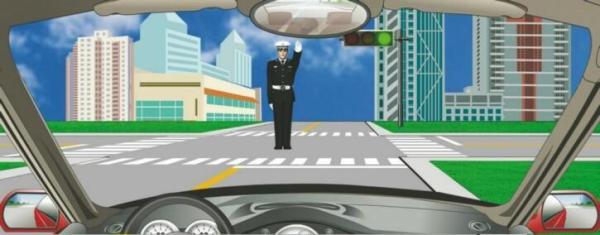
A. stop and wait
B. obey the traffic lights
C. run straight on the right side
D. may turn right
Answer: A
5. When driving a vehicle on the road, the driver should drive safely at the prescribed speed.
A. Right
B. Wrong
Answer: A
6. A motorized vehicle driver who illegally occupies the emergency lane on the expressway is subject to a 6-point penalty.
A. Right
B. Wrong
Answer: A
7. Whats the meaning of this sign?
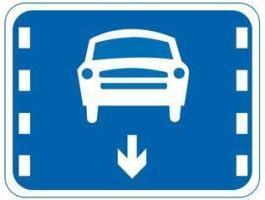
A. lane for small vehicles
B. special lane for small vehicles
C. special lane for multi-passenger vehicles
D. lane for motorized vehicles
Answer: D
8. What is the time limit of deferred license checking due to military service, abroad and other reasons?
A. 3 years
B. 5 years
C. 1 years
D. 2 years
Answer: A
9. It lights to indicate that ______

A. the head fog light is turned on
B. the low beam light is turned on
C. the high beam light is turned on
D. the tail fog light is turned on
Answer: C
10. When a vehicle changes lane, the driver should turn on the turn signal and rapidly enter the new lane.
A. Right
B. Wrong
Answer: B
11. When a motorized vehicle driving license is lost or destroyed to be unrecognizable, the driver should apply to the issuing vehicle management station for a reissue.
A. Right
B. Wrong
Answer: A
12. When overtaking a vehicle stopping on the right side, the driver should ________ in case that vehicle starts up suddenly or opens the door.
A. Speed up and pass
B. Keep honking
C. Maintain the normal speed
D. Keep a safe horizontal distance from that vehicle, reduce speed and pass
Answer: D
13. A person who has not obtained driving license drives a motorized vehicle, he will be held for legal liability.
A. Right
B. Wrong
Answer: A
14. This sign reminds the lane or the road narrows on the right side ahead.
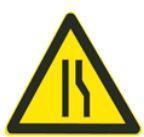
A. Right
B. Wrong
Answer: A
15. Which kind of vehicle can be applied for when initially applying for the driving license?
A. midsize bus
B. large bus
C. ordinary motor tricycle
D. trailer
Answer: C
16. When the driver senses a tire blowout on the road, he should control the direction of the vehicle, gently depress the brake pedal to slowly reduce the speed and gradually park the vehicle steadily on the roadside.
A. Right
B. Wrong
Answer: A
17. Whats the meaning of this sign?
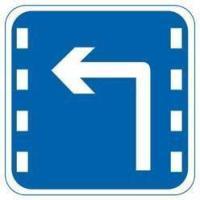
A. right-turn lane
B. U turn lane
C. left-turn lane
D. lanes for going in different directions
Answer: C
18. How to use lights when overtaking at night?
A. turn off the high beam light
B. turn on high beam lights
C. use fog lights
D. using the high and low beam lights alternately
Answer: D
19. Whats the meaning of the double yellow solid lines?
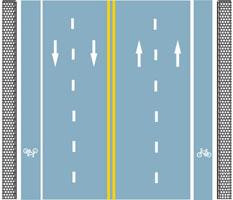
A. opposite direction lanes dividing line that can not be crossed
B. opposite direction lanes dividing line that can be crossed
C. bilateral same direction lanes dividing line that can be crossed
D. one-way lanes dividing line
Answer: A
20. Can not overtake in this situation.

A. Right
B. Wrong
Answer: A