

1. When the vehicles cross each other at night, the driver may continuous change lights to remind the vehicle coming in the opposite direction and at the same should reduce speed and go forward or stop on the right side.
A. Right
B. Wrong
Answer: A
2. Turn on the left-turn signal in advance when making a U turn on the road.
A. Right
B. Wrong
Answer: A
3. What kind of sign is it?
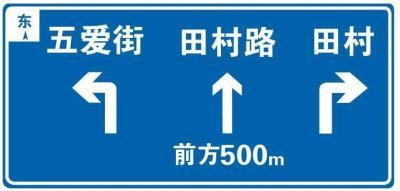
A. directional sign
B. indicative sign
C. prohibitive sign
D. warning sign
Answer: A
4. When a vehicle passes a crosswalk, the driver should yield to the pedestrians.
A. Right
B. Wrong
Answer: A
5. The light switch is in this position, front fog lights turn on

A. Right
B. Wrong
Answer: A
6. What is this traffic sign?
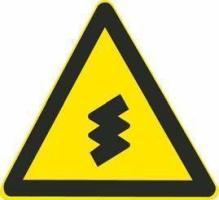
A. slippery section
B. sharp curve
C. inverse curve
D. continuous curves
Answer: D
7. Which should be carried onboard?
A. insurance policy
B. vehicle license
C. certificate of ex-factory inspection
D. vehicle registration papers
Answer: B
8. A motorized vehicle can make a U turn on this road as long as it does not interfere other vehicles.
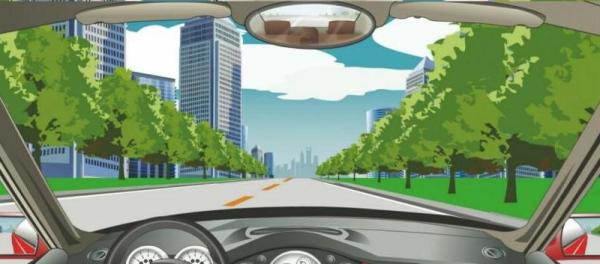
A. Right
B. Wrong
Answer: A
9. The passenger in the front seat does not need to buckle up when a motorized vehicle runs.
A. Right
B. Wrong
Answer: B
10. Whats the meaning of this sign?
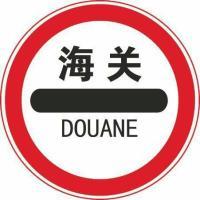
A. national boundaries
B. border defense
C. boundaries
D. customs
Answer: D
11. You can not drive a motorized vehicle into the lane where the red X-shaped light or the red arrow light is on.
A. Right
B. Wrong
Answer: A
12. Whats the meaning of this sign?
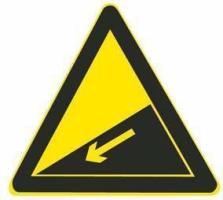
A. embankment road
B. steep uphill road
C. continuous up slopes
D. steep downhill road
Answer: D
13. The seat belts can reduce the injury of the driver and passengers when there is a collision.
A. Right
B. Wrong
Answer: A
14. Must reduce the frequency of honking in this section.

A. Right
B. Wrong
Answer: B
15. A person who falsifies, alters driving license or uses falsified, altered driving license, and if his act constitutes a crime, he should be held for criminal liabilities according to law.
A. Right
B. Wrong
Answer: A
16. In which situation the traffic police may detain the vehicle?
A. no lable of inspection
B. no ID card
C. no lable of environmental protection
D. no vehicle registration papers
Answer: A
17. If the registration paper, license plate and vehicle license of a motorized vehicle are lost or destroyed, the vehicle owner should apply for reissuing or replacing them to the _______________.
A. traffic police detachment vehicle management station at the residential place
B. vehicle management station at the issuing place of the driving license
C. vehicle management station at the registration place
D. local police station
Answer: C
18. Whats the meaning of this sign?
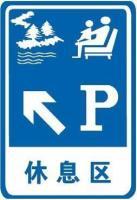
A. rest area
B. service area
C. car park
D. observation deck
Answer: A
19. What is this manipulation device?
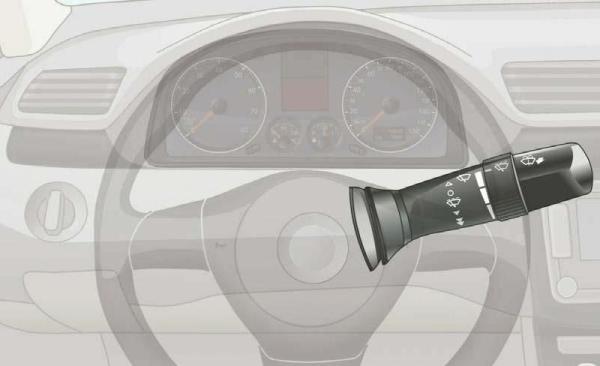
A. switch of windscreen wiper
B. switch of the head lights
C. switch of the turn signal
D. switch of defogger
Answer: A
20. Whats the meaning of this sign?
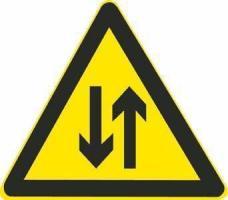
A. reduce speed and yield
B. variable lane
C. separated road
D. two-way traffic
Answer: D