

1. How to use lights when pulling over on road?
A. turn on the hazard lights
B. turn on the right-turn signal in advance
C. use the high and low beam lights alternately
D. not need to use any light to indicate
Answer: B
2. The vehicle is allowed to _______ at this intersection.
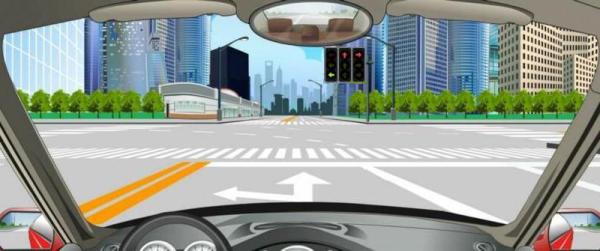
A. go straight or turn right
B. turn right
C. turn left
D. go straight
Answer: C
3. Whats the meaning of this guide arrow?
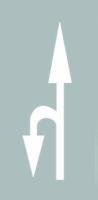
A. indicate turning left or making a U turn ahead
B. indicate going straight or turning left ahead
C. indicate going straight or changing to left lane ahead
D. indicate going straight or making a U turn ahead
Answer: D
4. When the driver discovers a tire is leaking and steers the vehicle off the main carriageway, he should refrain from applying emergency so as to avoid a vehicle turnover or a rear-end collision arising from the late braking of the following vehicle.
A. Right
B. Wrong
Answer: A
5. As the road is wet and slippery after rain, brake application when driving can easily ___.
A. Cause sideways slide and traffic accident
B. Cause collision due to poor visibility
C. Be ignored by the drivers of other vehicles
D. Cause engine kill
Answer: A
6. How to run on this road?
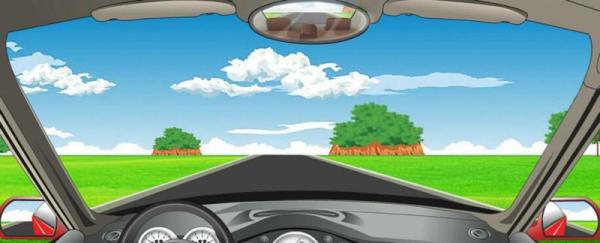
A. run in the middle of the road
B. run on both side of the road
C. run according to lanes
D. go forward at will
Answer: A
7. Reducing the speed when driving in sand, hail, rain, fog, ice and other weather conditions.
A. Right
B. Wrong
Answer: A
8. Whats the meaning of the white broken lines area on the far left side?
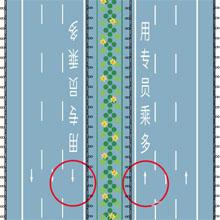
A. special lane for multi-passenger vehicles
B. special lane for small buses
C. special lane for taxis with no passenger
D. special lane for large buses
Answer: A
9. Whats the meaning of this sign?
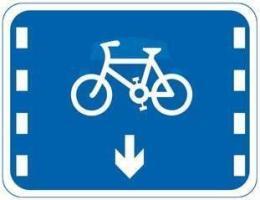
A. no entry for bicycles
B. lane for non-motorized vehicles
C. special lane for bicycles
D. bicycle stopping area
Answer: B
10. If a vehicle has the right of way at an intersection but encounters a vehicle cutting in, the driver should _________.
A. Rush to pass
B. Speed up in advance and pass
C. Reduce speed and evade, or stop to yield when necessary
D. Go forward at the normal speed according to the right of way and refuses to evade
Answer: C
11. When encountering a vehicle coming in the opposite direction on a mountain road, the driver should ______ when crossing each other.
A. Not reduce speed
B. Stick to the center of the road
C. Speed up
D. Reduce speed or stop to yield
Answer: D
12. What device does the switch of this symbol control?

A. the windscreen defrosting or defogging
B. the rear window wiper and washer
C. the windscreen wiper and washer
D. the rear window defrosting or defogging
Answer: C
13. Before a vehicle enters an intersection, the driver should reduce speed, observe and make sure it is safe to do so.
A. Right
B. Wrong
Answer: A
14. You have the priviledged passing right of way at the intersection in this situation.
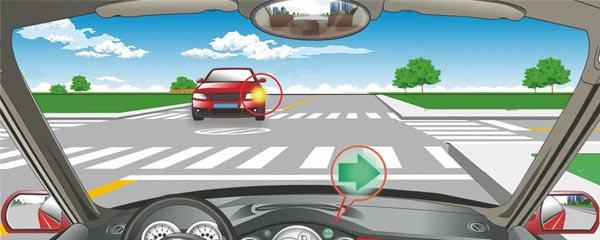
A. Right
B. Wrong
Answer: B
15. Do not start up a vehicle when the door or compartment is not properly closed.
A. Right
B. Wrong
Answer: A
16. What is the time limit of deferred license checking due to military service, abroad and other reasons?
A. 3 years
B. 5 years
C. 1 years
D. 2 years
Answer: A
17. Whats the meaning of the yellow slash filled area in the middle of the road?
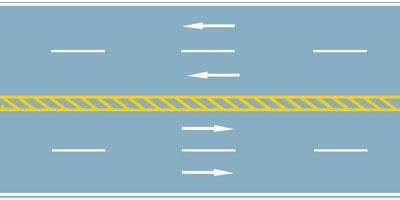
A. one-way lanes dividing line
B. opposite direction lanes dividing line that can not be crossed
C. bilateral same direction lanes dividing line that can be crossed
D. opposite direction lanes dividing line that can be crossed
Answer: B
18. Whats the meaning of this sign?
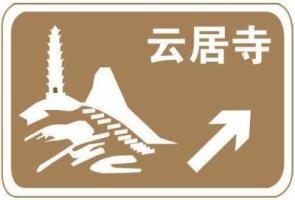
A. distance to a tourist area
B. category of a tourist area
C. direction of a tourist area
D. symbol of a tourist area
Answer: C
19. What marking is the combination of the white broken lines and the triangle area?
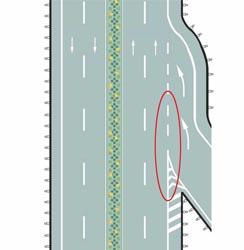
A. road entry marking
B. lane-dividing line that can be crossed
C. deceleration line at road entry
D. road exit marking
Answer: A
20. What marking is the road mark in the circle?
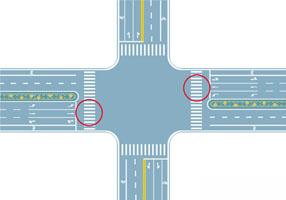
A. crosswalk line
B. slowdown and yield line
C. stopping and yield line
D. intersection signal line
Answer: A