

1. When driving at night, the drivers observation ability is visibly poorer and his visibility range becomes shorter than driving in the daytime.
A. Right
B. Wrong
Answer: A
2. After a vehicle enters a mountain road, it should pay special attention to the continuous curves sign. In addition, it should voluntarily evade vehicles and pedestrians, reduce speed in a time manner and honk in advance.
A. Right
B. Wrong
Answer: A
3. A motorized vehicle driver who escapes or commits other extremely serious acts after causing a major accident in violation of the traffic regulations is subject to a prison term of more than 7 years.
A. Right
B. Wrong
Answer: B
4. The main impact of the road conditions at night on safe driving is ________.
A. The visibility is low and unfavorable for observing road traffic conditions
B. The road surface is complex and changing
C. The physical strength of the driver decreases
D. The driver can easily have impulse and illusion
Answer: A
5. Whats the meaning of this sign?
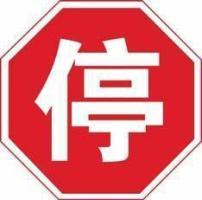
A. stop to yield
B. no stopping temporarily
C. no entry
D. no long stopping
Answer: A
6. In which situation should a small car driver need check?
A. the end of a scoring cycle
B. change driving license due to expiration
C. fail to reach 12 points in one scoring cycle
D. reach 12 points in one scoring cycle
Answer: B
7. Traffic Police can detain the driver according to law, if the driver drives a motorized vehicle which is suspected of reaching the write-off standard.
A. Right
B. Wrong
Answer: B
8. Driving in a dusty weather, it does not needed to turn on the head light, the contour light and the tail light.
A. Right
B. Wrong
Answer: B
9. This set of the hand signals of the traffic police indicates that the vehicles should ____ .
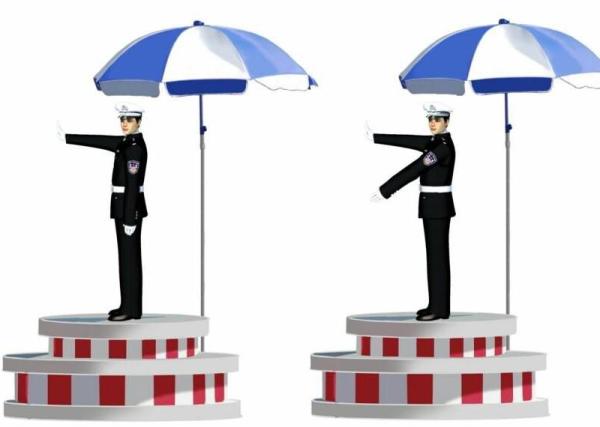
A. wait to turn left
B. pull over
C. turn left
D. turn right
Answer: C
10. If a vehicle enters a left lane for overtaking but is unable to ensure a safe horizontal distance with the normally-running vehicle in front, the driver should ________.
A. Speed up and overtake
B. Overtake after running a distance in parallel
C. Give up overtaking
D. Overtake with care
Answer: C
11. Whats the meaning of this sign?
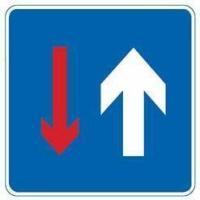
A. stop to yield
B. one-way road
C. going first when crossing each other
D. the opposite vehicle goes first when crossing each other
Answer: C
12. Traffic Police can detain the vehicle according to law if it is suspected of using the label of insurance from other vehicle.
A. Right
B. Wrong
Answer: A
13. Which is correct in this kind of intersection?

A. make a U turn along the left lane
B. cannot make a U turn
C. make a U turn through the middle lane
D. make a U turn inside the intersection
Answer: B
14. What markings are the two double yellow broken lines on the road?
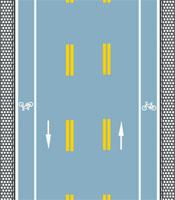
A. two-way lanes dividing line
B. variable lane line
C. lane-dividing line that can be crossed
D. one-way lanes dividing line
Answer: B
15. How long can a driver drives without rest?
A. less than 6hrs
B. less than 8hrs
C. less than 10hrs
D. less than 4hrs
Answer: D
16. What is this instrument?
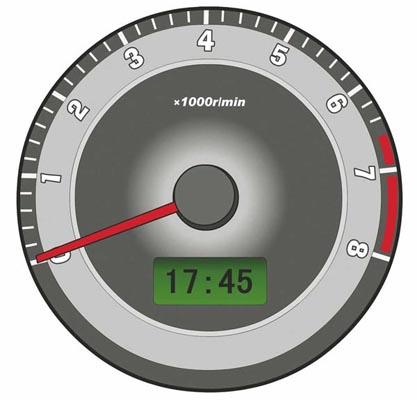
A. engine tachometer
B. driving speed meter
C. interval mileage meter
D. fuel consumption / 100 km
Answer: A
17. When the road maintenance vehicle and the engineering vehicle are on duty, the passing vehicles should avoid with care.
A. Right
B. Wrong
Answer: A
18. On which kind of city road a vehicle is not allowed to overtake?
A. main streets
B. one-way section
C. section with heavy traffic flow
D. two one-way lanes
Answer: C
19. If the registration paper, license plate and vehicle license of a motorized vehicle are lost or destroyed, the vehicle owner should apply for reissuing or replacing them to the vehicle management station at the residential place.
A. Right
B. Wrong
Answer: B
20. As the road is wet and slippery after rain, brake application when driving can easily ___.
A. Cause sideways slide and traffic accident
B. Cause collision due to poor visibility
C. Be ignored by the drivers of other vehicles
D. Cause engine kill
Answer: A