

1. What is the meaning of this sign?

A. Road narrows on both sides
B. Road narrows on the right side
C. Road narrows on the left side
D. Bridge narrows
Answer: B
2. When overtaking a motor vehicles on uphill sections of a mountain road, the driver should _____.
A. Honk in advance
B. Forward cars are allowed to overtake before overtaking.
C. Turn on the left-turn signal in advance
D. Speed up direct and overtake
Answer: ABC
3. What is the meaning of this sign?
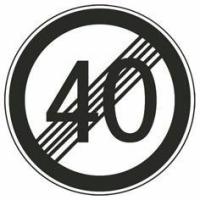
A. Driving at reduced speed in the section of 40 meters
B. Minimum speed is 40km/hr
C. Maximum speed is 40km/hr
D. 40km/hr speed limit ban is lifted
Answer: D
4. Where should we choose to park?
A. Parking spaces on roads
B. Construction section
C. Crosswalk
D. Parking lot
Answer: AD
5. When a wounded person is unable to get off the vehicle by himself, he should be removed from the vehicle so as to avoid a secondary injury.
A. Right
B. Wrong
Answer: A
6. It is an illegal act for the driver to make calls while driving.
A. Right
B. Wrong
Answer: A
7. When driving a motorcycle, the driver may wear slippers for the sake of safety.
A. Right
B. Wrong
Answer: B
8. When the tire pressure is too low, what will happen if the tire changes its shape in waves and increases in temperature due to fast movement?
A. Unstable tire pressure
B. Even lower tire pressure
C. Driving resistance increases
D. Tire burst
Answer: D
9. What are the main reason for not applying emergency braking when driving on rainy days?
A. Increase fuel consumption
B. Reduce fuel consumption
C. The tires can easily spin
D. Easy to cause rear-end collision
Answer: CD
10. Which lamp should be turned on when motor vehicles pass through a road section at night where the street light condition is good?
A. Front and rear fog lamps
B. Low-beam
C. High-beam
D. Hazard lamp
Answer: B
11. When driving in icy and snowy weather, because of the reduction of the stability, it is easy for the wheels to race or slip when rapidly speeding up.
A. Right
B. Wrong
Answer: A
12. When rescuing a person sustaining full-body burns the rescue personnel may spray cool water to his body to put out the fire.
A. Right
B. Wrong
Answer: B
13. When finding a tire burst on the road, the driver should gently depress the brake pedal, reduce speed and stop the vehicle slowly.
A. Right
B. Wrong
Answer: A
14. How to follow a motor vehicle safely on the road?
A. Observe the front vehicle conditions
B. Drive on the left side of the road as far as possible
C. Be ready to slow down at any time
D. Keep a safe distance
Answer: ACD
15. When driving on a snowy day, drivers should follow the tracks on the road before them.
A. Right
B. Wrong
Answer: A
16. What should be done by the driver who intends to overtake but the motor vehicle in front neither reduces its speed nor allows the right of way?
A. Continuously sounding the horn and accelerating to overtake
B. Accelerating and continuing to overtake
C. Refraining from overtaking
D. Following the vehicle in front closely and finding a chance to overtake
Answer: C
17. What is the meaning of this sign?
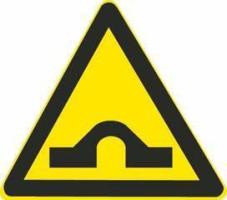
A. Hump bridge
B. High outburst road
C. Low-lying road
D. Bump road
Answer: A
18. What is the meaning of this sign?

A. Road narrows on both sides
B. Road narrows on the right side
C. Road narrows on the left side
D. Bridge narrows
Answer: A
19. What is the meaning of this sign?
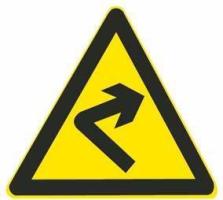
A. Sharp right curve
B. Bypass from right side
C. Continuous curves
D. Sharp left curve
Answer: A
20. When a motor vehicle passes over an overflowing bridge, what should the driver do after stopping and observing closely?
A. Change to a high gear and pass rapidly
B. Constantly observe the changes of the flow
C. Prepare to stop at any time
D. Change to a low gear and pass through at a constant speed
Answer: D