

1. This sign warns the driver there is school area ahead.
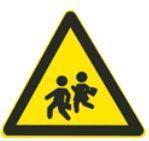
A. Right
B. Wrong
Answer: B
2. The driving license will be revoked when the person is executed community drug treatment, forced isolation treatment or community-based rehabilitation measures.
A. Right
B. Wrong
Answer: A
3. A small bus driver should reduce speed rapidly when he suddenly feel bumpy on a flat expressway, to prevent tire blowout.
A. Right
B. Wrong
Answer: A
4. When a vehicle leaves an expressway, it should reduce speed in the deceleration lane before entering the ramp.
A. Right
B. Wrong
Answer: A
5. This sign reminds the width of the bridge narrows ahead.
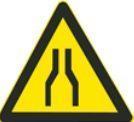
A. Right
B. Wrong
Answer: B
6. What should the driver do when encountering a vehicle from the opposite direction on a road without a central line?
A. driving closely by the roadside
B. driving by the central of the road
C. reducing speed and driving by right side
D. run by using the lane for non-motorized vehicles
Answer: C
7. A motorized vehicle driver who uses falsified and altered license plate is subject to a ________.
A. 2-point penalty
B. 3-point penalty
C. 12-point penalty
D. 6-point penalty
Answer: C
8. Can not overtake in this situation.

A. Right
B. Wrong
Answer: A
9. When causing a road accident involving property damage, the party should leave the scene on his own but he does not leave, the traffic police can not order him to leave.
A. Right
B. Wrong
Answer: B
10. If one drives an illegally assembled motorized vehicle, he should not only pay the fine, but also ________ .
A. be confiscated the driving license
B. be revoked the driving permission
C. be forced to recover the vehicle condition
D. be revoked the driving license
Answer: D
11. No turning right at the intersection ahead.

A. Right
B. Wrong
Answer: B
12. What is this manipulation device?
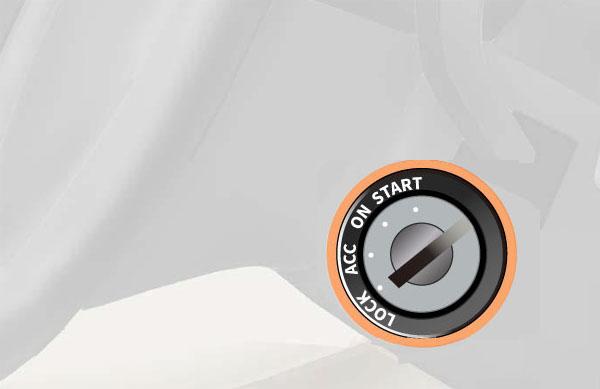
A. air conditioner switch
B. ignition switch
C. wiper switch
D. light switch
Answer: B
13. When a vehicle stops temporarily in a rainy day, the driver should turn on ______.
A. The head and tail fog lights
B. The hazard lights
C. The high beam light
D. The reverse light
Answer: B
14. Whats the meaning of the white broken lines area on the far left side?
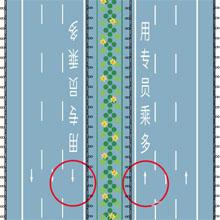
A. special lane for multi-passenger vehicles
B. special lane for small buses
C. special lane for taxis with no passenger
D. special lane for large buses
Answer: A
15. Whats the meaning of this sign?
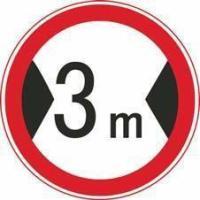
A. 3m width limit ahead
B. 3m width limit
C. the 3m width limit ban is lifted
D. 3m height limit
Answer: B
16. What is the max speed when in or out of the lane for non-motorized vehicles?
A. 40km/hr
B. 50km/hr
C. 60km/hr
D. 30km/hr
Answer: D
17. If the drivers household register has moved out of the original vehicle management station, the driver should apply to the vehicle management station _______ .
A. At the former place of his household register
B. At the residential place
C. At the new place of his household register
D. At the location of his household register
Answer: C
18. As the traffic flow at an interchange is generally one-way, the vehicles do not have to reduce speed when passing.
A. Right
B. Wrong
Answer: B
19. Whats the meaning of the white horizontal solid line in the circle?
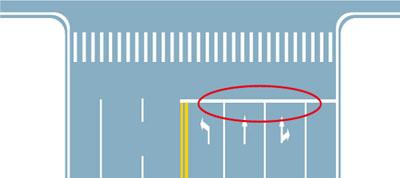
A. turning waiting line
B. deceleration line
C. yielding line
D. stop line
Answer: D
20. Turn on the right-turn signal and return immediately to the original lane afterovertaking.
A. Right
B. Wrong
Answer: B