

1. Whats the meaning of this sign?
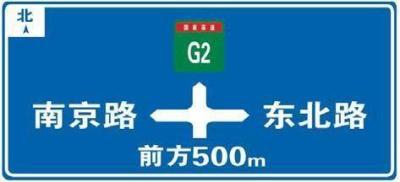
A. lane information indication
B. road branching point ahead
C. place and distance indication
D. intersection ahead
Answer: D
2. Whats the meaning of this sign?
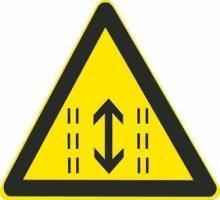
A. watch for two-way road
B. driving by either side of the road
C. watch for variable lane
D. variable lane
Answer: C
3. The driver who chases and races while driving on the road, and commits serious acts is subject to ______
A. a prison term of 6 months
B. a prison term of more than 1 year
C. a criminal restriction and a fine
D. a criminal detention and a fine
Answer: D
4. How to go straight when encountering this traffic light at the intersection?
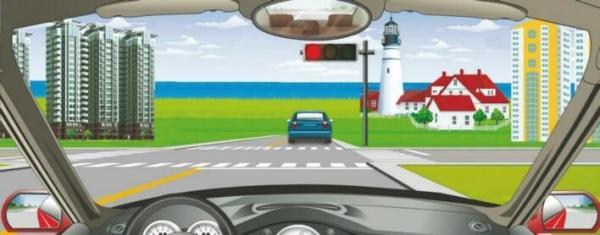
A. enter the intersection to wait
B. turn left
C. speed up and pass straight
D. can not exceed the stop line
Answer: D
5. It lights to indicate that ______

A. the tail fog light is turned on
B. the low beam light is turned on
C. the high beam light is turned on
D. the head fog light is turned on
Answer: A
6. Use the high and low beam lights alternately when passing the crosswalk at night.
A. Right
B. Wrong
Answer: A
7. When a driver suddenly encounters a vehicle in the opposite direction that forces its way by overtaking and occupying his lane, the driver may refuse to avoid it and force it to yieldto you.
A. Right
B. Wrong
Answer: B
8. It lights to indicate that ______
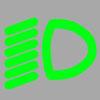
A. the tail fog light is turned on
B. the low beam light is turned on
C. the high beam light is turned on
D. the head fog light is turned on
Answer: B
9. If the applicant commits bribery or cheating in the course of a test, his eligibility for this test will be cancelled and the results of other tests he has passed will be invalid.
A. Right
B. Wrong
Answer: A
10. What marking are the white broken lines in the circles?
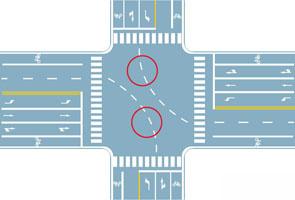
A. small vehicles turning lines
B. lane connection lines
C. non-motorized vehicles guide lines
D. intersection guide line
Answer: D
11. Whats the meaning of this sign?
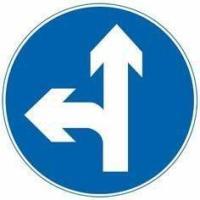
A. going straight and right turn
B. going straight and left turn
C. no going straight and no left turn
D. right turn and left turn only
Answer: B
12. Whitch kind of vehicle is prohibited from passing by this sign?
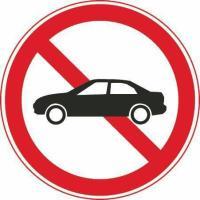
A. all kinds
B. small bus
C. midsize bus
D. small truck
Answer: B
13. This sign means the opposite vehicle should stop to yield when crossing each other.
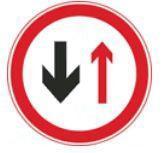
A. Right
B. Wrong
Answer: B
14. How often should a driver who is more than 60 years old present the certificate of physical conditions?
A. every 3 years
B. every 2 years
C. every 6 months
D. every 1 year
Answer: D
15. This sign warns the driver to run slowly with care and beware of the vehicles from horizontal road.
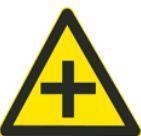
A. Right
B. Wrong
Answer: A
16. Whats the role of indicative sign?
A. tell the direction information
B. warn danger ahead
C. restrict the vehicles and pedestrians from passing
D. indicate the vehicles and pedestrians to go ahead
Answer: D
17. Whats the meaning of this sign?
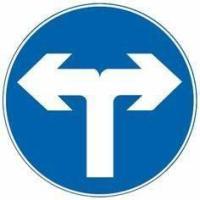
A. no left turn
B. left and right turn
C. no left and right turn
D. no right turn
Answer: B
18. The starter works when turning the ignition switch to the ACC position.
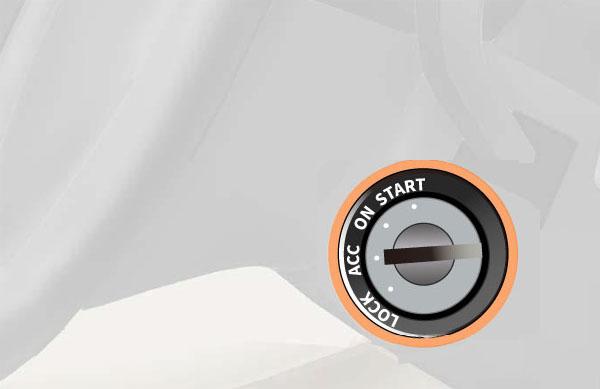
A. Right
B. Wrong
Answer: B
19. When the driver is suspected of drinking or drunk in a traffic accident, preserve the scene and immediately report to the police.
A. Right
B. Wrong
Answer: A
20. What is the max speed on the expressway when the visibility is lower than 100 meters?
A. less than 40km/hr
B. less than 60km/hr
C. less than 80km/hr
D. less than 90km/hr
Answer: A