

1. What should motor vehicle drivers do when parking temporarily on a rainy day?
A. Turn on hazard lamp
B. Turn on front and back fog lamp
C. Turn on low-beam
D. Set up warning sign at the back of the vehicle
Answer: A
2. What is the meaning of this sign?
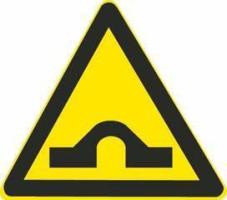
A. Hump bridge
B. High outburst road
C. Low-lying road
D. Bump road
Answer: A
3. What is the meaning of this sign?
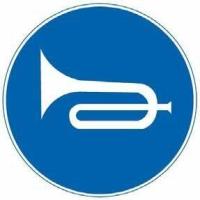
A. No honking the tweeter
B. No honking the woofer
C. Should honk
D. No honking
Answer: C
4. When a tire blowout on the road, the driver should swiftly depress the brake pedal to reduce speed, do all his can to control the steering wheel and stop the vehicle as soon as possible.
A. Right
B. Wrong
Answer: B
5. What should the driver do if he/she encounters pedestrians in this situation at an intersection?
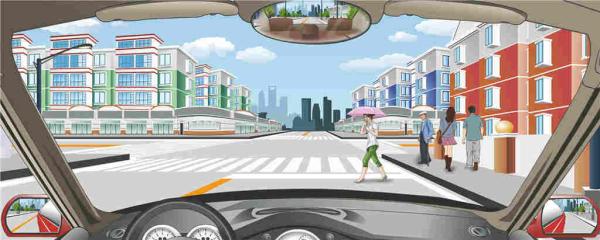
A. Slow down promptly and stop to yield
B. Sound the horn to warn the pedestrians to yield
C. Speed up and pass in front of the pedestrians
D. Turn on the headlamps to warn the pedestrians to yield
Answer: A
6. What should be done by the driver who intends to overtake but finds that the vehicle in front is also overtaking?
A. Following the vehicle in front closely and finding a chance to overtake it
B. Accelerating to overtake forcefully
C. Continuously sounding the horn to urge the vehicle in front to yield
D. Refraining from overtaking and letting the vehicle in front overtake first
Answer: D
7. What is the meaning of this sign?

A. Road narrows on both sides
B. Road narrows on the right side
C. Road narrows on the left side
D. Bridge narrows
Answer: B
8. Which of the following is a bad habit when changing lanes?
A. Turning on the indicator in advance
B. Observing closely before changing a lane
C. Change lanes at will
D. Not obstructing the passing of other normally moving vehicles
Answer: C
9. Gun powder, explosives and detonating powder belong to which of the following dangerous chemicals?
A. Oxidizing materials
B. Inflammable solid materials
C. Explosives
D. Self-igniting articles
Answer: C
10. When a motor vehicle encounters a burning phenomenon, it should leave the vehicle quickly so as not to cause injury or asphyxia to the respiratory tract.
A. Right
B. Wrong
Answer: A
11. When a motor vehicle moves through water, the driver should try to maintain a constant speed and sufficient power and pass through without stopping.
A. Right
B. Wrong
Answer: A
12. According to regulations, motorcycle driver and passenger should wear helmets.
A. Right
B. Wrong
Answer: A
13. The wrong measure to use the brake of a motorcycle is to __________.
A. Simultaneously use the front and back brakes
B. Use the front brake first
C. Use the back brake first
D. Avoid using the front brake too early
Answer: B
14. when passing an intersection without traffic lights, the driver finds people are crossing the street, the wrong measure for the driver to take is to __________.
A. Reduce speed or stop and yield
B. Honk to urge the pedestrians
C. Bypass
D. Weave through the pedestrians
Answer: BCD
15. Motor vehicle drivers don?ˉt need to use any lamp at night when passing through a road section where the street light condition is good.
A. Right
B. Wrong
Answer: B
16. When driving on a road covered with ice and snow, the motor vehicle may spin or slide when increasing the speed urgently, due to the loss of vehicle stability.
A. Right
B. Wrong
Answer: A
17. What is the meaning of this sign?
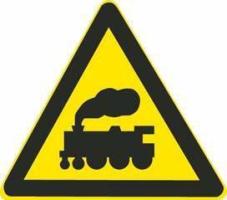
A. Watch for long time honking
B. An unmanned level crossing
C. A manned level crossing
D. Multi-crossing of railway and road
Answer: B
18. Whats the meaning of the white horizontal solid line in the circle?
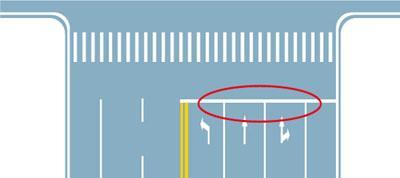
A. Turning waiting line
B. Deceleration line
C. Yielding line
D. Stop line
Answer: D
19. When a motor vehicle passes over an inundated road the driver should change to a low gear and pass at a constant speed.
A. Right
B. Wrong
Answer: A
20. When driving on a long downhill road, which is the best way to control the speed?
A. Coast in neutral gear
B. Take a low gear
C. Depress the clutch
D. Pull up the handbrake
Answer: B