

1. Whats the meaning of this guide arrow?
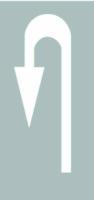
A. change to left lane
B. going straight ahead
C. U turn ahead
D. right turn ahead
Answer: C
2. A motorized vehicle driver who illegally occupies the emergency lane on the expressway is subject to a 6-point penalty.
A. Right
B. Wrong
Answer: A
3. Whats the meaning of this sign?
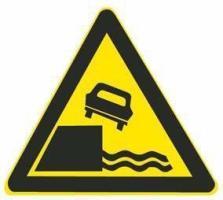
A. embankment road
B. cliffside road
C. waterside road
D. slippery road
Answer: A
4. When reversing on an ordinary road and discovering some vehicles are passing, the driver should _________.
A. Honk to indicate the intention
B. Voluntarily stop and yield
C. Speed up and reverse
D. Continue to reverse
Answer: B
5. In such road sections, you can enter the cross-hatched marking area to wait.
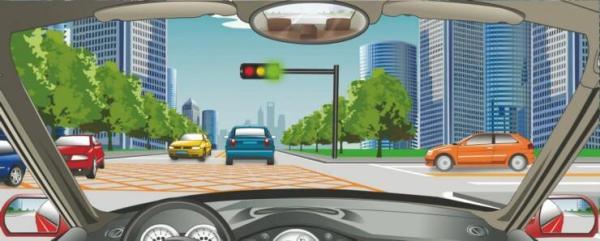
A. Right
B. Wrong
Answer: B
6. When the driver senses a tire blowout on the road, he should control the direction of the vehicle and use emergency braking to bring the vehicle swiftly to a stop.
A. Right
B. Wrong
Answer: B
7. When driving a small vehicle downhill, the driver may coast down by stopping the engine.
A. Right
B. Wrong
Answer: B
8. What pedal is it?
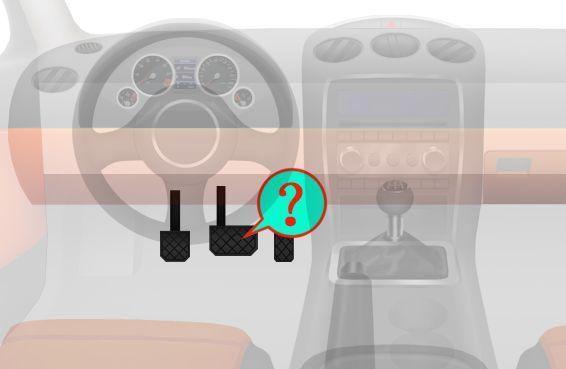
A. clutch pedal
B. accelerator pedal
C. brake pedal
D. handbrake
Answer: C
9. A driver can park the vehicle by borrowing the sidewalk if he cannot find the parking area.
A. Right
B. Wrong
Answer: B
10. A front tire blowout is very dangerous. The vehicle will immediately turn to the side where the tire is blown out and have a direct impact on the drivers control of the steering wheel.
A. Right
B. Wrong
Answer: A
11. This set of the hand signals of the traffic police indicates that the vehicles should ___ .

A. turn right
B. pull over
C. turn left
D. stop
Answer: D
12. When passing through an overflowing road, a high gear should be used to pass rapidly.
A. Right
B. Wrong
Answer: B
13. It lights to indicate that ______

A. the head fog light is turned on
B. the low beam light is turned on
C. the high beam light is turned on
D. the tail fog light is turned on
Answer: C
14. If a motorized vehicle runs 50% faster than the specified speed limit, the driver is subject to a 3-point penalty.
A. Right
B. Wrong
Answer: B
15. What is the role of ABS system when applying emergency braking?
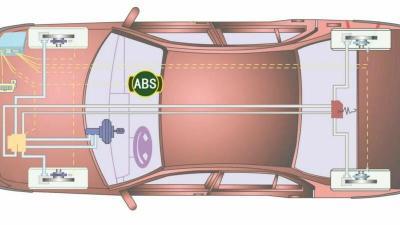
A. cut off the power output
B. control the direction automatically
C. reduce braking inertia
D. prevent wheel blocking
Answer: D
16. What kind of violation does the vehicle have while temporarily stopping by the roadside?
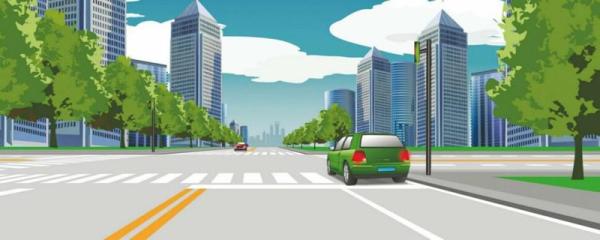
A. stop in the crosswalk
B. stop more than 30cm from the roadside
C. stop in the section with no stopping marking
D. stop occupying the lane for non-motorized vehicles
Answer: A
17. If a vehicle enters a left lane for overtaking but is unable to ensure a safe horizontal distance with the normally-running vehicle in front, the driver should ________.
A. Speed up and overtake
B. Overtake after running a distance in parallel
C. Give up overtaking
D. Overtake with care
Answer: C
18. When a driver drives a motorized vehicle during the period of probation, the driver should paste or hang a uniform probation mark on the rear part of the vehicle.
A. Right
B. Wrong
Answer: A
19. What is this instrument?
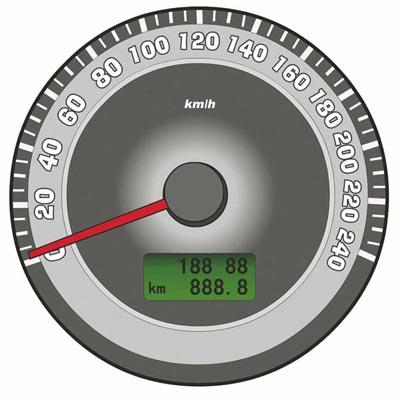
A. speed and mileage meter
B. engine tachometer
C. top speed meter
D. fuel consumption / 100 km
Answer: A
20. When driving at night on a road with no or poor lighting, the driver should switch from the low beam light to the high beam light. But the vehicle following in the same direction is not allowed to use the high beam light.
A. Right
B. Wrong
Answer: A