

1. When driving a motor vehicle near an intersection, the vehicle may speed up and honk to pass.
A. Right
B. Wrong
Answer: B
2. When such circumstances happen suddenly, what should the driver do?
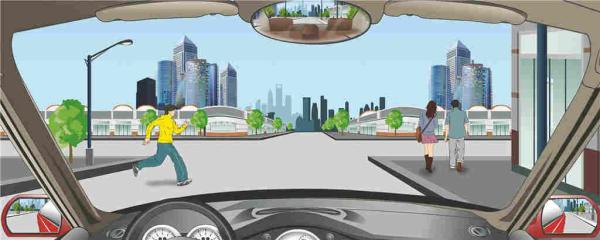
A. Reduce speed or stop to yield
B. Bypass in front of the pedestrians
C. Continuously sound the horn to alert the pedestrians
D. Bypass from behind the pedestrians
Answer: A
3. What should the driver do when the motor vehicle counters this situation?

A. Sound the horn continuously to warn
B. Speed up and bypass from the front
C. Slow down when encountering any risks
D. Slow down voluntarily and yield
Answer: D
4. When a motor vehicle stops in snow, which lamp should be turned on?
A. Front and rear fog lamps, clearance lamp and rear position lamp
B. Reverse lamp, clearance lamp and rear position lamp
C. Headlamp, clearance lamp and rear position lamp
D. Hazard lamps, clearance lamp and rear position lamp
Answer: D
5. When rescuers enter the scene to rescue the wounded after harmful gas leakage caused by traffic accidents, they must wear air respirators or cover their mouth and nose with wet towels.
A. Right
B. Wrong
Answer: A
6. Which of the following is an inflammable solid material?
A. Matches
B. Fireworks
C. Calcium carbide
D. Explosives
Answer: A
7. When use the brake of a motorcycle, use the front-wheel brake first, then use the back-wheel brake.
A. Right
B. Wrong
Answer: B
8. The main impact of rainy weather on safe driving is _______.
A. The visibility is poor
B. The tire grip decreases
C. The resistance to the vehicle increases
D. The road is wet and slippery
Answer: ABD
9. When discovering animals crossing the expressway on the highway, the driver should not drastically turn to evade.
A. Right
B. Wrong
Answer: A
10. What should the driver do when the motor vehicle encounters this situation in front of a school?

A. Bypass before the queue
B. Slow down and pass slowl
C. Stop promptly and yield
D. Go through in the spaces between the queues
Answer: C
11. How will the adhesive force of road change when speed increases on a damp and slippery road?
A. Increase sharply
B. Increase gradually
C. Decrease sharply
D. No change
Answer: C
12. When overtaking a motor vehicles on uphill sections of a mountain road, the driver should _____.
A. Honk in advance
B. Forward cars are allowed to overtake before overtaking.
C. Turn on the left-turn signal in advance
D. Speed up direct and overtake
Answer: ABC
13. When a vehicle encounters a strong side wind in a mountain valley, the driver should drastically turn the steering handlebar to adjust the direction of the vehicle if he feels the vehicle deviates from the normal direction.
A. Right
B. Wrong
Answer: B
14. What should be checked before driving?
A. No parts need to be checked
B. Whether the tires have been cleaned
C. Where the spare tire is placed
D. The fastening and air pressure of tires
Answer: D
15. What is the most frequent problem for driving on a muddy road?
A. High resistance force
B. Sideways slide
C. The motor vehicle bumps
D. Steering failure
Answer: B
16. What should motor vehicle drivers do when parking temporarily on a rainy day?
A. Turn on hazard lamp
B. Turn on front and back fog lamp
C. Turn on low-beam
D. Set up warning sign at the back of the vehicle
Answer: A
17. When driving on a foggy day, the driver should turn on the fog lamp.
A. Right
B. Wrong
Answer: A
18. When driving a motor vehicle following anther vehicle, What should the driver pay attention to?
A. When following a taxi, it is necessary to prevent it from pulling over at any time to get on and off passengers.
B. For large trucks loaded with goods, we should increase the distance between cars and avoid long time follow ups to prevent the risk of cargo spilling and blind areas.
C. When the current side of the vehicle has an internship sign, it should increase the distance with the vehicle to prevent the front vehicle emergency braking.
D. Follow a vehicle in foggy weather, pay attention to the emergency braking of the front vehicle
Answer: ABCD
19. When a motor vehicle passes over an overflowing bridge, what should the driver do after stopping and observing closely?
A. Change to a high gear and pass rapidly
B. Constantly observe the changes of the flow
C. Prepare to stop at any time
D. Change to a low gear and pass through at a constant speed
Answer: D
20. When a wounded person suffering burns is thirsty, he may drink a small quantity of slightly salty water.
A. Right
B. Wrong
Answer: A