

1. For a temporary stop on a foggy day, the driver should only turn on the fog lamp and the low-beam
A. Right
B. Wrong
Answer: B
2. Under such circumstances, motor vehicle drivers may sound the horn at the proper time and speed up to pass through.
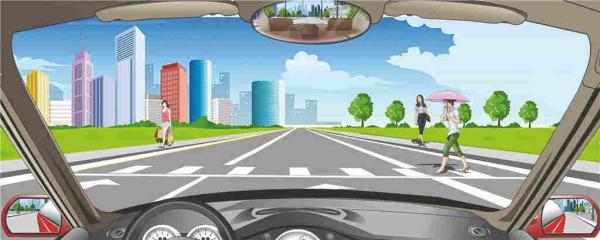
A. Right
B. Wrong
Answer: B
3. When there is a sudden braking failure on the road, what should be done by the driver?
A. Firmly holding the steering wheel and controlling the direction
B. Immediately changing to a low gear to reduce speed
C. Using the stopping brake to reduce speed
D. Turning on the hazard lamps
Answer: ABCD
4. What should the driver do upon finding a burst rear tire?
A. Adjust by swiftly turning the steering wheel
B. Control the direction while reducing speed slowly
C. Swiftly turn the steering wheel to the opposite direction
D. Swiftly take braking measures
Answer: B
5. When the vehicle behind gives a notice of overtaking at night, the vehicle in front should not yield blindly.
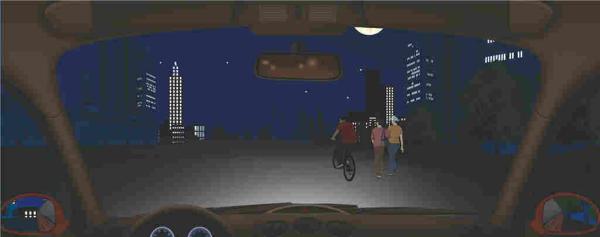
A. Right
B. Wrong
Answer: A
6. Under such circumstances at a congested intersection, what should motor vehicle drivers do?
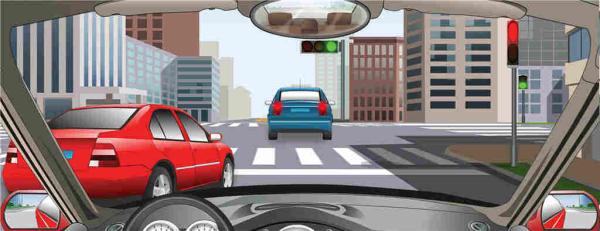
A. Force the vehicle to go back to its original lane
B. Closely follow the vehicle in front and refuse to yield
C. Politely yield and pass through
D. Sound the horn and turn on the head lamps
Answer: C
7. When there is a braking failure on a downhill road, if there is no favorable terrain or opportunity to stop the vehicle, the driver should drop gear by one position or two positions, and control the speed by taking advantage of the braking role of the engine.
A. Right
B. Wrong
Answer: A
8. In rain, the most effective way to avoid the danger arising from water slide is to drive at high speed
A. Right
B. Wrong
Answer: B
9. The sign on the right indicates that sounding the horn is prohibited here.
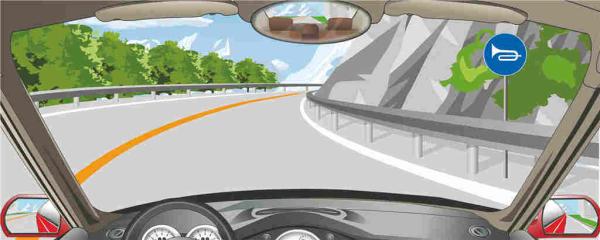
A. Right
B. Wrong
Answer: B
10. The sign on the left indicates the destinations of two highway directions
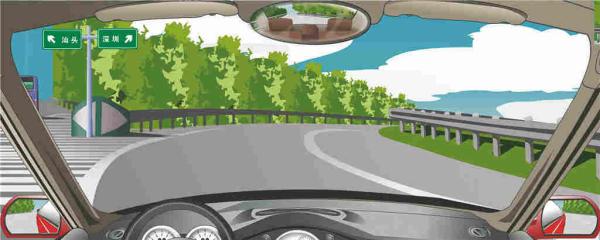
A. Right
B. Wrong
Answer: A
11. What should the driver do if the back wheel slides to the right on a muddy road?
A. Continuously speed up
B. Turn right
C. Turn left
D. Apply emergency brake
Answer: B
12. When seeing this sign, the driver should slow down promptly.
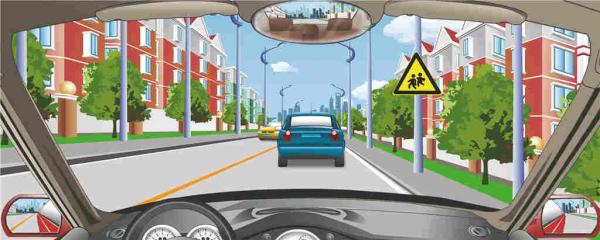
A. Right
B. Wrong
Answer: A
13. What should the driver do if he encounters pedestrians in this situation at an intersection?
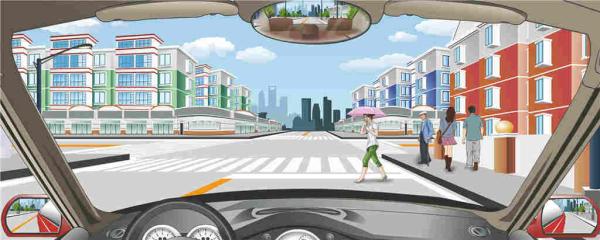
A. Slow down promptly and stop to yield
B. Sound the horn to warn the pedestrians to yield
C. Speed up and pass in front of the pedestrians
D. Turn on the headlamps to warn the pedestrians to yield
Answer: A
14. Motor vehicles are prohibited from driving straight or turning left in this situation.
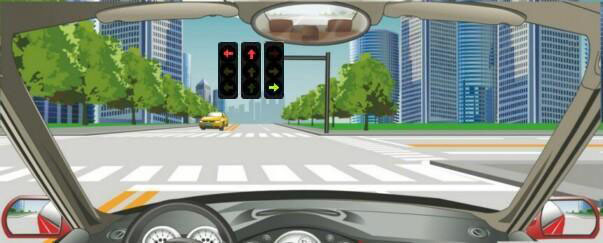
A. Right
B. Wrong
Answer: A
15. The sign on the right warns of a wildlife protection area ahead.
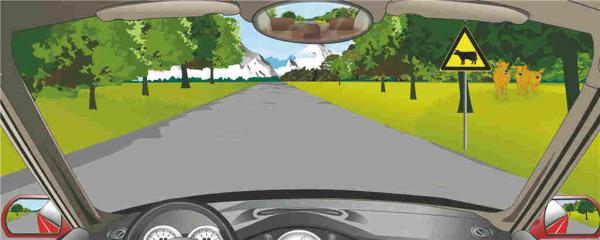
A. Right
B. Wrong
Answer: B
16. The right-front sign indicates a time-regulated pedestrian area.
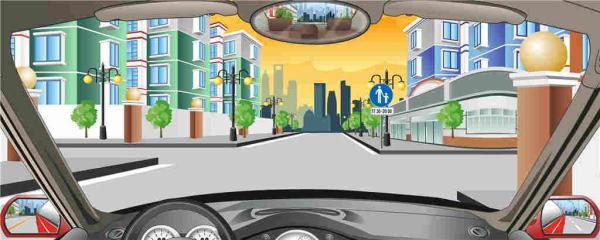
A. Right
B. Wrong
Answer: A
17. When finding a tire burst on the road, the driver should gently depress the brake pedal, reduce speed and stop the vehicle slowly.
A. Right
B. Wrong
Answer: A
18. The sign on the right warns of a non-motor vehicle lane.
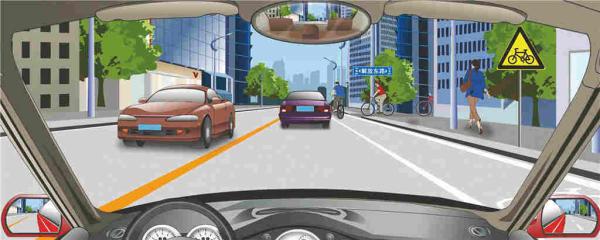
A. Right
B. Wrong
Answer: B
19. After entering the acceleration lane of an expressway, the driver should increase the speed to how many kilometers per hour?
A. More than 30 km/hour
B. More than 40 km/hour
C. More than 50 km/hour
D. More than 60 km/hour
Answer: D
20. Dangerous chemicals possess the characteristics of explosion, inflammation, poison, erosion and radiation.
A. Right
B. Wrong
Answer: A