

1. Which will affect the stopping distance?
A. Pavement conditions
B. Driver?ˉs reaction time
C. The quantity of cargo and the structure of brake, etc.
D. The vehicle speed
Answer: ABCD
2. How should lamps be used when motor vehicle drivers pass through a two-way tunnel?
A. Turn on the hazard lamps
B. Turn on the high-beam
C. Turn on the fog lamp
D. Turn on the low-beam
Answer: D
3. Driving a motor vehicle in the downhill section of a mountain road avoids overtaking as much as possible because _______.
A. Vehicle resistance in downhill section is very high
B. Vehicles on downhill sections are more difficult to control than on flat roads due to gravity.
C. In downhill section, the front speed is faster and it is difficult to overtake.
D. Vehicles on downhill sections tend to be too fast due to gravity
Answer: BD
4. What should driver do when students crossing the road in line?
A. Speed up and pass in the front of the students
B. Sound the horn to warn the students to yield
C. Slow down and pass
D. Stop and wait until the students pass
Answer: D
5. When driving on a damp and slippery road, drivers should avoid using the emergency brake to his/her best ability.
A. Right
B. Wrong
Answer: A
6. What is the meaning of this sign?
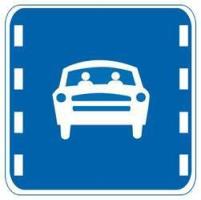
A. Special lane for small vehicles
B. Special lane for motorized vehicles
C. Special lane for taxis
D. Special lane for multi-passenger vehicles
Answer: D
7. When seeing this sign, the driver should reduce speed and observe the road conditions.
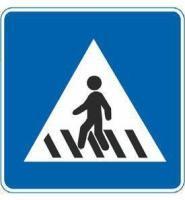
A. Right
B. Wrong
Answer: A
8. What is the meaning of this sign?
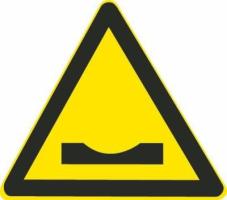
A. Bump road
B. Low-lying road
C. High outburst road
D. Hump bridge
Answer: B
9. A light motorcycle is only permitted to carry preschoolers.
A. Right
B. Wrong
Answer: B
10. When a tire blowout on the road, the driver should swiftly depress the brake pedal to reduce speed, do all his can to control the steering wheel and stop the vehicle as soon as possible.
A. Right
B. Wrong
Answer: B
11. When a wounded person suffering burns is thirsty, he may drink a small quantity of slightly salty water.
A. Right
B. Wrong
Answer: A
12. What should be done by motor vehicle drivers in order to yield politely to such pedestrians?
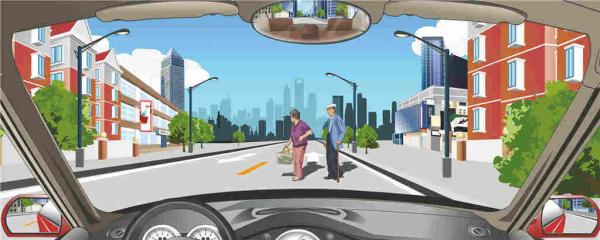
A. Speed up and bypass in front of the pedestrians
B. Speed up and bypass from behind the pedestrians
C. Reduce speed or stop to yield
D. Continuously sound the horn to alert the pedestrians
Answer: C
13. When approaching another vehicle at night, why should the driver alternate between high-and-low-beam at a distance more than 150 meters?
A. Warn each other before passing
B. Driving habit
C. Easy to observe the situation ahead from either side
D. Courtesy
Answer: C
14. What is the meaning of this sign?
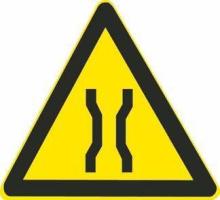
A. Road narrows on the left side
B. Narrow bridge
C. Narrow road
D. Road narrows on the right side
Answer: B
15. What is the meaning of this sign?

A. Reduce speed and go slowly
B. Watch for danger
C. Jammed section
D. Accident-prone section
Answer: B
16. What should motor vehicle drivers do when approaching an oncoming vehicle on a frozen road?
A. Cut speed as approaching each other
B. Pass each other by speeding up properly
C. Pass each other slowly by cutting speed in advance
D. Pass each other along the central line to the best
Answer: C
17. How to do in this situation?
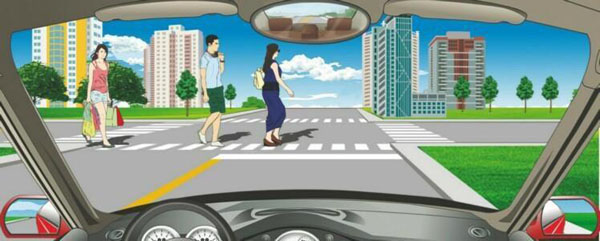
A. Stop and yield to the pedestrians
B. Bypass from the front of the pedestrians
C. Honk to remind the pedestrians
D. Bypass from the rear of the pedestrians
Answer: A
18. What is the meaning of this sign?

A. Bump road
B. High outburst road
C. Low-lying road
D. Hump bridge
Answer: B
19. When driving in a heavy rain, drivers should contro their speed to prevent their vehicles from sliding.
A. Right
B. Wrong
Answer: A
20. Keep enough safe distance When a motor vehicle follows another vehicle, because ______.
A. Avoke a rear-end collision
B. The closer you get to the vehicle, the less easy it is to grasp the situation ahead of the vehicle.
C. Enough distance to avoid emergencies
D. Prevent being unable to detect the front vehicle brake in time due to the damage rear lamp of the front vehicle
Answer: ABCD