

1. How far should be the distance from the vehicle in front at the speed of more than 100 km/hr when driving a small passenger vehicle on the expressway?
A. more than 50 meters
B. more than 60 meters
C. more than 100 meters
D. more than 80 meters
Answer: C
2. When running on the road having maximum speed limit signs, the motorized vehicle is not allowed to exceed the marked maximum speed.
A. Right
B. Wrong
Answer: A
3. Stopping the vehicle temporarily in the crosswalk is the act of violation of the law.
A. Right
B. Wrong
Answer: A
4. The driving license of a motorized vehicle driver will be detained after his penalty scores reach 12 points in a scoring circle.
A. Right
B. Wrong
Answer: A
5. When passing an unmanned level crossing, the driver should ________.
A. Speed up and pass
B. Reduce speed and pass
C. Maintain the speed and pass
D. Stop, look and pass
Answer: D
6. One can drive the small motor vehicle with automatic transmission if the authorized vehicle applied for is small motor vehicle.
A. Right
B. Wrong
Answer: A
7. In which situation the traffic police may detain the vehicle?
A. no vehicle registration papers
B. no insurance contract
C. no lable of environmental protection
D. no label of insurance
Answer: D
8. When driving in icy and snowy weather, the vehicle steadiness decreases and sudden acceleration can very easily cause spins and slides.
A. Right
B. Wrong
Answer: A
9. When a vehicles turns, it should do so on the right side and refrain from occupying the lane of the other party. The left turn should be gentle and the right turn should be sharp.
A. Right
B. Wrong
Answer: A
10. Which illegal conduct is subject to a 12-point penalty
A. violate traffic lights
B. use falsified license plate
C. call or answer the mobile phone
D. violate prohibitive signs
Answer: B
11. Speed up and pass when encountering this traffic light at the intersection
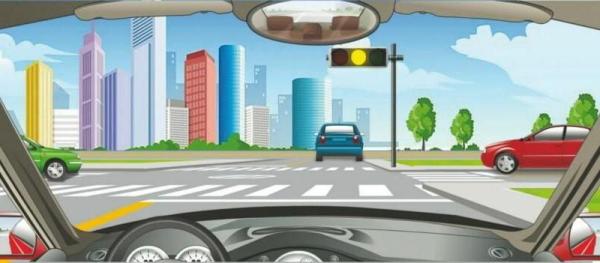
A. Right
B. Wrong
Answer: B
12. The vehicle with ABS system can minimize the braking distance when driving on a road covered by ice and snow.
A. Right
B. Wrong
Answer: B
13. Whats the meaning of this sign?

A. running by right side
B. no going straight
C. straight one-way road
D. yield if going to go straight
Answer: C
14. Whats the meaning of this sign?
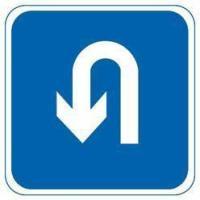
A. U turn
B. reversing
C. left turn
D. bypassing
Answer: A
15. It lights to indicate that engine oil may be insufficient.

A. Right
B. Wrong
Answer: A
16. If a driver has driven a motorized vehicle for more than four hours running, he should stop the vehicle and rest for at least ____________.
A. 10 minutes
B. 15 minutes
C. 20 minutes
D. 5 minutes
Answer: C
17. How to do when the vehicle breaks down on road and needs to stop to solve the problem?
A. stop in the middle of the road
B. stop the vehicle where will not interfere the traffic
C. turn on the low beam lights or fog lights
D. stop on the spot to solve the problem
Answer: B
18. It lights to indicate that the generator is charging to the batteries.

A. Right
B. Wrong
Answer: B
19. What marking are the white broken lines in the circles?
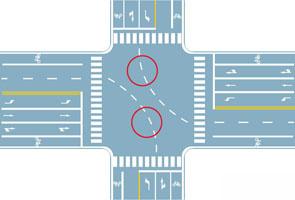
A. small vehicles turning lines
B. lane connection lines
C. non-motorized vehicles guide lines
D. intersection guide line
Answer: D
20. Whats the meaning of this sign?

A. expressway mileage No.
B. expressway border plate No.
C. expressway name No.
D. expressway section No.
Answer: C