

1. How to do when causing a minor traffic accident with no human casualties and no dispute?
A. do not move the vehicle
B. counsel other vehicles bypass
C. leave the scene and discuss on their own
D. protect the scene and discuss
Answer: C
2. The main impact of the road conditions in icy and snowy weather is ______.
A. The electric equipment can easily get wet and cause short circuit
B. The visibility is lower and the field of vision is blurred
C. The resistance to the vehicle increases
D. Poor braking performance and Side pulling
Answer: D
3. Which kind of vehicle can be driven if the authorized vehicle applied for is small motor vehicle?
A. low-speed truck
B. midsize bus
C. motor tricycle
D. self-propelled wheeled machinery
Answer: A
4. When a vehicle passes a crosswalk, the driver should yield to the pedestrians.
A. Right
B. Wrong
Answer: A
5. Turn on the left-turn signal in advance when making a U turn on the road.
A. Right
B. Wrong
Answer: A
6. If a driving license is obtained by deception, bribery or other illegal means, the driving license should be revoked and the applicant is not allowed to re-apply for it _____ .
A. within 3 years
B. the whole life
C. within 1 year
D. within 5 years
Answer: A
7. When driving a motor vehicle after drinking, a prison term of more than 3 years will be imposed.
A. Right
B. Wrong
Answer: B
8. Which is correct in this kind of intersection?

A. make a U turn along the left lane
B. cannot make a U turn
C. make a U turn through the middle lane
D. make a U turn inside the intersection
Answer: B
9. What kind of violation does this stopping car have?
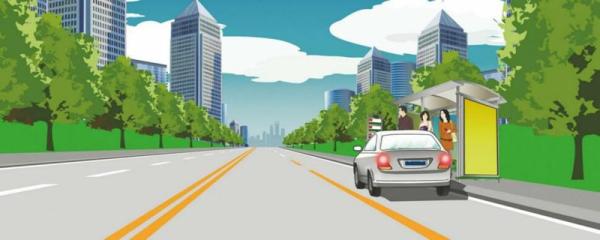
A. stop occupying the lane for non-motorized vehicles
B. stop in the section with no stopping marking
C. stop at bus station
D. stop occupying sidewalk
Answer: C
10. When a motorized vehicle makes a U turn, turns around or goes down a slope, the maximum speed should not exceed 40 kilometers per hour.
A. Right
B. Wrong
Answer: B
11. When a motorized vehicle runs on an expressway, it ________.
A. May stop on the road shoulder to let passengers on and off
B. May stop in the emergency lane to load and unload cargos
C. May overtake or stop in the acceleration or deceleration lane
D. Is not allowed to drive or stop in the emergency lane in a non-emergency case
Answer: D
12. Whats the meaning of this sign?
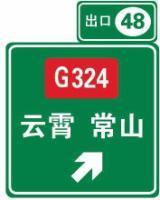
A. expressway right exit ahead
B. expressway destination indication
C. expressway left exit ahead
D. expressway next exit ahead
Answer: A
13. Which is correct to use lights on rainy day when following a vehicle?
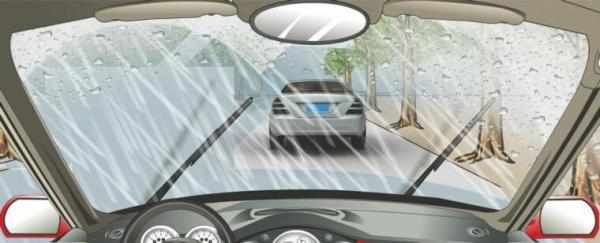
A. use high beam lights
B. cannot use the low beam lights
C. cannot use the high beam light
D. use fog lights
Answer: C
14. When driving in a heavy rain, the driver should control the speed to avoid the danger arising from water slide.
A. Right
B. Wrong
Answer: A
15. Full penalty points of a scoring cycle because of violating the traffic regulations is 12 points.
A. Right
B. Wrong
Answer: A
16. It lights if left door is not closed.

A. Right
B. Wrong
Answer: B
17. Whats the meaning of this sign?

A. distance to a tourist area
B. direction of a tourist area
C. symbol of a tourist area
D. category of a tourist area
Answer: A
18. When a vehicle goes down a long slope, it should run at a lower gear and fully use the engine to brake.
A. Right
B. Wrong
Answer: A
19. When encountering slow-moving vehicles at an intersection that has no traffic signals, the motorized vehicle should pass alternately.
A. Right
B. Wrong
Answer: A
20. Whats the meaning of the white solid lines at the edge of the carriageway on both sides of the road?
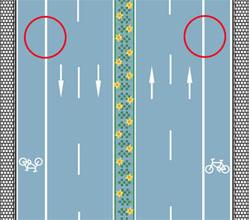
A. Vehicles may cross temporarily
B. Vehicles are not allowed to cross.
C. Motorized vehicles may cross temporarily.
D. Non-motorized vehicles may cross temporarily
Answer: B