

1. Whats the meaning of this sign?
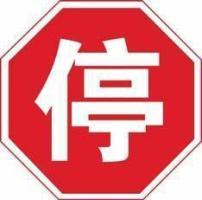
A. stop to yield
B. no stopping temporarily
C. no entry
D. no long stopping
Answer: A
2. How long is the period of probation after a motorized vehicle driver obtains his driving license for the first time or the permission to drive higher level vehicles.
A. 6 months
B. 12 months
C. 2 years
D. 3 months
Answer: B
3. How to make a U turn in this intersection?
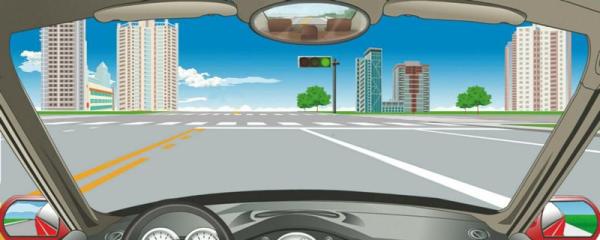
A. broken lines of the central line
B. make a U turn from the right lane
C. enter the intersection and make a U turn
D. make a U turn in the crosswalk
Answer: A
4. Whats the meaning of this sign?
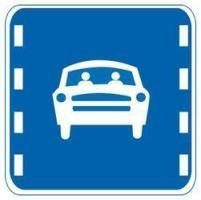
A. special lane for small vehicles
B. special lane for motorized vehicles
C. special lane for taxis
D. special lane for multi-passenger vehicles
Answer: D
5. The vehicles are prohibited from passing when encountering this traffic light at the intersection.
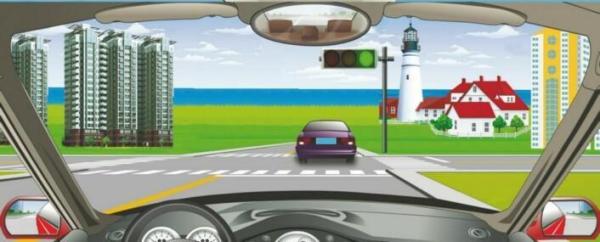
A. Right
B. Wrong
Answer: B
6. How to drive in this section?
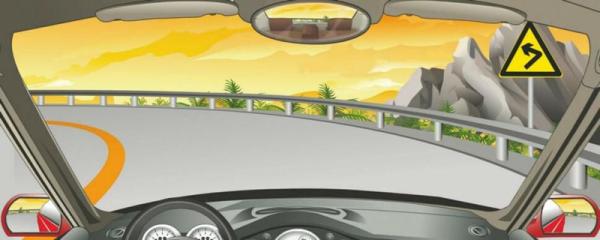
A. occupy the road of the other side to pass the curve
B. drive along the middle of the curve
C. speed up and honk to pass
D. reduce speed and honk
Answer: D
7. What device does the switch of this symbol control?

A. the windscreen defrosting
B. the rear window wiper
C. the rear window defrosting
D. the windscreen wiper
Answer: D
8. When overtaking, the driver should ________ if the vehicle in front refuses to reduce speed or yield.
A. Follow closely and find chance to overtake again
B. Stop overtaking
C. Speed up and continue to overtake
D. Continuously honk and speed up to overtake
Answer: B
9. When entering an expressway toll gate, the driver should select a gate where _______.
A. There are more vehicles
B. The red light is on
C. The green light is on
D. Service is temporarily suspended
Answer: C
10. How to pass when encountering this situation at the intersection?
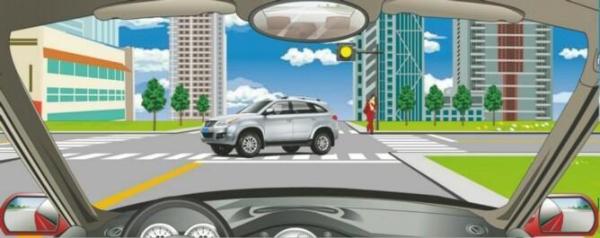
A. make sure it is safe to pass
B. turn right and speed up to pass
C. speed up and pass straight
D. turn left and speed up to pass
Answer: A
11. If a motorized vehicle breaks down or causes a traffic accident on the expressway and cannot to run normally, the vehicle should be towed by ______.
A. a vehicle passing by
B. a large bus
C. a vehicle traveling together
D. a tow truck
Answer: D
12. When reaching a sharp curve, the driver should reduce speed and drive on the right side so as to avoid colliding with the vehicle crossing the central line of the curve in the opposite direction.
A. Right
B. Wrong
Answer: A
13. It lights to indicate that ______

A. the front fan works
B. air external circulation
C. windscreen defroster
D. air internal circulation
Answer: D
14. A motorized vehicle runs on the road without a label of inspection, the traffic police can detain the vehicle.
A. Right
B. Wrong
Answer: A
15. This set of the hand signals of the traffic police indicates that the vehicles should ___ .
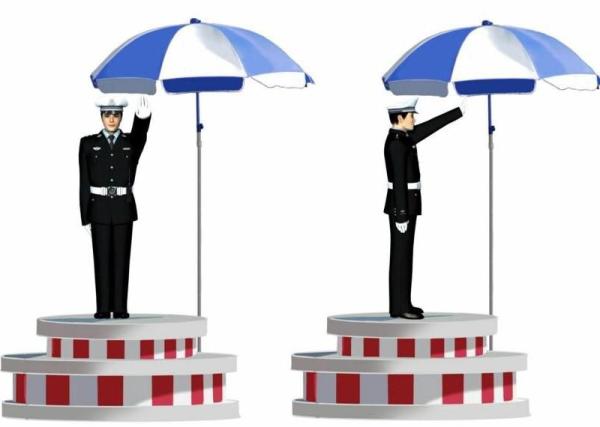
A. turn right
B. pull over
C. turn left
D. stop
Answer: D
16. Whats the meaning of this sign?
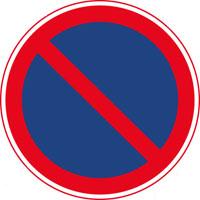
A. no stopping temporarily
B. no long stopping
C. no stopping
D. long stopping is allowed
Answer: B
17. It lights when turning on the right-turn signal.

A. Right
B. Wrong
Answer: B
18. How to run when encountering this situation?
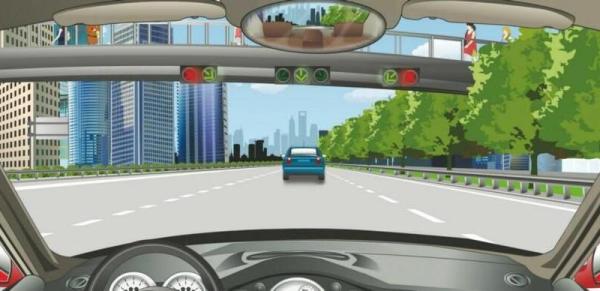
A. speed up to enter the lane of either side
B. enter the right lane
C. reduce speed and enter the lane of either side
D. can not run in the lane of neither side
Answer: D
19. In which situation the traffic police may detain the vehicle?
A. no lable of inspection
B. no ID card
C. no lable of environmental protection
D. no vehicle registration papers
Answer: A
20. Whats the meaning of this sign?

A. No passing
B. driving at reduced speed
C. time limit for entering
D. no entering
Answer: A