

1. What will be subject to if submitting false materials to apply for driving license?
A. a 20~200 yuan fine
B. disqualification for applying for
C. cannot re-apply for within 1 year
D. cannot re-apply for within 2 years
Answer: C
2. What is the max speed when in or out of the lane for non-motorized vehicles?
A. 40km/hr
B. 50km/hr
C. 60km/hr
D. 30km/hr
Answer: D
3. Whats the meaning of this sign?
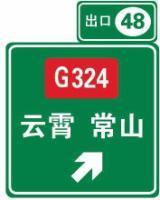
A. expressway right exit ahead
B. expressway destination indication
C. expressway left exit ahead
D. expressway next exit ahead
Answer: A
4. How long is the period of probation after a motorized vehicle driver obtains his driving license for the first time or the permission to drive higher level vehicles.
A. 6 months
B. 12 months
C. 2 years
D. 3 months
Answer: B
5. When a vehicle passes a level crossing, it is prohibited from overtaking.
A. Right
B. Wrong
Answer: A
6. It lights if left door is not closed.

A. Right
B. Wrong
Answer: B
7. As the road is wet and slippery after rain, brake application when driving can easily ___.
A. Cause sideways slide and traffic accident
B. Cause collision due to poor visibility
C. Be ignored by the drivers of other vehicles
D. Cause engine kill
Answer: A
8. Whats the meaning of this sign?
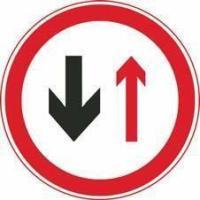
A. stop and yield the right side vehicle while crossing each other
B. no passing on the right side road
C. two-way lane section ahead
D. stop and yield the opposite vehicle while crossing each other
Answer: D
9. To hold the steering wheel like this is correct.

A. Right
B. Wrong
Answer: B
10. What marking is the combination of the white broken lines and the triangle area?
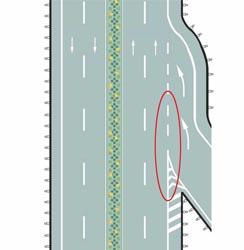
A. road entry marking
B. lane-dividing line that can be crossed
C. deceleration line at road entry
D. road exit marking
Answer: A
11. Motor vehicle frontal collision, the double protection of the airbag and the safety belts can give full play to the role.
A. Right
B. Wrong
Answer: A
12. When a vehicle passes a level crossing, the driver should use the low gear to pass and should not change gear halfway in order to avoid engine kill.
A. Right
B. Wrong
Answer: A
13. The reason that a road destroyed by flood affects safe driving and smooth passage is __.
A. The road grip becomes stronger
B. It is impossible to see the hidden holes and bumps in road surface
C. The visibility become lower and blurs the field of vision
D. The sunshine reflection blurs the view
Answer: B
14. If the vehicle has no license plate, label of inspection or label of insurance, preserve the scene and immediately report to the police.
A. Right
B. Wrong
Answer: A
15. If a motorized vehicle hits a building or a public facility, the vehicle may leave the scene right away.
A. Right
B. Wrong
Answer: B
16. You have the priviledged passing right of way in this situation.

A. Right
B. Wrong
Answer: A
17. The three principles for careful driving are concentration, careful observation and early prevention.
A. Right
B. Wrong
Answer: A
18. Which of the following vehicle in front in the same lane is not allowed to be overtaken?
A. large bus or large truck
B. fire engine on duty
C. public bus
D. taxis
Answer: B
19. The vehicles are prohibited from passing when encountering this traffic light at the intersection.
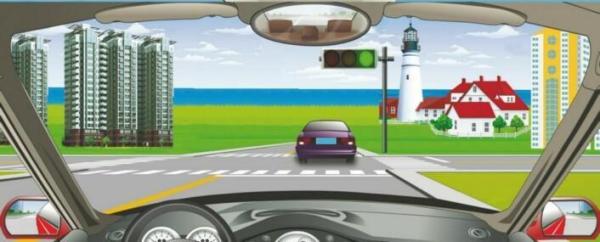
A. Right
B. Wrong
Answer: B
20. Do not hang or place articles close to the front and rear windows that block the vision of the driver.
A. Right
B. Wrong
Answer: A