

1. When encountering non-motorized vehicles cutting in on the road, the driver should ___.
A. Honk to warn
B. Speed up and pass
C. Reduce speed and yield
D. Suddenly speed up when approaching
Answer: C
2. The continuously flashing yellow light is to warn that the driver should look and make sure it is safe to pass.
A. Right
B. Wrong
Answer: A
3. What marking is the two white broken lines in the circle?

A. stop lines at crossroad
B. left-turn waiting areas
C. U turn guide lines
D. small vehicles turning lines
Answer: B
4. When driving at night on a road that has good lighting, the driver should use _______.
A. The fog light
B. The low beam light
C. The high beam light
D. The hazard lights
Answer: B
5. Whats the meaning of this sign?
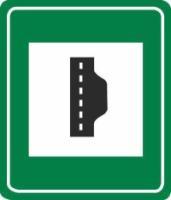
A. expressway emergency strip
B. expressway yielding area
C. expressway bus station
D. expressway parking area
Answer: A
6. How to drive in sand, hail, rain, fog, ice and other weather conditions?
A. run as normal
B. maintain the speed
C. speed up properly
D. reduce the speed
Answer: D
7. When encountering slow-moving vehicles at an intersection that has no traffic signals, the motorized vehicle should pass alternately.
A. Right
B. Wrong
Answer: A
8. A person can not apply the motorized vehicle driving license, if he has been held for criminal liabilities according to law because of driving after drinking and causing a major traffic accident.
A. Right
B. Wrong
Answer: A
9. The vehicle can not run straight or turn left in this situation.
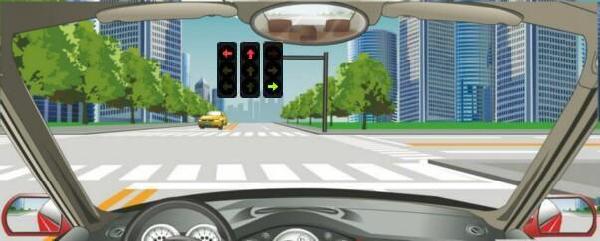
A. Right
B. Wrong
Answer: A
10. When causing a road accident involving property damage, the party should leave the scene on his own but he does not leave and causes a traffic jam, he may be subject to a fine of 200 yuan.
A. Right
B. Wrong
Answer: A
11. When a vehicle goes downhill on a mountain road, it is not allowed to overtake.
A. Right
B. Wrong
Answer: A
12. What device does the switch of this symbol control?
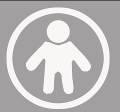
A. child safety lock
B. window glasses of both sides
C. electric door
D. door unlock
Answer: A
13. What marking is the yellow road surface in the center of the intersection?
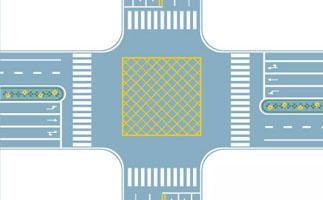
A. central circle
B. guide line
C. cross-hatched marking
D. parking area
Answer: C
14. This sign indicates running slowly or stopping to let the vehicle on main road go first.
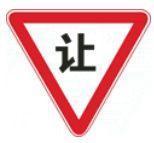
A. Right
B. Wrong
Answer: A
15. The main impact of the road conditions in icy and snowy weather is ______.
A. The electric equipment can easily get wet and cause short circuit
B. The visibility is lower and the field of vision is blurred
C. The resistance to the vehicle increases
D. Poor braking performance and Side pulling
Answer: D
16. If a driver has driven a motorized vehicle for more than four hours running, he should stop the vehicle and rest for at least ____________.
A. 10 minutes
B. 15 minutes
C. 20 minutes
D. 5 minutes
Answer: C
17. Which part does it control when rotating this part of the switch?
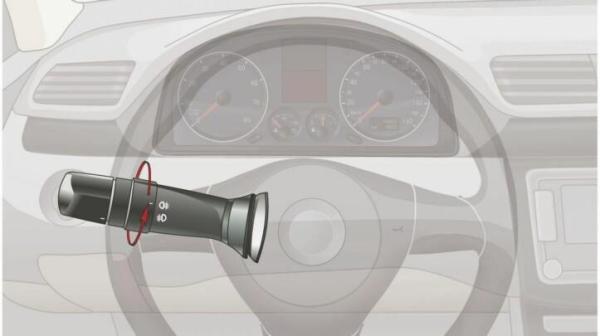
A. the low beam lights
B. the head and tail fog lights
C. high beam lights
D. turn signals
Answer: B
18. Which illegal conduct is subject to a 12-point penalty
A. violate traffic lights
B. use falsified license plate
C. call or answer the mobile phone
D. violate prohibitive signs
Answer: B
19. Driving in a dusty weather, it does not needed to turn on the head light, the contour light and the tail light.
A. Right
B. Wrong
Answer: B
20. What kind of violation does this broken down vehicle have?
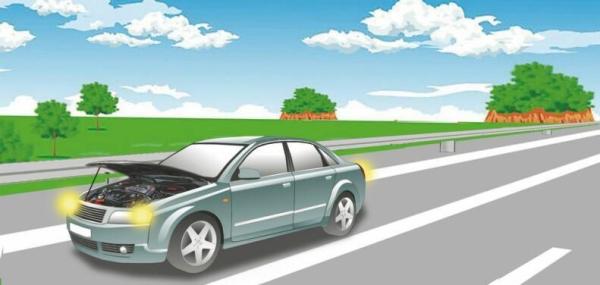
A. not turn on the hazard lights
B. not stop the car by the roadside
C. not solve the problem at once
D. not place the warning sign
Answer: D