

1. A motorized vehicle driver who illegally occupies the emergency lane on the expressway is subject to a 6-point penalty.
A. Right
B. Wrong
Answer: A
2. What is the max speed on this city road?
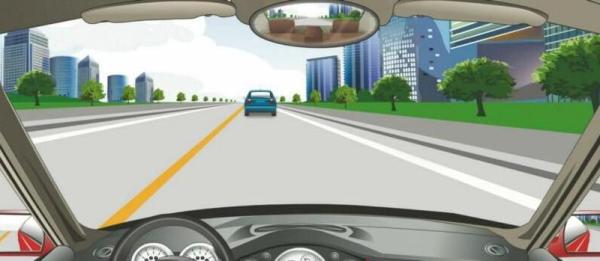
A. 30km/hr
B. 40km/hr
C. 50km/hr
D. 70km/hr
Answer: C
3. When encountering a traffic jam on the expressway, the driver should follow the front vehicle lining up, and immediately turn on the hazard light to prevent rear-end collision.
A. Right
B. Wrong
Answer: A
4. In which situation the traffic police may detain the vehicle?
A. no lable of inspection
B. no ID card
C. no lable of environmental protection
D. no vehicle registration papers
Answer: A
5. What kind of marking are the double yellow solid lines in the middle of the road?
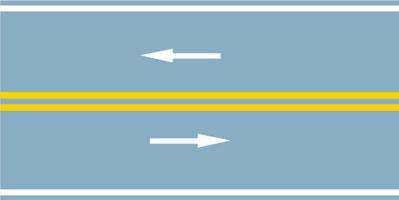
A. auxiliary marking
B. warning sign
C. prohibitive marking
D. indicative marking
Answer: C
6. After the green light at an intersection is on, the vehicles may not yield if non-motorized vehicles cut in.
A. Right
B. Wrong
Answer: B
7. One can drive the small motor vehicle with automatic transmission if the authorized vehicle applied for is small motor vehicle.
A. Right
B. Wrong
Answer: A
8. The main impact of mountain roads on safe driving is _______.
A. The traffic conditions are boring
B. The slopes are long, the curves are sharp and visibility range is shorter.
C. The traffic flow is heavy
D. The road signs are fewer
Answer: B
9. When a vehicle runs on an expressway at the speed of 100 kilometers per hour, its safe distance from the vehicle in front is not less than 100 meters.
A. Right
B. Wrong
Answer: A
10. May throw items to the road while driving.
A. Right
B. Wrong
Answer: B
11. When a vehicle on the main road approaches a conjunction with a feeder road, the driver should ______ in order to prevent a collision with a vehicle that suddenly enters from the feeder road.
A. Maintain the normal speed
B. Reduce speed in advance, observe and drive with care
C. Honk and swiftly pass
D. Speed up in advance and pass
Answer: B
12. This sign warns the driver to run slowly with care and beware of the vehicles from horizontal road.
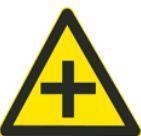
A. Right
B. Wrong
Answer: A
13. Traffic Signs and traffic markings are not traffic signals.
A. Right
B. Wrong
Answer: B
14. This set of the hand signals of the traffic police indicates that the vehicles should ___ .
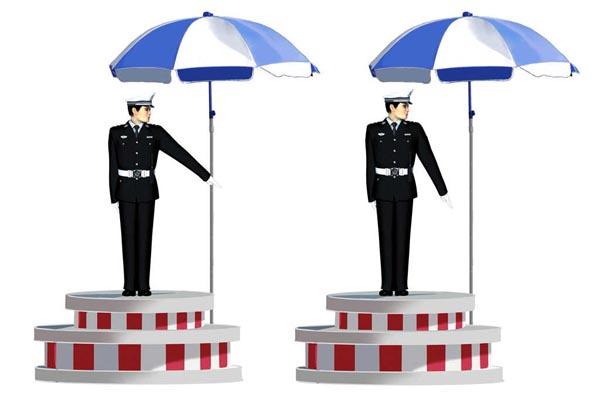
A. turn left
B. wait to turn left
C. reduce speed and pass slowly
D. turn right
Answer: B
15. What is the max speed when passing a level crossing?
A. 15km/hr
B. 20km/hr
C. 30km/hr
D. 40km/hr
Answer: C
16. If discovering pedestrians abruptly cross the road while driving, the driver should immediately reduce speed and evade.
A. Right
B. Wrong
Answer: A
17. The main impact of the road conditions in icy and snowy weather is ______.
A. The electric equipment can easily get wet and cause short circuit
B. The visibility is lower and the field of vision is blurred
C. The resistance to the vehicle increases
D. Poor braking performance and Side pulling
Answer: D
18. Whats the meaning of this sign?

A. lane for both going straight and U turn
B. lane for both going straight and left turn
C. lane for going straight and right turn
D. lanes for going in different directions
Answer: B
19. When a vehicle reaches a muddy or burst-and-muddy section, the driver should stop,observe and select the level and solid section or the section with vehicle tracks.
A. Right
B. Wrong
Answer: A
20. When passing an intersection without traffic lights, the driver should go through as fast as possible.
A. Right
B. Wrong
Answer: B