

1. You should speed up through the section with this kind of traffic marking.
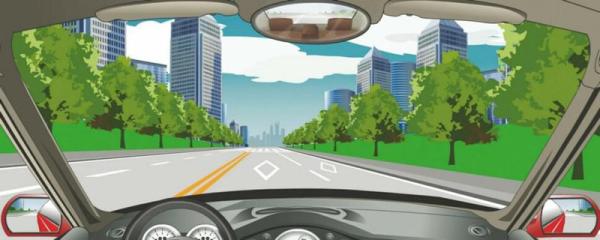
A. Right
B. Wrong
Answer: B
2. What is this manipulation device?
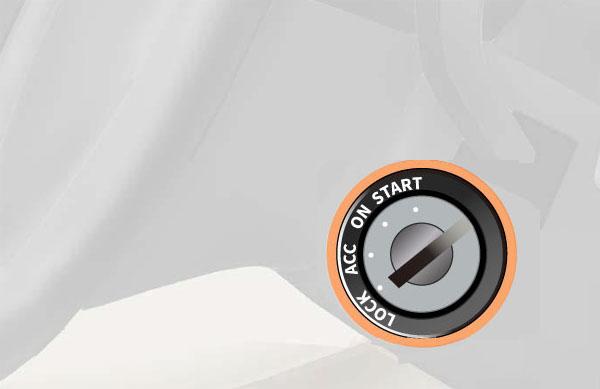
A. air conditioner switch
B. ignition switch
C. wiper switch
D. light switch
Answer: B
3. What is the max speed when passing a level crossing?
A. 15km/hr
B. 20km/hr
C. 30km/hr
D. 40km/hr
Answer: C
4. If a motorized vehicle hits a building or a public facility, the vehicle may leave the scene right away.
A. Right
B. Wrong
Answer: B
5. What is this instrument?
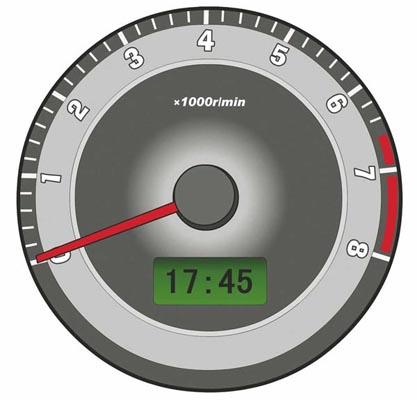
A. engine tachometer
B. driving speed meter
C. interval mileage meter
D. fuel consumption / 100 km
Answer: A
6. Must reduce the frequency of honking in this section.

A. Right
B. Wrong
Answer: B
7. When a vehicle changes lane, the driver should turn on the turn signal in advance,observe traffic conditions, maintain a safe distance and move into the new lane.
A. Right
B. Wrong
Answer: A
8. When driving at night on a road with no or poor lighting, the driver should switch from the low beam light to the high beam light. But the vehicle following in the same direction is not allowed to use the high beam light.
A. Right
B. Wrong
Answer: A
9. Which kind of vehicle can be driven if the authorized vehicle applied for is small motor vehicle with automatic transmission?
A. low-speed truck
B. small motor vehicle
C. motorcycle
D. light truck with automatic transmission
Answer: D
10. If a motorized vehicle driver drives on the road after getting drunk is subject to a prison term of more than 3 years.
A. Right
B. Wrong
Answer: B
11. What marking is the two white broken lines in the circle?

A. stop lines at crossroad
B. left-turn waiting areas
C. U turn guide lines
D. small vehicles turning lines
Answer: B
12. When a vehicle passes a sharp curve, it may overtake if traffic is light.
A. Right
B. Wrong
Answer: B
13. At this position, you may speed up to pass through the section.
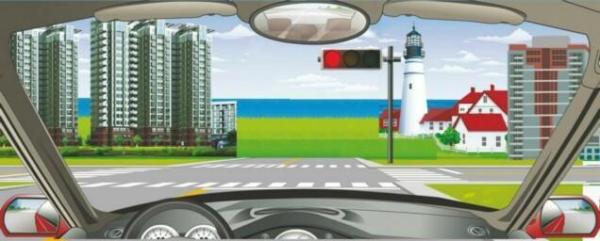
A. Right
B. Wrong
Answer: B
14. Traffic Police can detain the vehicle according to law if it is suspected of using the label of insurance from other vehicle.
A. Right
B. Wrong
Answer: A
15. Traffic markings are divided into indication, warning and prohibition.
A. Right
B. Wrong
Answer: A
16. A motorized vehicle that will turn right at an intersection but has a vehicle in front in the same lane waiting for the green light should ______________.
A. Stop and wait for his turn
B. Honk to indicate the vehicle in front to yield
C. Bypass the vehicle in front from the right side and go through the intersection
D. Bypass the vehicle in front from the left side and go through the intersection
Answer: A
17. Whats the meaning of this sign?
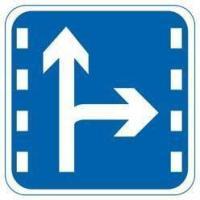
A. straight-going and left-turn lane
B. straight-going and side road exit lane
C. lane for both going straight and right turn
D. lanes for going in different directions
Answer: C
18. Whats the meaning of this sign?
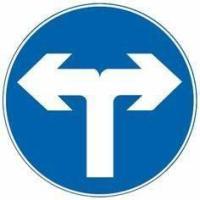
A. no left turn
B. left and right turn
C. no left and right turn
D. no right turn
Answer: B
19. In which situation cannot overtake a vehicle in front?
A. vehicle in front is reducing speed to yield
B. vehicle in front is turning left
C. vehicle in front is pulling over by the roadside
D. vehicle in front is turning right
Answer: B
20. Whats the meaning of this sign?
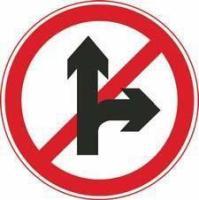
A. no going straight and no changing to left lane
B. no going straight and no left turn
C. allowed to go straight and change to left lane
D. no going straight and no right turn
Answer: D