

1. According to regulations, motorcycle driver should wear _______.
A. Glasses
B. A special safety helmet
C. Gloves
D. Safety kneepads
Answer: B
2. What is the meaning of this sign?
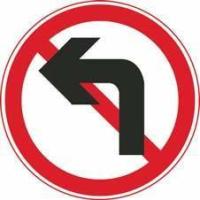
A. no U turn
B. no changing to left lane
C. no turning left
D. no entering the left lane
Answer: C
3. When a motor vehicle reaches a muddy or burst-and-muddy section of the road, the driver should stop, observe and select a level and solid section or a section with vehicle tracks.
A. Right
B. Wrong
Answer: A
4. If a motorized vehicle driver allows his vehicle to be driven by a person whose driving license has been detained, the traffic police will serve an oral warning.
A. Right
B. Wrong
Answer: B
5. It is unsafe to ride a motorcycle by high-heel shoes.
A. Right
B. Wrong
Answer: A
6. When driving in rain and encountering pedestrians with umbrellas or wearing raincoats, what should be done by motor vehicle drivers in order to yield?
A. Drive at a normal speed
B. Sound the horn to alert when approaching the pedestrians
C. Speed up and bypass on the left
D. Reduce speed and sound the horn in advance
Answer: D
7. If a person who has caused a major traffic accident and if his act constitutes a crime, he may not be held for criminal liabilities.
A. Right
B. Wrong
Answer: B
8. When a tire bursts suddenly on the road, the driver should refrain from violently depressing the brake pedal in panic. Instead, he/she should try his/her best to change to a low gear and use engine braking to reduce the speed of the vehicle.
A. Right
B. Wrong
Answer: A
9. When a motorized vehicle breaks down on the road and is difficult to move, the driver should place a warning sign within 50 meters behind the vehicle.
A. Right
B. Wrong
Answer: B
10. When a motor vehicle temporarily stops in fog, which lamp should be turned on?
A. Hazard lamp, clearance lamp and rear position lamp
B. Left-turn indicator, clearance lamp and rear position amp
C. Headlamp, clearance lamp and rear position lamp
D. Reverse lamp, clearance lamp and rear position lamp
Answer: A
11. If one drives an illegalled assembled motorized vehicle, he should not only pay the fine, but also ________ .
A. be confiscated the driving license
B. be revoked the driving permission
C. be forced to recover the vehicle condition
D. be revoked the driving license
Answer: D
12. The motorcycles should be inspected once every year when it exceeds ____ as from the date of registration.
A. 1 year
B. 2 years
C. 3 years
D. 4 years
Answer: D
13. In which section cannot overtake?
A. main streets
B. elevated road
C. crosswalk
D. ring express
Answer: C
14. What is the meaning of this sign?
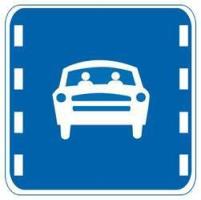
A. special lane for small vehicles
B. special lane for motorized vehicles
C. special lane for taxis
D. special lane for multi-passenger vehicles
Answer: D
15. How to choose parking spot when needing to stop by the roadside?
A. stop in the opposite direction by the left roadside
B. stop in the parking area
C. stop anywhere as will by the roadside
D. stop in the sidewalk
Answer: B
16. When encountering an overflowing bridge, the driver should look at the situation, and passes through slowly before he makes sure that it is safe to do so.
A. Right
B. Wrong
Answer: A
17. What is the meaning of this sign?
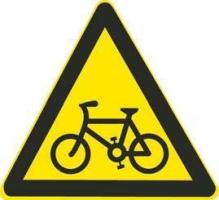
A. the lane for non-motorized vehicles
B. yield non-motorized vehicles
C. no passing for non-motorized vehicles
D. watch for non-motorized vehicles
Answer: D
18. When use the brake of a motorcycle, use the front-wheel brake first, then use the back-wheel brake.
A. Right
B. Wrong
Answer: B
19. A motorcycle driver should wear long-sleeve and long-trouser-leg clothes with brilliant color so that he can be easy found by other transports participants when he is riding.
A. Right
B. Wrong
Answer: A
20. A motorized vehicle runs on the road without a label of inspection, the traffic police can detain the vehicle.
A. Right
B. Wrong
Answer: A