

1. What is the meaning of this sign?
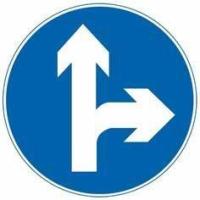
A. Going straight and left turn
B. Going straight and right turn
C. No going straight and no right turn
D. Left turn and right turn only
Answer: B
2. Drivers who ride motorcycles are able to not wear safety helmets.
A. Right
B. Wrong
Answer: B
3. When a motor vehicle temporarily stops at night, which lamp should be turned on?
A. Front and rear fog lamp, clearance lamp and rear position lamp
B. Head lamp, clearance lamp and rear position lamp
C. Hazard lamp, clearance lamp and rear position lamp
D. Reverse lamp, clearance lamp and rear position lamp
Answer: C
4. At the scene of a traffic accident, once there is a leakage of toxic and harmful substances, people must be evacuated at the first time and alarmed immediately.
A. Right
B. Wrong
Answer: A
5. When the engine suddenly stalls on the road, what should the driver do?
A. Stop the vehicle and overhaul it immediately
B. Immediately turn on the hazard lamps
C. Move the vehicle to a place where it will not obstruct the traffic flow
D. Set up a breakdown warning sign
Answer: BCD
6. What are the hazards of drivers using cellphones or texting while driving?
A. Influencing driving operation
B. Influencing the rest of passengers
C. Failure to respond to emergencies
D. Distracted driving
Answer: ACD
7. When rescuing a wounded person suffering spinal fracture, it is necessary to ___________.
A. Take warm-keeping measure
B. Use soft stretcher to carry
C. Use sling to keep in position
D. Help the wounded person to move
Answer: C
8. When encountering a school bus which stops at the right roadside and students are embarking or disembarking, what should motor vehicle drivers do?
A. If there is only one motor vehicle lane in each direction, motor vehicle drivers behind the bus should stop and wait.
B. If there are two motor vehicle lanes in each direction, motor vehicle drivers in the left lane behind the bus may overtake the bus at a lower speed
C. If there are three motor vehicle lanes in each direction, motor vehicle drivers in the middle lane behind the bus should stop and wait
D. If there are three motor vehicle lanes in each direction, motor vehicle drivers in the left lane behind the bus may pass at a lower speed
Answer: ACD
9. The wrong measure to ride a motorcycle in summer is to __________.
A. Drive at a high speed for a long time
B. Control the speed by the accelerator
C. Avoid using the brake
D. Avoid loading people or cargoes
Answer: A
10. Under such circumstance at an intersection. motor vehicle drivers should be prepared to stop and yieldat any time.
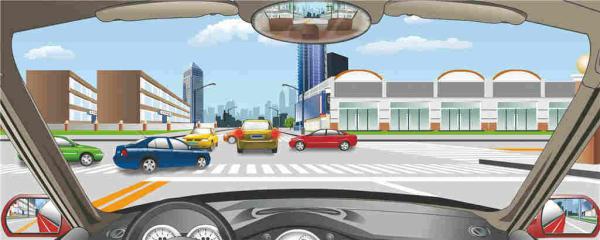
A. Right
B. Wrong
Answer: A
11. What is the meaning of this sign?
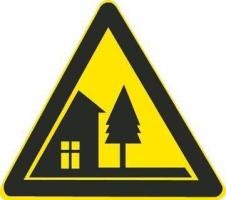
A. Watch for pedestrians
B. Crosswalk
C. Village or town
D. Primary school
Answer: C
12. The drivers, loaders and supercargoes responsible for dangerous chemicals transportation should all full understand the chemical characteristics, potential risks, features of the packaging containers and emergency measures for any unexpected accidents.
A. Right
B. Wrong
Answer: A
13. Under such circumstances, what should motor vehicle drivers do?
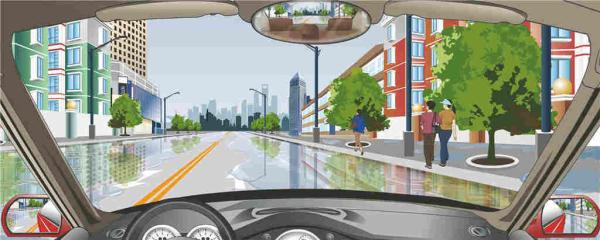
A. Pass slowly at a lower speed
B. Speed up and pass
C. Continuously sound the horn and pass
D. Pass at a normal speed
Answer: A
14. When rescuing a person sustaining full-body burns the rescue personnel may spray cool water to his body to put out the fire.
A. Right
B. Wrong
Answer: B
15. What is the meaning of this sign?
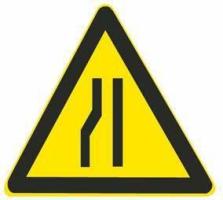
A. Road narrows on both sides
B. Road narrows on the right side
C. Road narrows on the left side
D. Bridge narrows
Answer: C
16. What is the meaning of this sign?
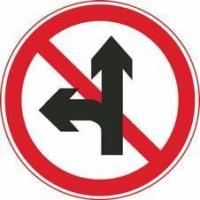
A. No going straight and no changing to left lane
B. No going straight and no left turn
C. Allowed to go straight and turn left
D. No going straight and no right turn
Answer: B
17. When a motorcycle goes downhill, it may fully use the neutral gear and slide.
A. Right
B. Wrong
Answer: B
18. vehicles to pass an intersection marked with this sign?
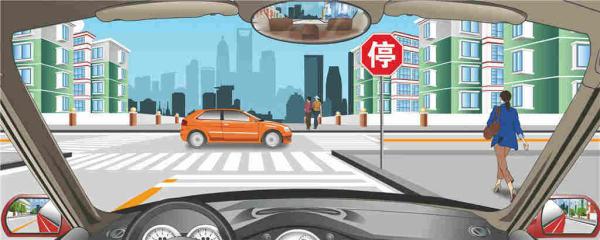
A. Stopping and observing the traffic situation around the intersection
B. Approaching the intersection by speeding up
C. Approaching the intersection at a reduced speed
D. Observing the traffic situation on the left rear side
Answer: A
19. What is the meaning of this sign?
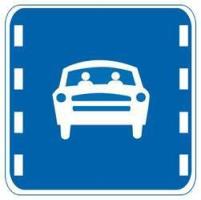
A. Special lane for small vehicles
B. Special lane for motorized vehicles
C. Special lane for taxis
D. Special lane for multi-passenger vehicles
Answer: D
20. When driving into the traffic flow on a main road from a relief road, drivers should speed up.
A. Right
B. Wrong
Answer: B