

1. Which will affect the stopping distance?
A. Pavement conditions
B. Driver?ˉs reaction time
C. The quantity of cargo and the structure of brake, etc.
D. The vehicle speed
Answer: ABCD
2. When overtaking a motor vehicles on uphill sections of a mountain road, the driver should _____.
A. Honk in advance
B. Forward cars are allowed to overtake before overtaking.
C. Turn on the left-turn signal in advance
D. Speed up direct and overtake
Answer: ABC
3. When a motor vehicle moves through water, the driver should try to maintain a constant speed and sufficient power and pass through without stopping.
A. Right
B. Wrong
Answer: A
4. While driving a motorcycle, nothing is permitted to hang on the handlebars.
A. Right
B. Wrong
Answer: A
5. What should the driver do when the motor vehicle counters this situation?

A. Sound the horn continuously to warn
B. Speed up and bypass from the front
C. Slow down when encountering any risks
D. Slow down voluntarily and yield
Answer: D
6. Speed up and pass when encountering this traffic light at the intersection
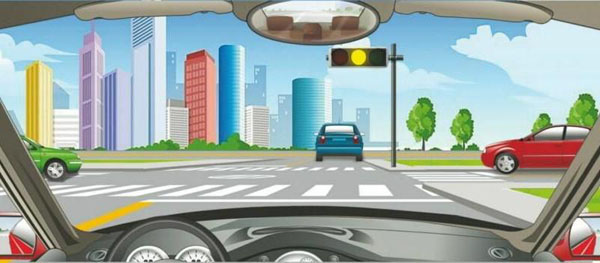
A. Right
B. Wrong
Answer: B
7. When carrying the wounded persons in coma or in danger of suffocation, they should lie face up.
A. Right
B. Wrong
Answer: B
8. What is the meaning of this sign?
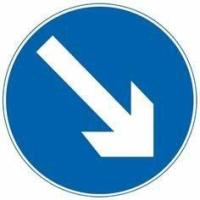
A. Downhill section on right side
B. Driving by the right side of the road
C. Stopping by the right side of the road
D. Right turn only
Answer: B
9. vehicles to pass an intersection marked with this sign?
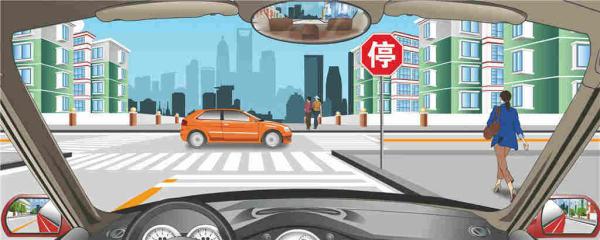
A. Stopping and observing the traffic situation around the intersection
B. Approaching the intersection by speeding up
C. Approaching the intersection at a reduced speed
D. Observing the traffic situation on the left rear side
Answer: A
10. When encountering this situation at the gate of a school, the driver should prepare to stop.
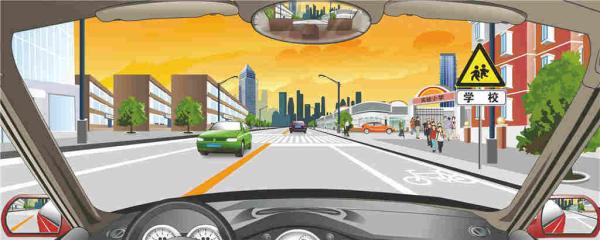
A. Right
B. Wrong
Answer: A
11. Before driving, it is necessary to check whether the cooling liquid, engine oil and fuel oil, are leaking.
A. Right
B. Wrong
Answer: A
12. When a motorcycle goes downhill on a mountain road, it is not allowed to overtake.
A. Right
B. Wrong
Answer: A
13. What is the meaning of this sign?
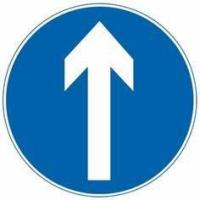
A. Straight-going lane
B. Going straight only
C. One-way road
D. No going straight
Answer: B
14. What are the main reason for not applying emergency braking when driving on rainy days?
A. Increase fuel consumption
B. Reduce fuel consumption
C. The tires can easily spin
D. Easy to cause rear-end collision
Answer: CD
15. Serious wave will appear when the front tire blows out; the driver should release the accelerator, firmly hold the steering wheel with both hands, quickly gradually break down, and stop to yield.
A. Right
B. Wrong
Answer: A
16. Rescue personnel should check the breath of the unconscious person before applying any other emergency treatment.
A. Right
B. Wrong
Answer: A
17. When driving on a snowy day, drivers should follow the tracks on the road before them.
A. Right
B. Wrong
Answer: A
18. When a tire blowout on the road, the driver should swiftly depress the brake pedal to reduce speed, do all his can to control the steering wheel and stop the vehicle as soon as possible.
A. Right
B. Wrong
Answer: B
19. When the driver discovers a tire is leaking and steers the vehicle off the main driving lane, he/she should refrain from applying emergency braking so as to avoid a vehicle turnover or a rear-end collision arising from the late braking of the vehicle behind.
A. Right
B. Wrong
Answer: A
20. When approaching another vehicle at night, why should the driver alternate between high-and-low-beam at a distance more than 150 meters?
A. Warn each other before passing
B. Driving habit
C. Easy to observe the situation ahead from either side
D. Courtesy
Answer: C