

1. You should speed up through the section with this kind of traffic marking.
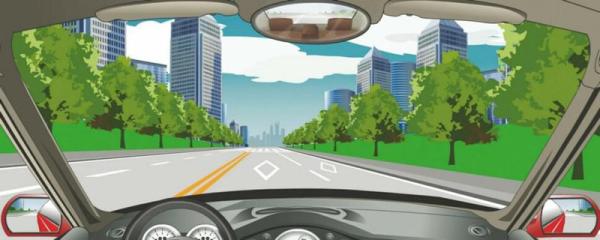
A. Right
B. Wrong
Answer: B
2. How to drive in sand, hail, rain, fog, ice and other weather conditions?
A. run as normal
B. maintain the speed
C. speed up properly
D. reduce the speed
Answer: D
3. The main impact of muddy roads on safe driving is _________.
A. The resistance to the vehicle becomes weaker
B. The tires can easily spin and skid
C. The visibility become lower and blurs the field of vision
D. The road grip becomes stronger
Answer: B
4. Whats the meaning of this sign?
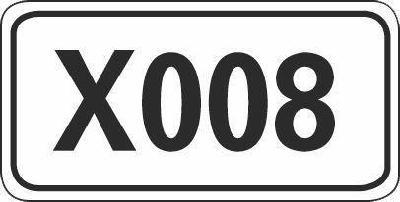
A. provincial highway No.
B. national highway No.
C. county road No.
D. township road No.
Answer: C
5. Stop and yield to the pedestrians under this situation.
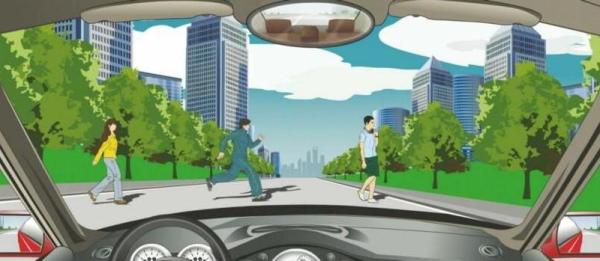
A. Right
B. Wrong
Answer: A
6. It lights to indicate that luggage compartment is open.

A. Right
B. Wrong
Answer: B
7. Traffic Police can detain the vehicle according to law if it uses other vehicles license plate and vehicle license.
A. Right
B. Wrong
Answer: A
8. Pass the crossing as fast as possible if there is a red light at the intersection of a road or a level crossing.
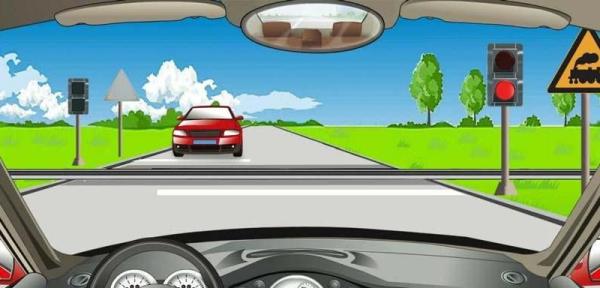
A. Right
B. Wrong
Answer: B
9. From which side to overtake?

A. both sides
B. right side
C. left side
D. the side with no obstacle
Answer: C
10. Whats the meaning of the yellow broken and solid lines in the middle of the road?
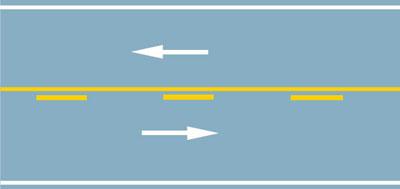
A. no crossing the lines on the side of the broken line
B. no crossing the lines on the side of the solid line
C. allowed to cross the lines on the side of the solid line
D. allowed to cross the lines on both sides
Answer: B
11. When crossing each other at night, how far should change the high beam lights to low beam lights?
A. not need to change lights
B. beyond 150m
C. within 100m
D. within 50m
Answer: B
12. This sign warns the driver there have traffic lights ahead.

A. Right
B. Wrong
Answer: A
13. Whats the meaning of this sign?
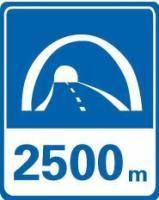
A. the distance from the tunnel exit
B. the distance from the tunnel entry
C. the distance of following the vehicle in front in the tunnel
D. the whole length of the tunnel
Answer: A
14. What does this symbol indicate?

A. luggage compartment is opened
B. engine compartment is opened
C. cover of fuel tank is opened
D. door of one side is opened
Answer: B
15. When the motor vehicle installed ABS system applys emergency braking, the driver can depress the brake pedal heavily.
A. Right
B. Wrong
Answer: A
16. The validity of the driving license which is initially applied for is 4 years.
A. Right
B. Wrong
Answer: B
17. The validity of the driving license which is initially applied for is ______
A. 3 years
B. 5 years
C. 6 years
D. 12 years
Answer: C
18. How to pass the intersection when running straight
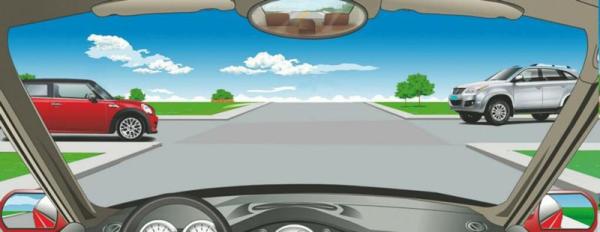
A. turn on the hazard lights and pass
B. directly speed up and pass straight
C. yield to the vehicle from the right road
D. yield to the vehicle from the left road
Answer: C
19. What mark is the inclined yellow and black lines?
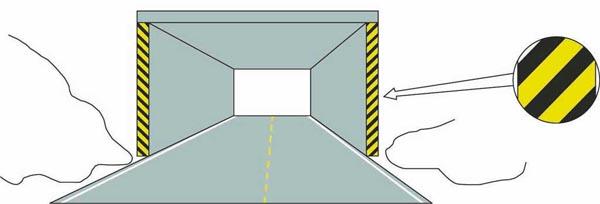
A. entity mark
B. protrusions mark
C. three-dimensional mark
D. deceleration mark
Answer: C
20. At night, the drivers observation is markedly poorer than in the daytime and the range of visibility range is _______.
A. Unchanged
B. Irregular
C. Longer
D. Shorter
Answer: D