

1. If a motorized vehicle driver drives on the road after getting drunk is subject to a prison term of more than 3 years.
A. Right
B. Wrong
Answer: B
2. Causing a traffic accident due to violating the law and regulations on road traffic safety is the rule-breaking act.
A. Right
B. Wrong
Answer: B
3. It is unsafe to ride a motorcycle by high-heel shoes.
A. Right
B. Wrong
Answer: A
4. Motor vehicle drivers don’t need to use any lamp at night when passing through a road section where the street light condition is good.
A. Right
B. Wrong
Answer: B
5. The motorized vehicle driver is not allowed to drive a motorized vehicle when his driving license is detained.
A. Right
B. Wrong
Answer: A
6. A light motorcycle is only permitted to carry preschoolers.
A. Right
B. Wrong
Answer: B
7. What will be subject to if submitting false materials to apply for driving license?
A. a 20~200 yuan fine
B. disqualification for applying for
C. cannot re-apply for within 1 year
D. cannot re-apply for within 2 years
Answer: C
8. It is not a bad habit for a driver to frequently change lanes.
A. Right
B. Wrong
Answer: B
9. When passing a sharp curve, motor vehicle drivers may overtake if there are few other vehicles on the road.
A. Right
B. Wrong
Answer: B
10. When a motor vehicle moves through water, the driver should try to maintain a constant speed and sufficient power and pass through without stopping.
A. Right
B. Wrong
Answer: A
11. Traffic Police can detain the vehicle according to law if it is suspected of using the label of inspection from other vehicle.
A. Right
B. Wrong
Answer: A
12. What is the meaning of this sign?
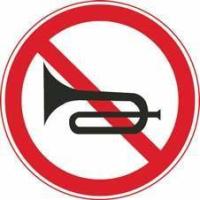
A. no long time honking
B. honk discontinuously
C. reduce speed and honk
D. no honking
Answer: D
13. A motorized vehicle is not allowed to stop in the section 50 meters to the narrow road less than 4 meters width.
A. Right
B. Wrong
Answer: A
14. A motorized vehicle driver who uses falsified or altered driving license is subject to a 12-point penalty.
A. Right
B. Wrong
Answer: A
15. What should be done by the driver who intends to overtake but the motor vehicle in front neither reduces its speed nor allows the right of way?
A. Continuously sounding the horn and accelerating to overtake
B. Accelerating and continuing to overtake
C. Refraining from overtaking
D. Following the vehicle in front closely and finding a chance to overtake
Answer: C
16. After setting off from the roadside, motor vehicle drivers should speed up as soon as possible and make a sharp left-turn in order to drive into the normal lane.
A. Right
B. Wrong
Answer: B
17. When driving on a foggy day, the driver should turn on the fog lamp.
A. Right
B. Wrong
Answer: A
18. What is the meaning of this sign?

A. turn right
B. one-way road
C. going straight only
D. straight-going lane
Answer: A
19. When causing a road accident involving property damage, the party should leave the scene on his own but he does not leave and causes a traffic jam, he may be subject to a fine of 200 yuan.
A. Right
B. Wrong
Answer: A
20. When using emergency brake, be aware of keeping the body of the motorcycle being perpendicular to the ground to avoid sideslip.
A. Right
B. Wrong
Answer: A