

1. If a motorized vehicle driver drives on the road after getting drunk is subject to a prison term of more than 3 years.
A. Right
B. Wrong
Answer: B
2. If a driver has not received full penalty points, and the fine has not been paid, the penalty points will be transferred into the next scoring cycle.
A. Right
B. Wrong
Answer: A
3. In which section when a vehicle runs is prohibited from overtaking.
A. elevated road
B. intersection
C. central streets
D. ring express
Answer: B
4. Which lamp should be used when motor vehicles pass hrough an intersection at night where there is no traffic light signal?
A. High-beam
B. Low-beam
C. Hazard lamps
D. High-beam and low-beam should be used alternatively
Answer: D
5. When running on the road having maximum speed limit signs, the motorized vehicle is not allowed to exceed the marked maximum speed.
A. Right
B. Wrong
Answer: A
6. When driving in icy and snowy weather, because of the reduction of the stability, it is easy for the wheels to race or slip when rapidly speeding up.
A. Right
B. Wrong
Answer: A
7. A motorized vehicle runs on the road without a label of inspection, the traffic police can detain the vehicle.
A. Right
B. Wrong
Answer: A
8. Driving license will be detained if you allow to drive your car.
A. driver during the period of probation
B. driver who has obtained a driving license
C. one whose driving license been revoked
D. one whose penalty points reach 6 points
Answer: C
9. What is the meaning of this sign?
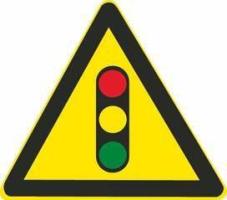
A. crosswalk lights
B. watch for pedestrians
C. attention to traffic lights
D. intersection
Answer: C
10. When a motorized vehicle breaks down at night, and is difficult to move, the driver should turn on the hazard lights, the contour lights and the tail lights.
A. Right
B. Wrong
Answer: A
11. What is the meaning of this sign?
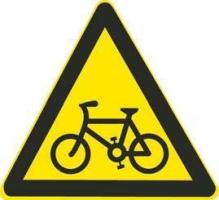
A. the lane for non-motorized vehicles
B. yield non-motorized vehicles
C. no passing for non-motorized vehicles
D. watch for non-motorized vehicles
Answer: D
12. What kind of harmful effect will be brought about by continuously using the foot brake on a long downhill road?
A. Shorten the engine’s service life
B. Make the driver feel tired
C. Easily cause the vehicle to overturn
D. Reduce the braking efficiency
Answer: D
13. When driving a motorized vehicle uphill, you should speed up and honk when you going to reach the top of the slope.
A. Right
B. Wrong
Answer: B
14. If the driver’s accumulated penalty points reach the stipulated limit, he will be _______ by the traffic control department of the public security organ.
A. detained for less than 15 days
B. banned for lifetime from driving
C. educated on the law and regulations and take the exam again
D. held for criminal liabilities according to law
Answer: C
15. Which shoud be taken along while driving?
A. vocational qualification certificate
B. ID card
C. driving license
D. work permits
Answer: C
16. A motorized vehicle driver who drives the vehicle which permission is different is subject to a ________.
A. 2-point penalty
B. 3-point penalty
C. 6-point penalty
D. 12-point penalty
Answer: D
17. You can drive a motorized vehicle a short distance after drinking as long as it does not interfere the driving operation.
A. Right
B. Wrong
Answer: B
18. What is the meaning of this sign?
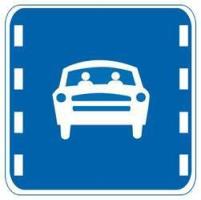
A. special lane for small vehicles
B. special lane for motorized vehicles
C. special lane for taxis
D. special lane for multi-passenger vehicles
Answer: D
19. What is the meaning of this sign?
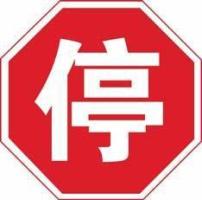
A. stop to yield
B. no stopping temporarily
C. no entry
D. no long stopping
Answer: A
20. Overtaking is allowed when passing a level crossing in city where no train passes.
A. Right
B. Wrong
Answer: B