

1. Whats the meaning of this sign?

A. crosswalk lights
B. watch for pedestrians
C. attention to traffic lights
D. intersection
Answer: C
2. Driving this kind of vehicle on road is ____
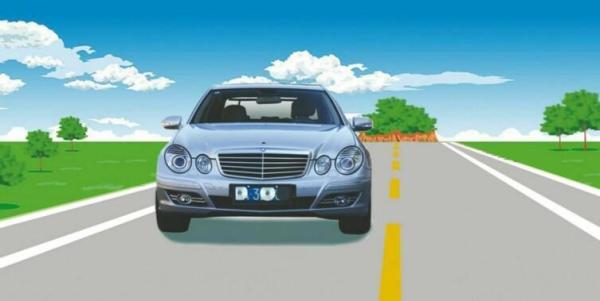
A. rule-breaking act
B. violation of regulations
C. violation of law
D. criminal act
Answer: C
3. Whats the meaning of this sign?
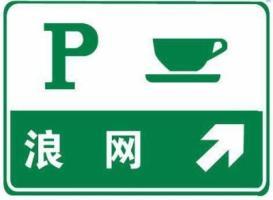
A. expressway parking area ahead
B. expressway shelter ahead
C. expressway car park ahead
D. expressway service area ahead
Answer: A
4. Whats the meaning of this sign?
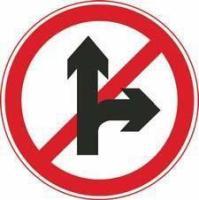
A. no going straight and no changing to left lane
B. no going straight and no left turn
C. allowed to go straight and change to left lane
D. no going straight and no right turn
Answer: D
5. Whats the meaning of this sign?
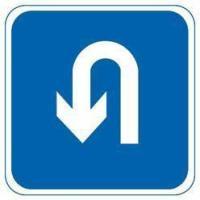
A. U turn
B. reversing
C. left turn
D. bypassing
Answer: A
6. Whats the meaning of this sign?
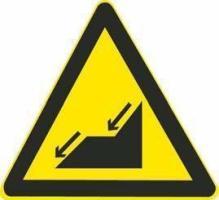
A. continuous down slopes
B. steep downhill road
C. steep uphill road
D. continuous up slopes
Answer: A
7. What marking are the white broken lines in the circles?
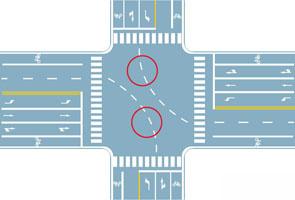
A. small vehicles turning lines
B. lane connection lines
C. non-motorized vehicles guide lines
D. intersection guide line
Answer: D
8. As the traffic flow at an interchange is generally one-way, the vehicles do not have to reduce speed when passing.
A. Right
B. Wrong
Answer: B
9. The validity of the driving license which is initially applied for is ______
A. 3 years
B. 5 years
C. 6 years
D. 12 years
Answer: C
10. One who runs away after causing a traffic accident and constitute a crime can not apply for motorized vehicle driving license.
A. Right
B. Wrong
Answer: A
11. This sign reminds the lane or the road narrows on the right side ahead.
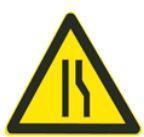
A. Right
B. Wrong
Answer: A
12. Whats the meaning of this sign?
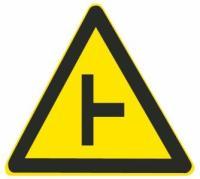
A. Y-shaped intersection
B. T-shaped intersection
C. intersection
D. ring intersection
Answer: B
13. A person who has not obtained driving license drives a motorized vehicle, he will be held for legal liability.
A. Right
B. Wrong
Answer: A
14. This sign indicates jammed section ahead and passing slowly.
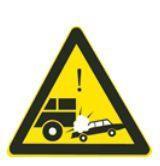
A. Right
B. Wrong
Answer: B
15. One can drive the low-speed truck if the authorized vehicle applied for is small motor vehicle with automatic transmission.
A. Right
B. Wrong
Answer: B
16. If a motorized vehicle driver has caused a major traffic accident in violation of the traffic regulations which has caused human death due to his escaping, the driver is subject to a prison term of 3 years ~ 7 years.
A. Right
B. Wrong
Answer: B
17. If a vehicle has the right of way at an intersection but encounters a vehicle cutting in, the driver should _________.
A. Rush to pass
B. Speed up in advance and pass
C. Reduce speed and evade, or stop to yield when necessary
D. Go forward at the normal speed according to the right of way and refuses to evade
Answer: C
18. How to do in this situation?

A. stop and yield to the pedestrians
B. bypass from the front of the pedestrians
C. honk to remind the pedestrians
D. bypass from the rear of the pedestrians
Answer: A
19. Whats the meaning of the white rectangle marking?
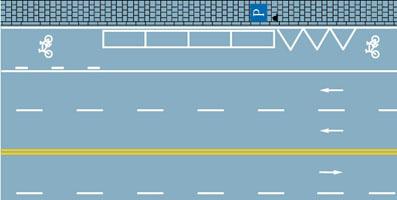
A. special space for taxicabs to take and drop passengers
B. horizontal parking space
C. inclined parking space
D. vertical parking space
Answer: B
20. Stopping temporarily on the road should not obstruct the passing of other vehicles and pedestrians.
A. Right
B. Wrong
Answer: A