

1. What is the max speed on a road covered by ice and snow
A. 50km/hr
B. 40km/hr
C. 30km/hr
D. 20km/hr
Answer: C
2. In this case, by the right side of the bus lane to overtake.
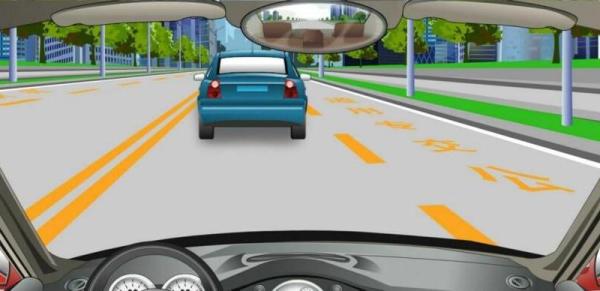
A. Right
B. Wrong
Answer: B
3. Whats the meaning of this sign?
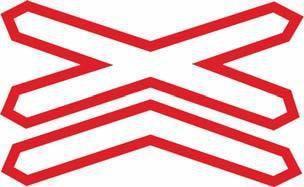
A. a manned level crossing
B. an unmanned level crossing
C. multi-crossing of railway and road
D. yielding the train with care
Answer: C
4. When ignition switch is in the START position, the starter starts.
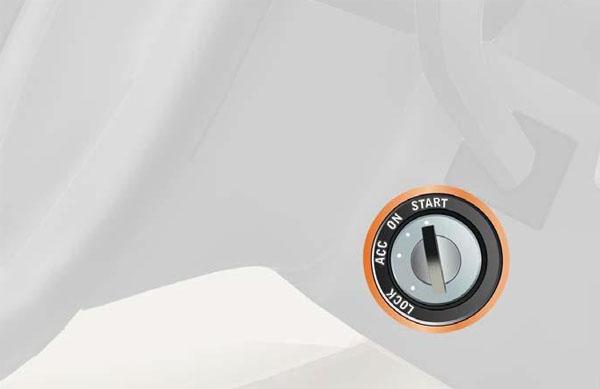
A. Right
B. Wrong
Answer: A
5. Whats the meaning of this sign?
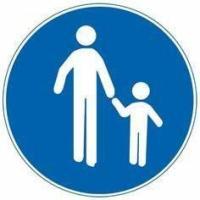
A. pass with low speed
B. watch for pedestrians
C. on foot
D. pedestrians go first
Answer: C
6. When discovering the persons injured in a traffic accident need rescue while driving, the driver should _________.
A. Send the injured persons to hospital in a timely manner or make emergency calls
B. Dodge as much as possible
C. Go ahead by bypassing the scene
D. Find an excuse to dodge the scene
Answer: A
7. After the green light at an intersection is on, the vehicles may not yield if non-motorized vehicles cut in.
A. Right
B. Wrong
Answer: B
8. If a motorized vehicle driver causes a traffic accident and runs away but his conduct does not constitute a crime, he is subject to a 12-point penalty.
A. Right
B. Wrong
Answer: A
9. How to turn left at this intersection?
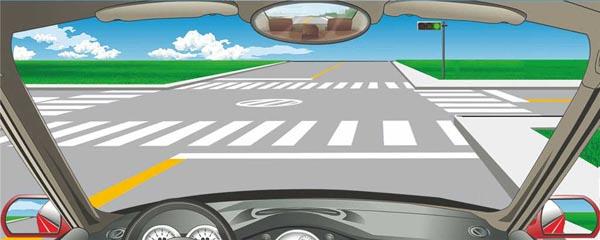
A. along the right side of the center point in the intersection
B. along the left side of the center point in the intersection
C. cover the center point in the intersection
D. can not turn left
Answer: B
10. What causes the rear-end collision?
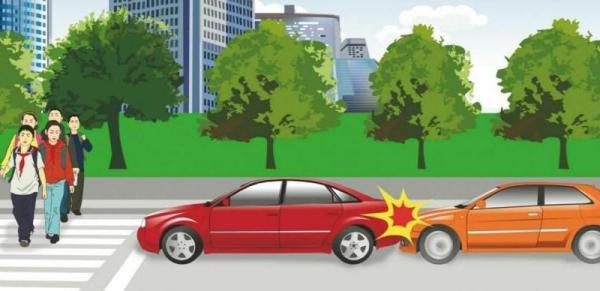
A. not observe through the rear-view mirror while the vehicle in front brakes
B. the vehicle in front brakes suddenly
C. distance from the vehicle in front is too close when the rear vehicle overtakes
D. not maintain a safe distance from the vehicle in front
Answer: D
11. How to turn right in this intersection?
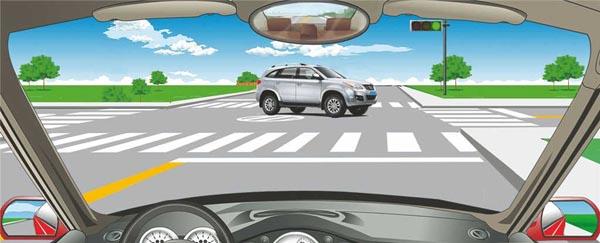
A. turn right directly
B. turn right at the front of the opposite car in advance
C. honk to urge
D. let the opposite car turn left first
Answer: D
12. When crossing each other on a narrow road, the driver should slow down, yield and stop first.
A. Right
B. Wrong
Answer: A
13. Whats the meaning of this sign?
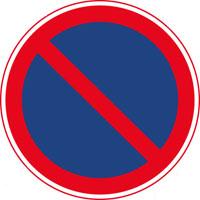
A. no stopping temporarily
B. no long stopping
C. no stopping
D. long stopping is allowed
Answer: B
14. What is this instrument?
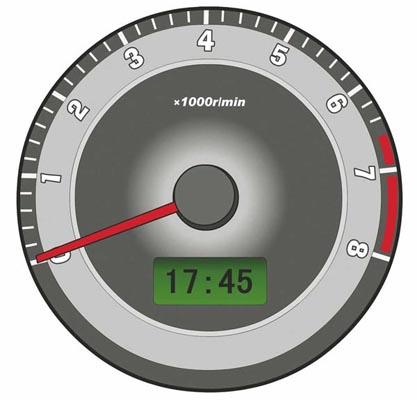
A. engine tachometer
B. driving speed meter
C. interval mileage meter
D. fuel consumption / 100 km
Answer: A
15. When the vehicles cross each other at night, the driver may continuous change lights to remind the vehicle coming in the opposite direction and at the same should reduce speed and go forward or stop on the right side.
A. Right
B. Wrong
Answer: A
16. If a vehicle enters a left lane for overtaking but is unable to ensure a safe horizontal distance with the normally-running vehicle in front, the driver should ________.
A. Speed up and overtake
B. Overtake after running a distance in parallel
C. Give up overtaking
D. Overtake with care
Answer: C
17. It is not safe for a woman driver to wear high heels to drive a vehicle.
A. Right
B. Wrong
Answer: A
18. Whats the meaning of this sign?
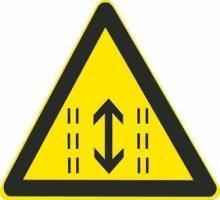
A. watch for two-way road
B. driving by either side of the road
C. watch for variable lane
D. variable lane
Answer: C
19. The vehicle is allowed to _______ at this intersection.
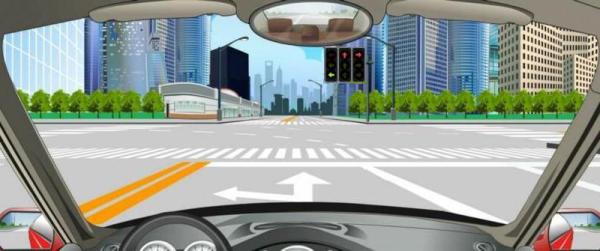
A. go straight or turn right
B. turn right
C. turn left
D. go straight
Answer: C
20. You have the priviledged passing right of way at the intersection in this situation.
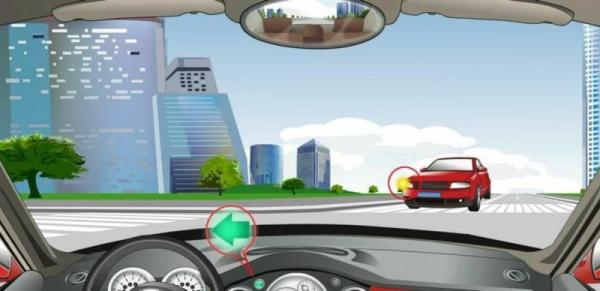
A. Right
B. Wrong
Answer: A