

1. When a vehicle passes a level crossing, the driver should use the low gear to pass and should not change gear halfway in order to avoid engine kill.
A. Right
B. Wrong
Answer: A
2. May turn right when encountering this traffic light at the intersection.
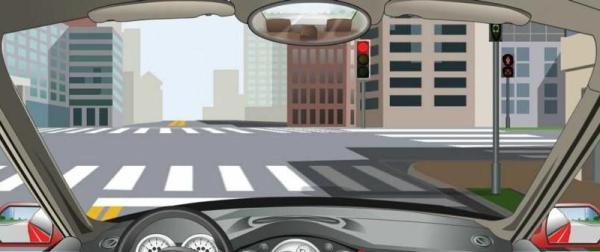
A. Right
B. Wrong
Answer: A
3. Whats the meaning of this sign?
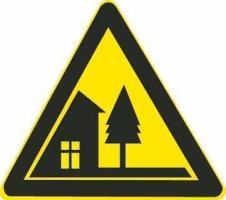
A. watch for pedestrians
B. crosswalk
C. village or town
D. primary school
Answer: C
4. What causes the rear-end collision?
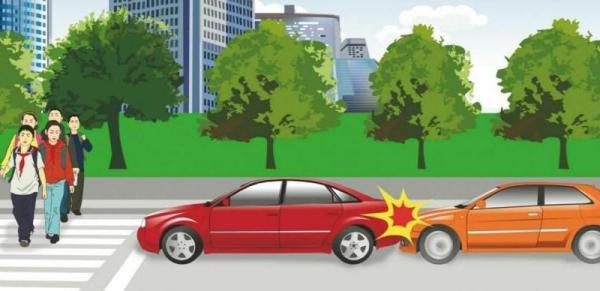
A. not observe through the rear-view mirror while the vehicle in front brakes
B. the vehicle in front brakes suddenly
C. distance from the vehicle in front is too close when the rear vehicle overtakes
D. not maintain a safe distance from the vehicle in front
Answer: D
5. A motorized vehicle can make a U turn on this road as long as it does not interfere other vehicles.
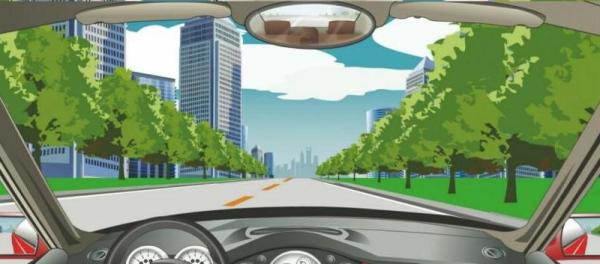
A. Right
B. Wrong
Answer: A
6. Whats the meaning of the white rectangle marking?
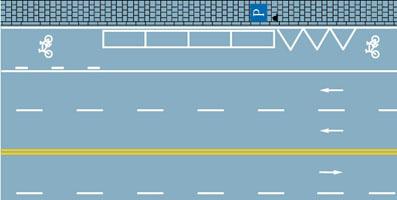
A. special space for taxicabs to take and drop passengers
B. horizontal parking space
C. inclined parking space
D. vertical parking space
Answer: B
7. When causing a road accident involving property damage, the party should leave the scene on his own but he does not leave and causes a traffic jam, he may be subject to a fine of 200 yuan.
A. Right
B. Wrong
Answer: A
8. Whats the role of indicative sign?
A. tell the direction information
B. warn danger ahead
C. restrict the vehicles and pedestrians from passing
D. indicate the vehicles and pedestrians to go ahead
Answer: D
9. It lights to indicate that ______

A. the side fans work
B. air external circulation
C. the front fan works
D. air internal circulation
Answer: C
10. What marking is the white polylines in the circle?
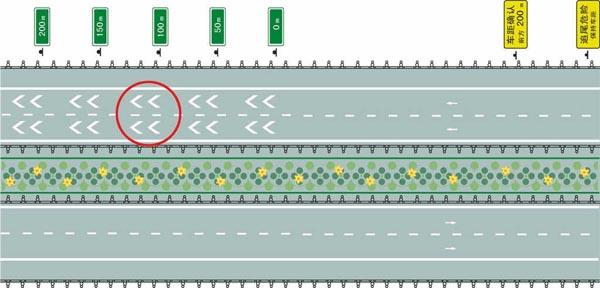
A. ascertaining the distance between the vehicles
B. driving at reduced speed
C. ascertaining the speed of the vehicles
D. reducing the speed at the intersection
Answer: A
11. What is the max speed when passing this curve?
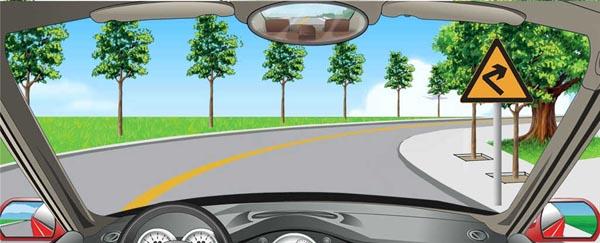
A. 40km/hr
B. 30km/hr
C. 50km/hr
D. 70km/hr
Answer: B
12. When a motorized vehicle breaks down at night, and is difficult to move, the driver should turn on the hazard lights, the contour lights and the tail lights.
A. Right
B. Wrong
Answer: A
13. A motorized vehicle driver who reverses, drives in the opposite direction or make a U turn by crossing the central dividing strip on the expressway is subject to a 6-point penalty.
A. Right
B. Wrong
Answer: B
14. Whats the meaning of this sign?
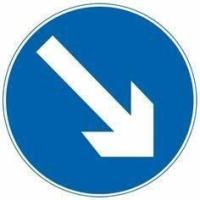
A. downhill section on right side
B. driving by the right side of the road
C. stopping by the right side of the road
D. right turn only
Answer: B
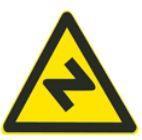
15. This sign warns slippery road ahead and running slowly with care.
A. Right
B. Wrong
Answer: B
16. Whats the meaning of the marking in the red circle?
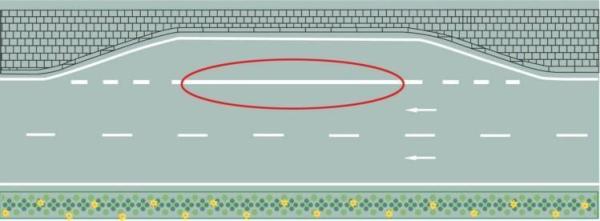
A. temporary stopping
B. bay-stopping
C. emergency stopping
D. public bus station
Answer: B
17. If the applicant commits bribery or cheating in the course of a test, his eligibility for this test will be cancelled and the results of other tests he has passed will be invalid.
A. Right
B. Wrong
Answer: A
18. Whats the meaning of this sign?
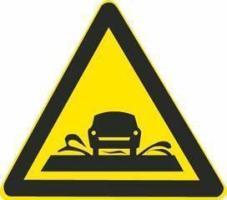
A. muddy road
B. low-lying road
C. overflowing road
D. ferry
Answer: C
19. Whats the meaning of the yellow slash filled area in the middle of the road?
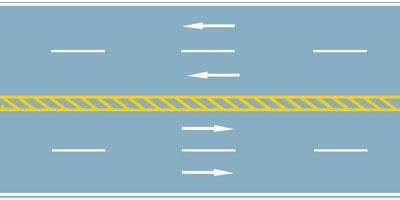
A. one-way lanes dividing line
B. opposite direction lanes dividing line that can not be crossed
C. bilateral same direction lanes dividing line that can be crossed
D. opposite direction lanes dividing line that can be crossed
Answer: B
20. What kind of violation does this broken down vehicle have?
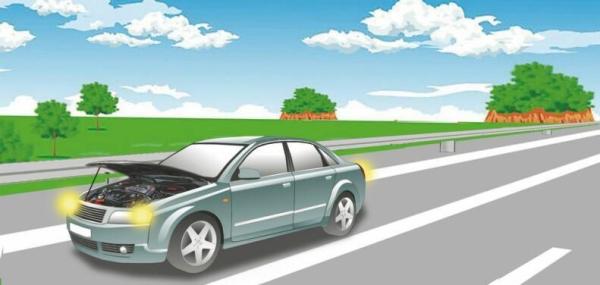
A. not turn on the hazard lights
B. not stop the car by the roadside
C. not solve the problem at once
D. not place the warning sign
Answer: D