

1. When a motorcycle turns at an excessively high speed, it can easily dash out of a curve or skid sideways.
A. Right
B. Wrong
Answer: A
2. Under such circumstances, what should be done by motor vehicle drivers in order to yield to the pedestrians politely?
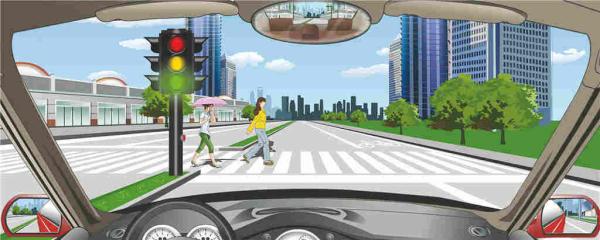
A. Set off after pedestrians pass
B. Set off and bypass in front of the pedestrians
C. Sound the horn to warn the pedestrians to yield
D. Set off and approach the pedestrians slowly
Answer: A
3. When encountering a vehicle in front ascending on a mountainous road covered with ice and snow, what should the motor vehicle driver do?
A. Ascend after the vehicle in front passes the slope
B. Overtake the vehicle in front swiftly and drive on
C. Overtake the vehicle in front with a slow speed and drive on
D. Follow the vehicle in front closely
Answer: A
4. What is the meaning of this sign?
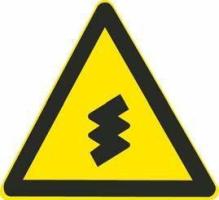
A. Slippery section
B. Sharp curve
C. Inverse curve
D. Continuous curves
Answer: D
5. When rescuing a wounded person suffering spinal fracture, it is necessary to ___________.
A. Take warm-keeping measure
B. Use soft stretcher to carry
C. Use sling to keep in position
D. Help the wounded person to move
Answer: C
6. What is the meaning of this sign?
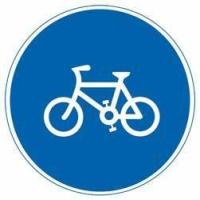
A. Electric bicycles may go
B. Parking space for non-motorized vehicles
C. Parking area for non-motorized vehicles
D. Non-motorized vehicles may go
Answer: D
7. What is the meaning of this sign?
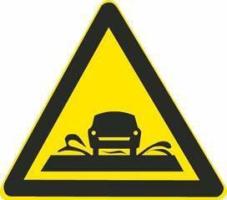
A. Muddy road
B. Low-lying road
C. Overflowing road
D. Ferry
Answer: C
8. Driving and smoking has no negative effect on safe driving
A. Right
B. Wrong
Answer: B
9. What is the main impact of foggy weather on safe driving?
A. Easy to slide sideways
B. Low visibility
C. Increase the resistance
D. Widen the field of vision
Answer: B
10. What should the driver pay attention to when the motor vehicle passes a school?
A. Observe the traffic signs and markings
B. Slow down and pass slowly
C. Prohibited from sounding the horn
D. Pass rapidly
Answer: ABC
11. What is the meaning of this sign?
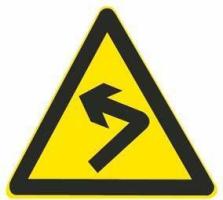
A. Bypass from left side
B. Continuous curves
C. Sharp left curve
D. Sharp right curve
Answer: C
12. When encountering non-motorized vehicles cutting in on the road, the driver should________.
A. Honk to warn
B. Speed up and bypass from the front
C. Voluntarily reduce speed and yield
D. Suddenly speed up when approaching
Answer: C
13. When encountering such pedestrians, what should motor vehicle drivers do?
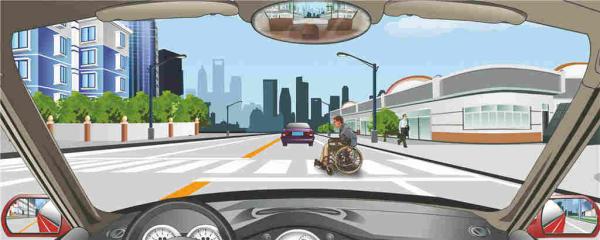
A. Bypass in front of the pedestrians
B. Bypass from behind the pedestrians
C. Sound the horn to alert the pedestrians
D. Voluntarily stop and yield
Answer: D
14. When a tire blowout on the road, the driver should swiftly depress the brake pedal to reduce speed, do all his can to control the steering wheel and stop the vehicle as soon as possible.
A. Right
B. Wrong
Answer: B
15. What is the meaning of this sign?
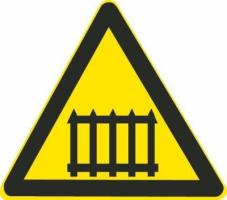
A. A manned level crossing
B. Multi-crossing of railway and road
C. Grade separation level crossing
D. An unmanned level crossing
Answer: A
16. When a motor vehicle passes over an overflowing bridge, what should the driver do after stopping and observing closely?
A. Change to a high gear and pass rapidly
B. Constantly observe the changes of the flow
C. Prepare to stop at any time
D. Change to a low gear and pass through at a constant speed
Answer: D
17. When rescuing a wounded person in an emergency, it is necessary to firstly stop the bleeding by compression before other methods are taken according to the conditions of bleeding.
A. Right
B. Wrong
Answer: A
18. Which of the following measures is incorrect when a motor vehicle stops?
A. Stop at a stipulated place
B. Avoid stopping on pedestrian streets
C. Avoid obstructing the passing of other motor vehicles and pedestrians when temporarily stops on the road
D. Stop on the non-motor vehicle lane
Answer: D
19. How to do in this intersection?
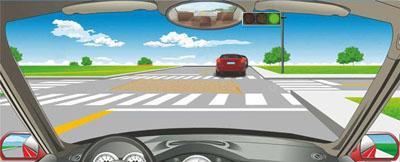
A. Wait in the cross-hatched marking area
B. stop and wait outside the intersection
C. Follow the vehicle in front and pass
D. Wait inside the intersection
Answer: B
20. It is unsafe to ride a motorcycle by high-heel shoes.
A. Right
B. Wrong
Answer: A