

1. Before a vehicle enters a curve of a mountain road, the driver ______ if there is no vehicle coming in the opposite direction.
A. Should reduce speed, honk and drive on the right side
B. Should drive along the outer side of the curve
C. May briefly borrow the opposite lane
D. May speed up and pass along the tangent line of the curve
Answer: A
2. Whats the meaning of this sign?

A. No passing
B. driving at reduced speed
C. time limit for entering
D. no entering
Answer: A
3. Whats the meaning of this sign?

A. fewer lanes
B. merging point
C. emergency lane
D. changing to left lane
Answer: A
4. When a vehicle passes a bumped road, the driver should ________.
A. Speed up and dash over under inertia
B. Change to the neutral gear and slide over
C. Maintain the original speed and pass
D. Pass slowly and steadily
Answer: D
5. Whats the meaning of this sign?
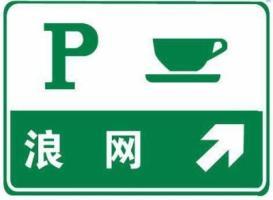
A. expressway parking area ahead
B. expressway shelter ahead
C. expressway car park ahead
D. expressway service area ahead
Answer: A
6. What is the max speed on this expressway?
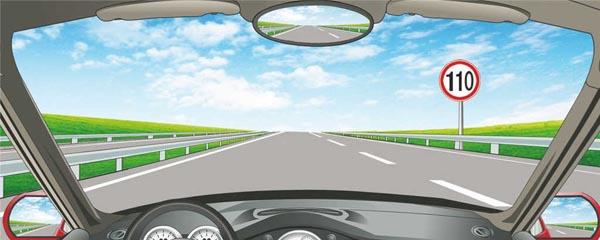
A. 110km/hr
B. 120km/hr
C. 90km/hr
D. 100km/hr
Answer: A
7. Using the high and low beam lights alternately while driving on the road of this kind of sharp curve.
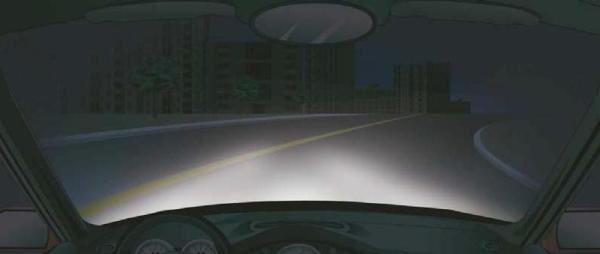
A. Right
B. Wrong
Answer: A
8. You can not drive a motorized vehicle into the lane where the red X-shaped light or the red arrow light is on.
A. Right
B. Wrong
Answer: A
9. The cycle for recording the accumulated penalty points for violating road traffic safety regulations is ____________.
A. 12 months
B. 24 months
C. 3 months
D. 6 months
Answer: A
10. It lights when turning on the width light.

A. Right
B. Wrong
Answer: A
11. Whats the meaning of this sign?

A. a manned level crossing 50m ahead
B. an unmanned level crossing 100m ahead
C. a manned level crossing 100m ahead
D. an unmanned level crossing 50m ahead
Answer: B
12. When causing a road accident involving property damage, the party should leave the scene on his own but he does not leave, the traffic police can not order him to leave.
A. Right
B. Wrong
Answer: B
13. If one drives an illegally assembled motorized vehicle, he should not only pay the fine, but also ________ .
A. be confiscated the driving license
B. be revoked the driving permission
C. be forced to recover the vehicle condition
D. be revoked the driving license
Answer: D
14. If a driving license is obtained by deception, bribery or other illegal means, the driving license should be revoked and the applicant is not allowed to re-apply for it _____ .
A. within 3 years
B. the whole life
C. within 1 year
D. within 5 years
Answer: A
15. When a vehicle passes a narrow road or bridge, it is prohibited from overtaking.
A. Right
B. Wrong
Answer: A
16. The vehicle with ABS system can minimize the braking distance when driving on a road covered by ice and snow.
A. Right
B. Wrong
Answer: B
17. How to pass this intersection?
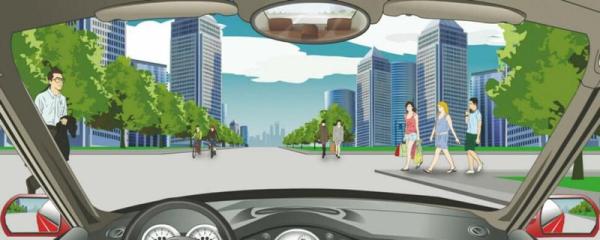
A. keep the speed and go through
B. honk to urge
C. reduce speed and go through slowly
D. speed up and go through
Answer: C
18. Whats the meaning of this sign?
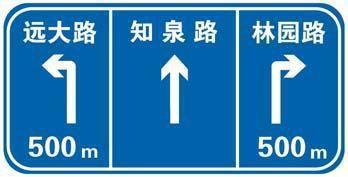
A. lane direction indication
B. intersection ahead
C. lane information indication
D. road branching point ahead
Answer: B
19. When driving in a snowy day, the driver should drive along the vehicle tracks if there are any.
A. Right
B. Wrong
Answer: A
20. Whats the meaning of this sign?
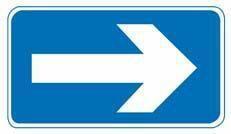
A. left one-way road
B. right one-way road
C. straight one-way road
D. yield if going to turn right
Answer: B