

1. When driving in a strong wind, drivers should abruptly turn the steering wheel to return to the original direction if they feel the vehicle deviates horizontally due to a strong gale.
A. Right
B. Wrong
Answer: B
2. When driving a motor vehicle into a traffic flow, drivers should not hold up other vehicles.
A. Right
B. Wrong
Answer: A
3. What is the meaning of this sign?

A. Customs inspection
B. Stop-for-inspection
C. Frontier inspection
D. No passing
Answer: B
4. It is not a bad habit for a driver to frequently change lanes.
A. Right
B. Wrong
Answer: B
5. What is the meaning of this sign?

A. No entry for bicycles
B. Lane for non-motorized vehicles
C. Special lane for bicycles
D. Bicycle stopping area
Answer: B
6. When a vehicle stops temporarily at the roadside at night, the wrong measure is to ______.
A. Turn on the warning flash light
B. Turn on the contour light
C. Turn on the high beam light
D. Turn off all lights
Answer: CD
7. After a traffic accident, what is the most effective measure to prevent secondary accidents?
A. Evacuate all passengers
B. Turn on the hazard lamps
C. Mark the original place of the injured persons
D. Properly place the danger warning sign
Answer: ABD
8. What is the meaning of this sign?
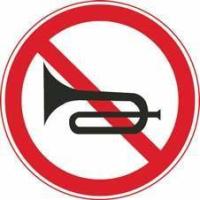
A. No long time honking
B. Honk discontinuously
C. Reduce speed and honk
D. No honking
Answer: D
9. Speeding up to go though the intersection before the light turns to red in this case.

A. Right
B. Wrong
Answer: B
10. When encountering dangerous and complicated circumstance, the driver should keep medium or low speed and keep the balance of the motorcycle to pass it cautiously.
A. Right
B. Wrong
Answer: A
11. Rescue personnel should check the breath of the unconscious person before applying any other emergency treatment.
A. Right
B. Wrong
Answer: A
12. When there is bleeding at the bone fracture of a wounded person, the first thing to do is to fix the wounded part in position, then stop the bleeding and dress the wound.
A. Right
B. Wrong
Answer: B
13. How to do in this intersection?
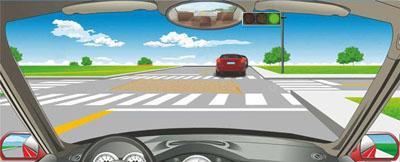
A. Wait in the cross-hatched marking area
B. stop and wait outside the intersection
C. Follow the vehicle in front and pass
D. Wait inside the intersection
Answer: B
14. When driving in thick or extremely thick fog, what should the driver do due to the low visibility in such weather?
A. Turn on the headlamp and drive slowly
B. Turn on the fog lamp and drive slowl
C. Park in a safe place
D. Drive slowly close to the roadside
Answer: C
15. When such circumstances happen suddenly, what should the driver do?
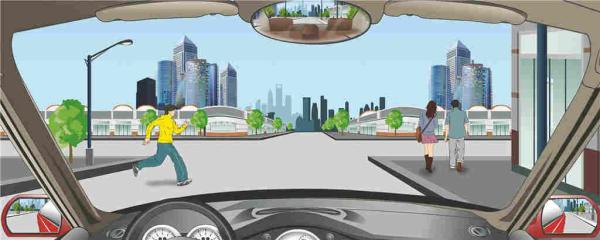
A. Reduce speed or stop to yield
B. Bypass in front of the pedestrians
C. Continuously sound the horn to alert the pedestrians
D. Bypass from behind the pedestrians
Answer: A
16. There is a risk of overtaking when driving a motor vehicle approaches the top of the slope on a mountainous road, because _____.
A. When approaching the top of the slope, the line of sight is blocked and it is impossible to observe the traffic situation.
B. When approaching the top of the slope, the line of sight is blocked. It is impossible to observe whether there are obstacles behind the top of the slope.
C. The speed is slower when approaching the top of the slope.
D. When approaching the top of the slope, the line of sight is blocked and the road direction behind the top of the slope can not be observed.
Answer: ABD
17. A motorcycle driver should wear long-sleeve and long-trouser-leg clothes with brilliant color so that he can be easy found by other transports participants when he is riding.
A. Right
B. Wrong
Answer: A
18. In emergencies, people?ˉs life safety should always be put in the first place.
A. Right
B. Wrong
Answer: A
19. When a motorcycle braking on a road covered by ice and snow, the driver should adopt point braking and prepare their feet for landing when braking.
A. Right
B. Wrong
Answer: A
20. What is the meaning of this sign?
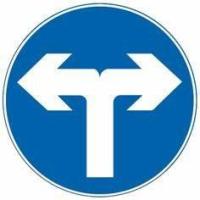
A. No left turn
B. Leftt and right turn
C. No leftt and right turn
D. No right turn
Answer: B