

1. It is not a bad habit for a driver to frequently change lanes.
A. Right
B. Wrong
Answer: B
2. When rescuing a wounded person suffering blood loss in an emergency, it is necessary to first stop the bleeding by compression before other treatments are taken in accordance with the conditions of bleeding.
A. Right
B. Wrong
Answer: A
3. When driving in a strong wind, drivers should abruptly turn the steering wheel to return to the original direction if they feel the vehicle deviates horizontally due to a strong gale.
A. Right
B. Wrong
Answer: B
4. The sign on the left indicates U-turn is allowed here.
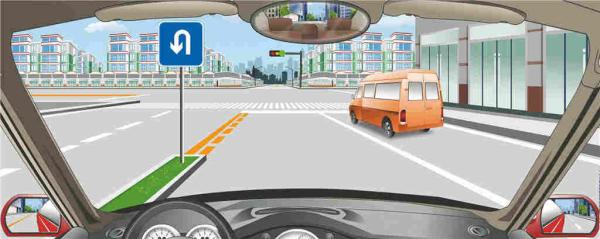
A. Right
B. Wrong
Answer: A
5. When driving in a residential area, the driver should not exceed the speed indicated by the speed limit sign.
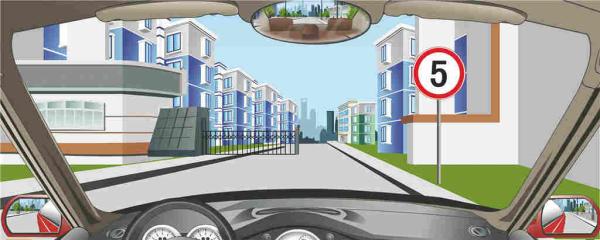
A. Right
B. Wrong
Answer: A
6. Motor vehicle drivers may borrow a special lane for other vehicle types, if one exists, to overtake.
A. Right
B. Wrong
Answer: B
7. When braking, side skid or tail swing may occur if the rear wheels are blocked.
A. Right
B. Wrong
Answer: A
8. Mr. Yang drove an adapted minibus (capacity 9 people and carrying 64 passengers, including 62 kindergarten pupils). When driving in Ma Caogou Village of Yu Linzi County, the bus used the lane for oncoming traffic and had a head-on colision with a heavy dump truck. As a result of this accident, 22 people were killed and 44 injured. What are the main illegal acts in this case?
A. The truck exceeded the speed limit
B. Illegal adaptation of a motor vehicle
C. The minibus carried more passengers than capacity
D. Driving in the opposite direction lane
Answer: BCD
9. Driving and smoking has no negative effect on safe driving
A. Right
B. Wrong
Answer: B
10. Motor vehicles should accelerate when driving into an intersection with this traffic signal.
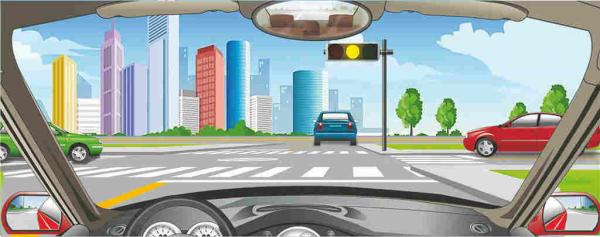
A. Right
B. Wrong
Answer: B
11. Motor vehicles are not allowed to reverse in a tunnel.
A. Right
B. Wrong
Answer: A
12. The sign on the right warns of entering a tunnel, and requires reduced speed.
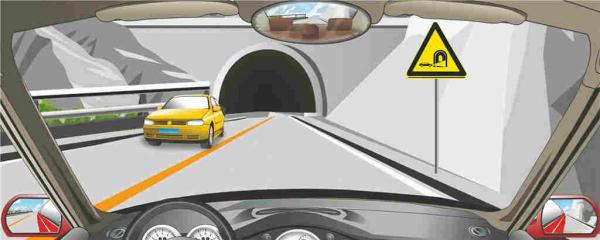
A. Right
B. Wrong
Answer: B
13. The sign on the left warns of no passing on the right-hand road ahead.

A. Right
B. Wrong
Answer: B
14. When following other vehicles on the uphill section of a mountain road, what should the driver do if the vehicle in front stops?
A. Overtake from either side of the front vehicle
B. Stop close to the vehicle in front
C. Stop with a larger space from the vehicle in front
D. Sound the horn continuously to warn the other driver
Answer: C
15. Under such circumstances, what should the motor vehicle driver do?
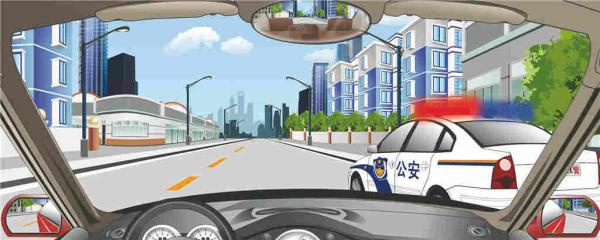
A. Reduce speed and yield by the left side
B. Reduce speed and yield by the right side
C. Speed up and yield by the left side
D. Go ahead along the original route
Answer: A
16. The sign on the right warns of low-lying road ahead.

A. Right
B. Wrong
Answer: A
17. When a motor vehicle breaks down on a mountain road, what should the driver do?
A. Park on a downhill section
B. Park on an uphill section
C. Park on a gentle section of the mountain road
D. Park on the crest of a slope
Answer: C
18. When driving in thick fog causing poor visibility on the expressway, the driver should apply emergency braking to stop at once.
A. Right
B. Wrong
Answer: B
19. When a tire suddenly bursts on the road, what should not be done by the driver?
A. Keep calm and release the accelerator pedal slowly
B. Hold the steering wheel firmly to ensure the vehicle goes straight
C. Apply emergency braking and stop the vehicle in the shortest possible time
D. Gently depress the brake pedal after the vehicle slows down
Answer: C
20. What should the driver do if he wants to turn left at this intersection?

A. Turn left along the straight-going lane
B. Enter the left turn waiting area
C. Enter the straight-moving waiting area
D. Turn left along the left lane
Answer: B