

1. Whats the meaning of this sign?
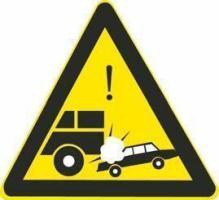
A. accident-prone section
B. construction section
C. reducing speed and going slowly section
D. jammed section
Answer: A
2. Move the switch up and down, the windscreen wipers start working.
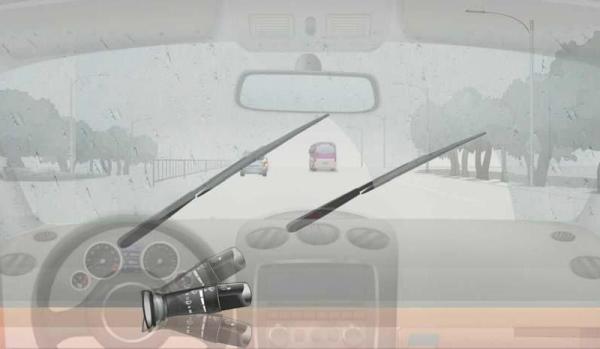
A. Right
B. Wrong
Answer: A
3. A driver may drive a motorized vehicle after the driving license has been lost within 3 months.
A. Right
B. Wrong
Answer: B
4. A motorized vehicle driver who drives after drinking is subject to a 12-point penalty.
A. Right
B. Wrong
Answer: A
5. When the green arrow for a lane is on and there are still pedestrians in the crosswalk before the vehicle, the driver should ___________.
A. Directly start up and pass
B. Start up and bypass the pedestrians from behind
C. Start up and bypass before the pedestrians
D. Start up after the pedestrians have passed
Answer: D
6. What does this symbol indicate?

A. luggage compartment is opened
B. engine compartment is opened
C. cover of fuel tank is opened
D. door of one side is opened
Answer: B
7. A motorized vehicle is not allowed to stop in the section 50 meters to the intersection.
A. Right
B. Wrong
Answer: A
8. When overtaking on a mountain road, the vehicle should overtake ______.
A. By taking every possible chance
B. By selecting a wide gentle uphill section
C. By selecting a fairly long downhill section
D. By selecting a relatively gentle downhill section
Answer: B
9. A person can not apply the motorized vehicle driving license, if he has been held for criminal liabilities according to law because of driving after drinking and causing a major traffic accident.
A. Right
B. Wrong
Answer: A
10. The police can detain the vehicle if one drives a vehicle without ______
A. vehicle license
B. qualification certificate
C. ID card
D. pass paper
Answer: A
11. When discovering traffic congestion ahead while driving, the driver should ________.
A. Find a chance to overtake the vehicle in front
B. Weave through other vehicles
C. Reduce speed, stop and wait in line
D. Honk to urge other vehicles
Answer: C
12. Whats the meaning of this sign?

A. turn left
B. no going straight
C. straight-going lane
D. one-way road
Answer: A
13. When ignition switch is in the START position, the starter starts.
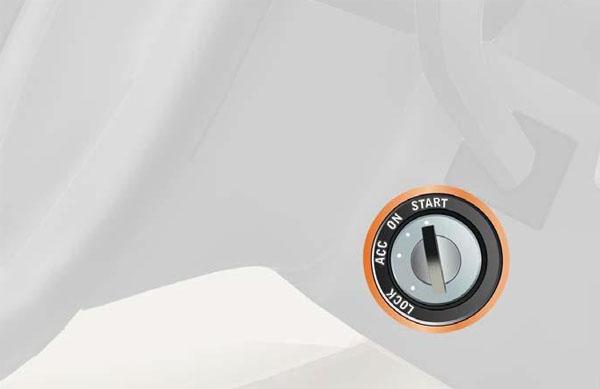
A. Right
B. Wrong
Answer: A
14. Whats the meaning of this sign?
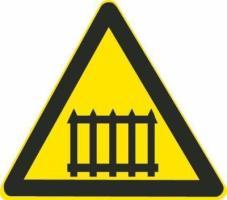
A. a manned level crossing
B. multi-crossing of railway and road
C. grade separation level crossing
D. an unmanned level crossing
Answer: A
15. The cycle for recording the accumulated penalty points for violating road traffic regulations is ____________.
A. 14 months
B. 12 months
C. 6 months
D. 10 months
Answer: B
16. Whats the meaning of this sign?
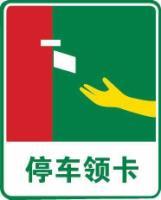
A. stop to get card
B. stop to pay
C. ETC lane
D. stop for inspection
Answer: A
17. No turning left in this situation.

A. Right
B. Wrong
Answer: A
18. What does this sign mean?
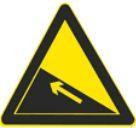
A. Reminding the side of a reservoir, lake or river ahead
B. Reminding the steep uphill road ahead
C. Reminding continuous two or more up slopes ahead
D. Reminding the steep downhill road ahead
Answer: B
19. The method and direction of changing lanes by the red car is correct.
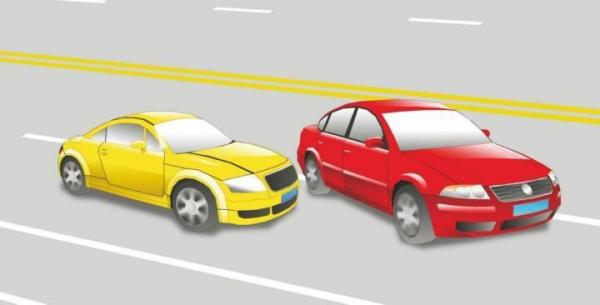
A. Right
B. Wrong
Answer: B
20. Which kind of vehicle can be driven if the authorized vehicle applied for is small motor vehicle with automatic transmission?
A. low-speed truck
B. small motor vehicle
C. motorcycle
D. light truck with automatic transmission
Answer: D