

1. Traffic Police can detain the vehicle which is suspected of using other vehicles license plate and vehicle license.
A. Right
B. Wrong
Answer: A
2. No turning right at the intersection ahead.

A. Right
B. Wrong
Answer: B
3. The red car can run in this lane.
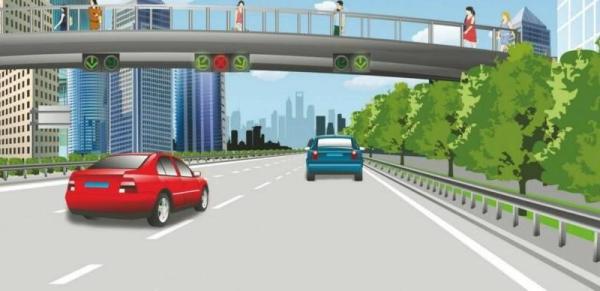
A. Right
B. Wrong
Answer: B
4. The safety pillow is used to protect the driver??s head when there is a rear-end collision.
A. Right
B. Wrong
Answer: B
5. When an accident has caused congestion on an expressway, the vehicles may run in the emergency strip on the right or in the shoulder of the road.
A. Right
B. Wrong
Answer: B
6. At this position, the motorized vehicle can continue to go through if the front wheels have passed the stop line.
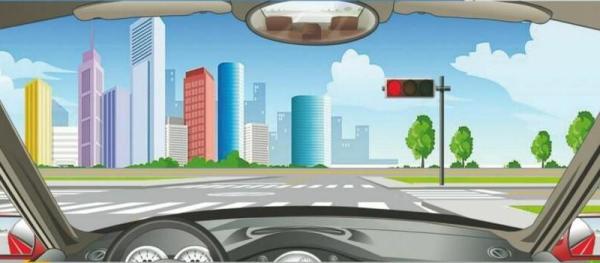
A. Right
B. Wrong
Answer: B
7. If the registration paper, license plate and vehicle license of a motorized vehicle are lost or destroyed, the vehicle owner should apply for reissuing or replacing them to the _______________.
A. traffic police detachment vehicle management station at the residential place
B. vehicle management station at the issuing place of the driving license
C. vehicle management station at the registration place
D. local police station
Answer: C
8. Whats the meaning of this sign?
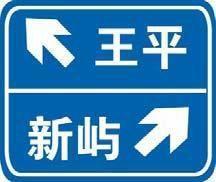
A. ring intersection ahead
B. intersection ahead
C. Y-shaped intersection ahead
D. T-shaped intersection ahead
Answer: C
9. Whats the meaning of this sign?
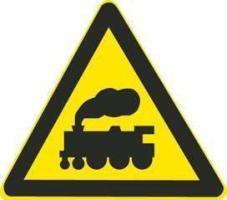
A. watch for long time honking
B. an unmanned level crossing
C. a manned level crossing
D. multi-crossing of railway and road
Answer: B
10. Whats the meaning of this sign?
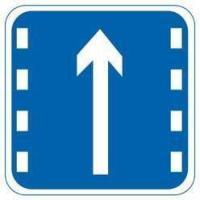
A. right-turn lane
B. U turn lane
C. left-turn lane
D. straight-going lane
Answer: D
11. When a vehicle changes lane, the driver should turn on the turn signal and rapidly enter the new lane.
A. Right
B. Wrong
Answer: B
12. If a small motor vehicle driver has assumed equal or main liability for a traffic accident causing human deaths, and his driving license has not been revoked, it shall be checked within 30 days after the end of the scoring cycle.
A. Right
B. Wrong
Answer: A
13. Change driving license before of expiration.
A. 60 days
B. 30 days
C. 90 days
D. 6 months
Answer: C
14. Which of the following vehicle in front in the same lane is not allowed to be overtaken?
A. the vehicle is reducing speed to yield
B. the vehicle is running normally
C. the vehicle is overtaking
D. the vehicle is making a stop
Answer: C
15. A motorized vehicle driver who drives more than 50% faster than the prescribed speed limit is subject to a 12-point penalty.
A. Right
B. Wrong
Answer: A
16. When there is a continuous rain, the shoulders of the mountain roads may become loose and the embankments may collapse. When driving in this weather, the driver should select the middle solid road and refrain from going close to the roadsides.
A. Right
B. Wrong
Answer: A
17. Driving this motorized vehicle on road is not an illegal act.
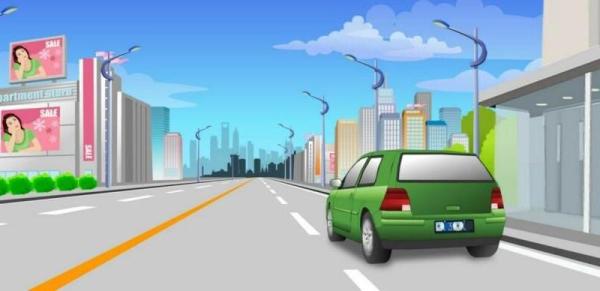
A. Right
B. Wrong
Answer: B
18. Whats the meaning of this sign?
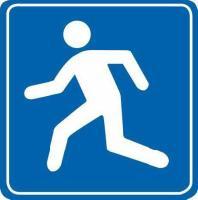
A. emergency shelter
B. service area
C. pedestrian passage
D. crossing road facility
Answer: A
19. If the registration paper, license plate and vehicle license of a motorized vehicle are lost or destroyed, the vehicle owner should apply for reissuing or replacing them to the vehicle management station at the residential place.
A. Right
B. Wrong
Answer: B
20. Whats the meaning of this sign?
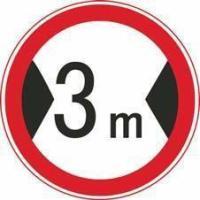
A. 3m width limit ahead
B. 3m width limit
C. the 3m width limit ban is lifted
D. 3m height limit
Answer: B