

1. How to pass when encountering this situation at the intersection?
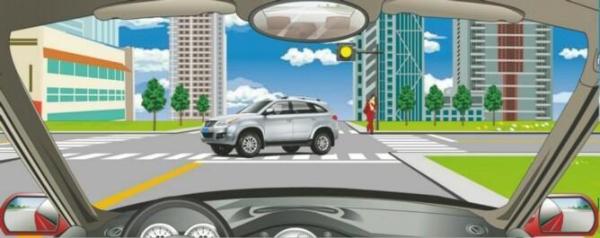
A. make sure it is safe to pass
B. turn right and speed up to pass
C. speed up and pass straight
D. turn left and speed up to pass
Answer: A
2. A driver should observe the dynamic situation of the rear side vehicles before driving into the traffic flow from other road.
A. Right
B. Wrong
Answer: A
3. When a motorized vehicle crosses a non-motorized vehicle on a narrow road or a narrow bridge at night, the motorized vehicle should use the high beam light.
A. Right
B. Wrong
Answer: B
4. Which is incorrect when a motorized vehicle breaks down on the expressway?
A. place warning sign as required
B. passengers cannot get off
C. call the police at once
D. turn on the hazard lights
Answer: B
5. Whats the meaning of this sign?
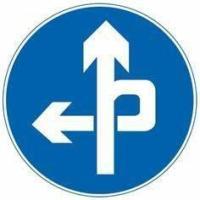
A. going straight and turning left at an interchange
B. going straight and turning right at an interchange
C. going straight and turning left
D. going straight and turning right
Answer: A
6. What is this instrument?
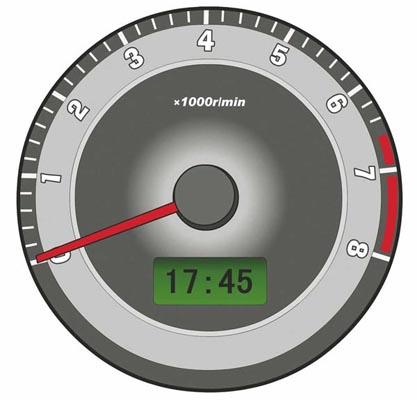
A. engine tachometer
B. driving speed meter
C. interval mileage meter
D. fuel consumption / 100 km
Answer: A
7. A driver should buckled up before the vehicle moves.
A. Right
B. Wrong
Answer: A
8. When the motor vehicle installed ABS system applys emergency braking, the driver can depress the brake pedal heavily.
A. Right
B. Wrong
Answer: A
9. How to drive through the intersection without traffic lights?
A. reduce speed and go slowly
B. speed up and pass
C. let large vehicle go first
D. let the left vehicle go first
Answer: A
10. What is this manipulation device?
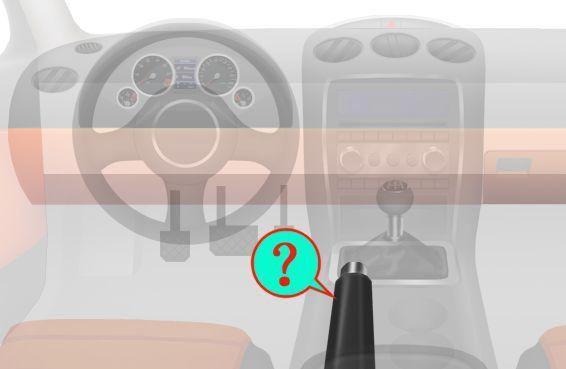
A. the air throttle lever
B. the gear lever
C. the clutch lever
D. the handbrake
Answer: D
11. A motorized vehicle is not allowed to stop in the section 50 meters to the bridge, steep slope or tunnel.
A. Right
B. Wrong
Answer: A
12. Whats the meaning of this sign?
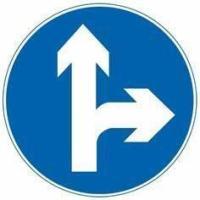
A. going straight and left turn
B. going straight and right turn
C. no going straight and no right turn
D. left turn and right turn only
Answer: B
13. May directly turn left in front of the vehicle coming opposite when encountering this traffic light.
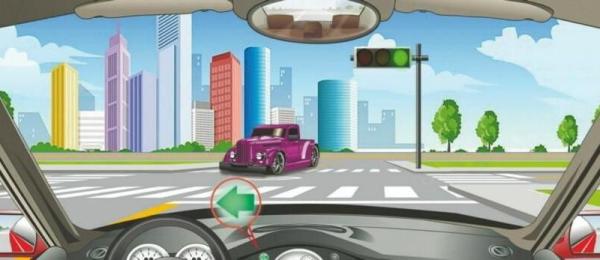
A. Right
B. Wrong
Answer: B
14. When passing a section of a mountain road which is prone to landside and mudflow, the driver should not stop.
A. Right
B. Wrong
Answer: A
15. A motorized vehicle is not allowed to stop in the section 50 meters to the intersection.
A. Right
B. Wrong
Answer: A
16. Whats the meaning of this sign?
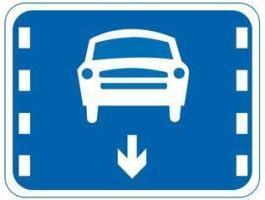
A. lane for small vehicles
B. special lane for small vehicles
C. special lane for multi-passenger vehicles
D. lane for motorized vehicles
Answer: D
17. When driving in thick or extremely thick fog, the driver should ____ due to low visibility.
A. Turn on the head light and keep driving
B. Turn on the contour light, fog light and drive along the right side
C. Turn on the hazard lights and keep driving
D. Turn on the hazard lights, fog light, and stop at a safe place
Answer: D
18. You should speed up through the section with this kind of traffic marking.
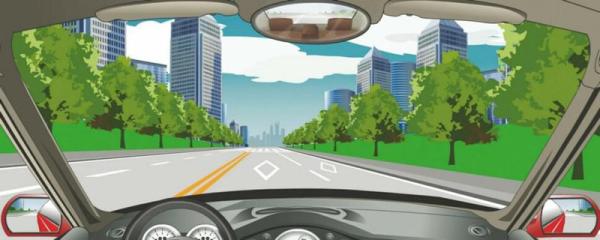
A. Right
B. Wrong
Answer: B
19. If a driving license has been revoked as it is obtained by deception, bribery or other illegal means, the applicant is not allowed to re-apply for it within ______
A. 6 months
B. 1 year
C. 2 years
D. 3 years
Answer: D
20. This sign indicates one-way section ahead.
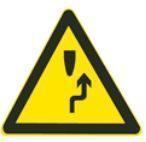
A. Right
B. Wrong
Answer: B