

1. When bicycles ahead obstruct the traffic flow, the driver may honk to remind them,speed up and bypass.
A. Right
B. Wrong
Answer: B
2. How to run at this position when leaving the expressway?
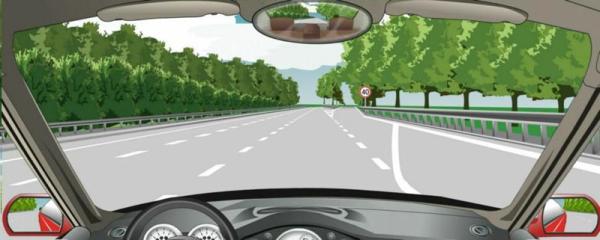
A. enter the deceleration lane
B. keep running forward
C. keep the speed at 100km/hr
D. reduce the speed to less than 40km/hr
Answer: A
3. As the traffic flow at an interchange is generally one-way, the vehicles do not have to reduce speed when passing.
A. Right
B. Wrong
Answer: B
4. When running on an expressway, the driver should ____ if he has missed the exit.
A. Reverse to the original place
B. Continue to go ahead and find the next exit
C. Immediately stop
D. Make a U turn from where he is
Answer: B
5. Driving motor vehicle with ABS system may occur side skidding when applying emergency braking.
A. Right
B. Wrong
Answer: A
6. After the green light at an intersection is on, the vehicles may not yield if non-motorized vehicles cut in.
A. Right
B. Wrong
Answer: B
7. How to do if there is a traffic jam in intersection?
A. borrow the opposite lane to pass
B. stop and wait outside the intersection
C. cut in the front vehicles to pass
D. enter the intersection and wait
Answer: B
8. The traffic lights allow the vehicle to ______
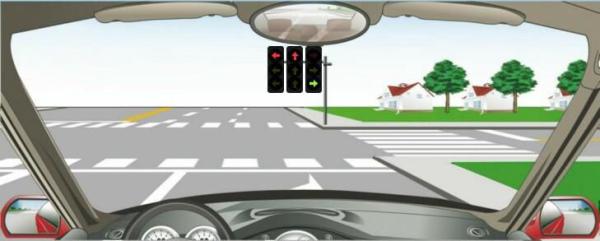
A. turn right
B. stop and wait
C. turn left
D. go straight
Answer: A
9. How far should be the distance from the vehicle in front at the speed of more than 100 km/hr when driving a small passenger vehicle on the expressway?
A. more than 50 meters
B. more than 60 meters
C. more than 100 meters
D. more than 80 meters
Answer: C
10. Within the validity of the Admission Form, the times of test reservation for Driving Skills of subject 2 and subject 3 can not exceed ______
A. 3 times
B. 4 times
C. 5 times
D. 6 times
Answer: C
11. This sign reminds an unmanned level crossing ahead.
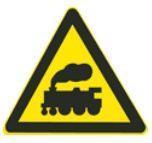
A. Right
B. Wrong
Answer: A
12. Speeding up to go though the intersection before the light turns to red in this case.
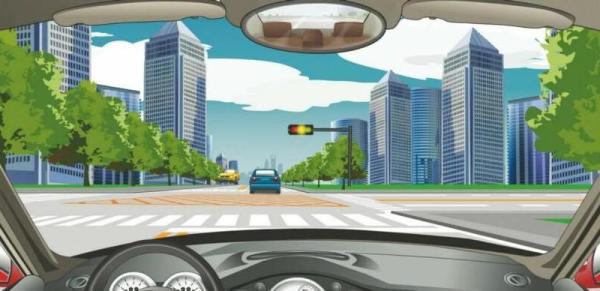
A. Right
B. Wrong
Answer: B
13. This sign reminds overflowing road or overflowing bridge ahead.
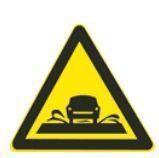
A. Right
B. Wrong
Answer: A
14. It lights to indicate that ______

A. the floor and the front fans work
B. air internal circulation
C. air external circulation
D. the side and the floor fans work
Answer: A
15. When a motorized vehicle returns to the original lane after overtaking, the driver should turn on the right-turn signal.
A. Right
B. Wrong
Answer: A
16. When the vehicle has changed its direction due to a front tire blowout on the road, the driver should firmly hold the steering wheel with both hands to ensure the vehicle goes straight.
A. Right
B. Wrong
Answer: A
17. In which situation that a driver cannot drive?
A. after drinking coffee
B. after drinking milk
C. after drinking
D. after drinking tea
Answer: C
18. A vehicle running on an expressway may frequently change lanes.
A. Right
B. Wrong
Answer: B
19. What device does the switch of this symbol control?
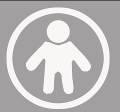
A. child safety lock
B. window glasses of both sides
C. electric door
D. door unlock
Answer: A
20. A motorized vehicle driver who has not yielded to the school bus according to stipulations is subject to a 6-point penalty.
A. Right
B. Wrong
Answer: A