

1. The contents of subject 2 test for small motor vehicle include Reversing stall parking, stopping at the appointed position and setting off on a slope, pulling over, driving by S-shaped line, sharp turning.
A. Right
B. Wrong
Answer: A
2. How to drive through the intersection without traffic lights?
A. reduce speed and go slowly
B. speed up and pass
C. let large vehicle go first
D. let the left vehicle go first
Answer: A
3. When a vehicle leaves an expressway, it should reduce speed in the deceleration lane before entering the ramp.
A. Right
B. Wrong
Answer: A
4. What marking is the white solid lines in the circle?

A. guide lanes lines
B. variable guide lanes lines
C. direction guide lines
D. one-way driving lines
Answer: A
5. Whats the meaning of the marking in the red circle?
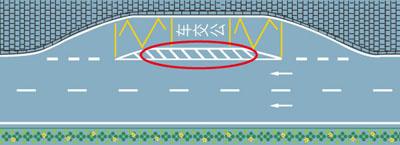
A. temporary stopping
B. large bus stopping
C. bus station
D. emergency stopping
Answer: C
6. Whats the meaning of this sign?
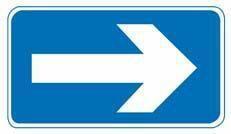
A. left one-way road
B. right one-way road
C. straight one-way road
D. yield if going to turn right
Answer: B
7. What is this instrument?
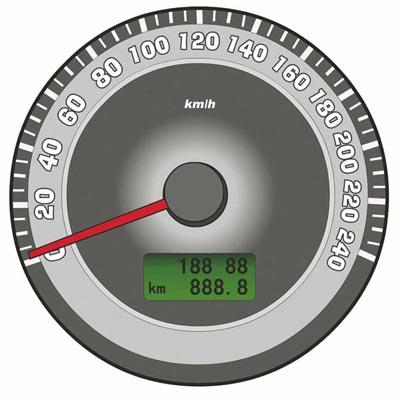
A. speed and mileage meter
B. engine tachometer
C. top speed meter
D. fuel consumption / 100 km
Answer: A
8. Driving a motorized vehicle on the road in violation of road traffic regulations shall be subject to relevant punishment.
A. Right
B. Wrong
Answer: A
9. A person who has the expired driving license can drive motorized vehicle within 1 year.
A. Right
B. Wrong
Answer: B
10. When encountering disabled people obstructing the traffic, the driver should voluntarily reduce speed and yield.
A. Right
B. Wrong
Answer: A
11. Whats the meaning of this sign?

A. turn right
B. one-way road
C. going straight only
D. straight-going lane
Answer: A
12. The continuously flashing yellow light means that the vehicle may speed up and pass.
A. Right
B. Wrong
Answer: B
13. If one drives an illegally assembled motorized vehicle, he should not only pay the fine, but also ________ .
A. be temporarily detained the driving license
B. be revoked the driving license
C. be held for criminal liabilities
D. be detained for less than 10 days
Answer: B
14. Whats the meaning of this sign?
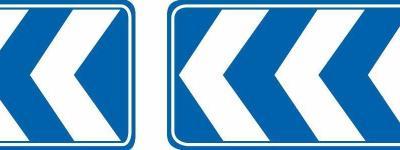
A. line guide signs
B. lane merging guide signs
C. lane branching guide signs
D. turning guide signs
Answer: A
15. What should the driver do if conditions permit when a following vehicle gives the overtaking signal on a road without a central line?
A. maintain the original speed
B. speed up
C. reduce speed, move to the right side and yield
D. immediately stop and yield
Answer: C
16. This sign reminds the lane or the road narrows on both sides ahead.
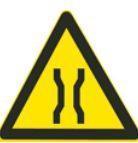
A. Right
B. Wrong
Answer: B
17. When braking on a muddy road, the tires can easily spin or drift and cause traffic accidents.
A. Right
B. Wrong
Answer: A
18. You should speed up to go through the railway crossing in this case.
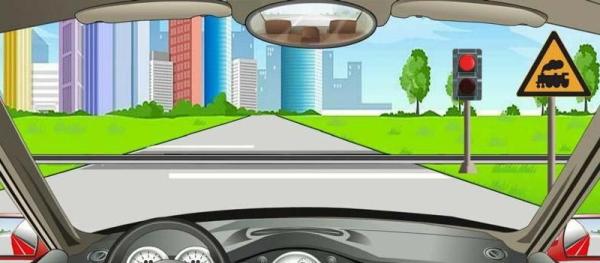
A. Right
B. Wrong
Answer: B
19. It lights to indicate that ______

A. handbrake released
B. foot brake failure
C. braking system is abnormal
D. the brake pedal does not return back
Answer: C
20. Change driving license before of expiration.
A. 60 days
B. 30 days
C. 90 days
D. 6 months
Answer: C