

1. Whats the meaning of this sign?
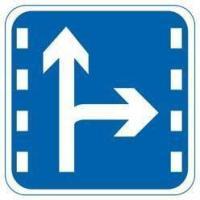
A. straight-going and left-turn lane
B. straight-going and side road exit lane
C. lane for both going straight and right turn
D. lanes for going in different directions
Answer: C
2. When a motorized vehicle makes a U turn, turns around or goes down a slope, the maximum speed should not exceed 40 kilometers per hour.
A. Right
B. Wrong
Answer: B
3. What marking is the combination of the white broken lines and the triangle area?
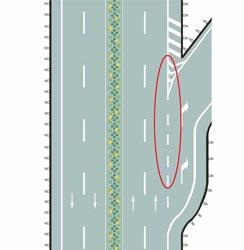
A. road entry marking
B. lane-dividing line that can be crossed
C. deceleration line at road exit
D. road exit marking
Answer: D
4. If a motorized vehicle causes a traffic accident on the expressway and cannot to run normally, the vehicle should be towed by a rescue vehicle or a tow truck.
A. Right
B. Wrong
Answer: A
5. If a vehicle has the right of way at an intersection but encounters a vehicle cutting in, the driver should _________.
A. Rush to pass
B. Speed up in advance and pass
C. Reduce speed and evade, or stop to yield when necessary
D. Go forward at the normal speed according to the right of way and refuses to evade
Answer: C
6. The validity of the Admission Form is _________
A. 1 year
B. 2 years
C. 3 years
D. 4 years
Answer: C
7. You should speed up through the section with this kind of traffic marking.
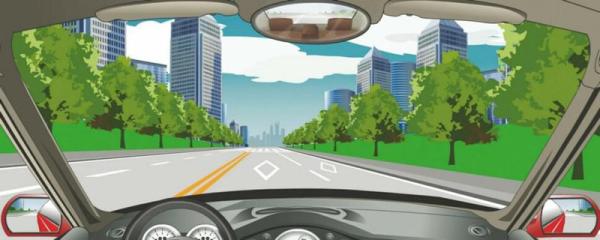
A. Right
B. Wrong
Answer: B
8. Within the validity of the Admission Form, the times of test reservation for Driving Skills of subject 2 and subject 3 can not exceed ______
A. 3 times
B. 4 times
C. 5 times
D. 6 times
Answer: C
9. You have the priviledged passing right of way at the intersection in this situation.
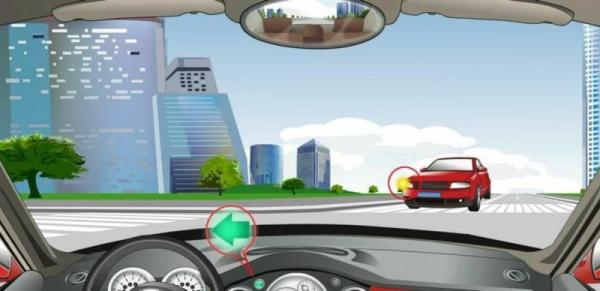
A. Right
B. Wrong
Answer: A
10. Nobody is allowed to drive a motorized vehicle that has safety hazards.
A. Right
B. Wrong
Answer: A
11. Whats the meaning of this sign?

A. rescue call number on expressway
B. service call number on expressway
C. police call number on expressway
D. traffic radio frequency on expressway
Answer: D
12. When driving a motorized vehicle uphill, you should speed up and honk when you going to reach the top of the slope.
A. Right
B. Wrong
Answer: B
13. The driving license of a motorized vehicle driver will be detained after his penalty scores reach 12 points in a scoring circle.
A. Right
B. Wrong
Answer: A
14. When finding a vehicle in the opposite direction having difficulty to go forward and needing to borrow road while crossing each other, the driver should ________.
A. Not occupy the road of the other side and should go forward normally
B. Indicate the other side to stop and yield
C. Speed up and go forward by the right side
D. Yield to the other side as much as possible
Answer: D
15. It lights when turning on the width light.

A. Right
B. Wrong
Answer: A
16. Whats the meaning of this sign?

A. turn left
B. no going straight
C. straight-going lane
D. one-way road
Answer: A
17. It lights to indicate that ______

A. the tail fog light is turned on
B. the low beam light is turned on
C. the high beam light is turned on
D. the head fog light is turned on
Answer: A
18. How to go straight when encountering this traffic light at the intersection?
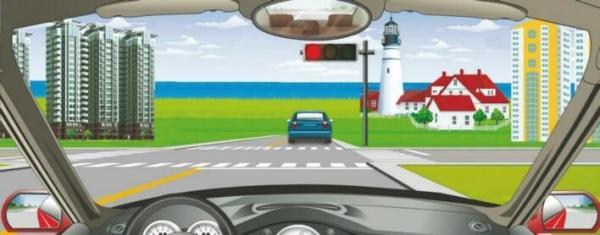
A. enter the intersection to wait
B. turn left
C. speed up and pass straight
D. can not exceed the stop line
Answer: D
19. Whats the meaning of this sign?

A. crosswalk
B. students passage
C. watch for pedestrians
D. children?ˉs passage
Answer: A
20. The doors of both sides are not closed if it lights.

A. Right
B. Wrong
Answer: A