

1. When a vehicle approaches a bus stopping at a bus stop, the driver should ______ in case the bus starts up suddenly or pedestrians cross in front of the bus.
A. Reduce speed, keep a sufficient distance and be ready to stop anytime
B. Maintain the normal speed
C. Honk to remind, speed up and pass
D. Be ready to apply emergency braking
Answer: A
2. Whats the meaning of this sign?
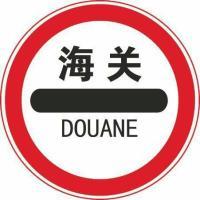
A. national boundaries
B. border defense
C. boundaries
D. customs
Answer: D
3. When reaching a sharp curve, the driver should reduce speed and drive on the right side so as to avoid colliding with the vehicle crossing the central line of the curve in the opposite direction.
A. Right
B. Wrong
Answer: A
4. The passenger in the front seat does not need to buckle up when a motorized vehicle runs.
A. Right
B. Wrong
Answer: B
5. A motorized vehicle driver who drives more than 50% faster than the prescribed speed limit is subject to a 12-point penalty.
A. Right
B. Wrong
Answer: A
6. Whats the meaning of this sign?

A. lanes for going in different directions
B. lane for both U turn and left turn
C. the lane of no left turn and no U turn
D. lane for both going straight and left turn
Answer: B
7. Whats the meaning of the double yellow solid lines?
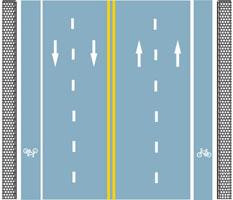
A. opposite direction lanes dividing line that can not be crossed
B. opposite direction lanes dividing line that can be crossed
C. bilateral same direction lanes dividing line that can be crossed
D. one-way lanes dividing line
Answer: A
8. Whats the meaning of this sign?
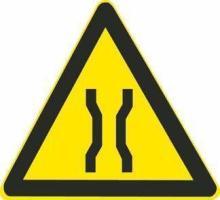
A. road narrows on the left side
B. narrow bridge
C. narrow road
D. road narrows on the right side
Answer: B
9. In which situation should a small car driver need check?
A. the end of a scoring cycle
B. change driving license due to expiration
C. fail to reach 12 points in one scoring cycle
D. reach 12 points in one scoring cycle
Answer: B
10. Whats the meaning of this sign?

A. Road traffic flow monitoring
B. Deceleration photographed area
C. Full section snapshot
D. Traffic monitoring equipment
Answer: D
11. If a motorized vehicle driver has caused a major accident in violation of the traffic regulations which has caused serious injury, the driver is subject to a prison term of less than 3 years or a criminal detention.
A. Right
B. Wrong
Answer: A
12. If a motorized vehicle driver has caused a major traffic accident in violation of the traffic regulations which has caused human death due to his escaping, the driver is subject to a prison term of _________.
A. less than 2 years
B. less than 3 years
C. less than 7 years
D. more than 7 years
Answer: D
13. Going though the intersection according to the traffic lights when traffic lights and command of the traffic police are inconsistency.
A. Right
B. Wrong
Answer: B
14. Whats the meaning of this sign?
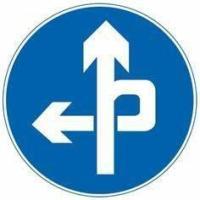
A. going straight and turning left at an interchange
B. going straight and turning right at an interchange
C. going straight and turning left
D. going straight and turning right
Answer: A
15. What does this symbol indicate?

A. switch of high beam lights
B. switch of the low beam lights
C. master switch of vehicle lights
D. the switch of tail fog light
Answer: C
16. The driver is prohibited from opening the door and letting passengers on and off when a vehicle has not come to a full stop.
A. Right
B. Wrong
Answer: A
17. What device does the switch of this symbol control?

A. the windscreen defrosting
B. the rear window wiper
C. the rear window defrosting
D. the windscreen wiper
Answer: D
18. Whats the meaning of the yellow marking on the road?
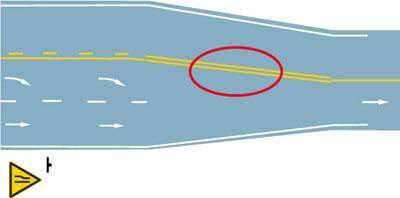
A. gradual road width
B. more carriageways
C. closing to obstacle
D. construction section indication
Answer: A
19. What marking is it?

A. prohibitive area
B. cross-hatched marking
C. guide line
D. central circle
Answer: D
20. If the license plate of a motorized vehicle has been destroyed, the owner of the vehicle should apply for reissuing or changing to the vehicle management station at the registration place.
A. Right
B. Wrong
Answer: A