

1. When a vehicle changes lane, the driver should turn on the turn signal and rapidly enter the new lane.
A. Right
B. Wrong
Answer: B
2. When the vehicles cross each other at night, the driver may continuous change lights to remind the vehicle coming in the opposite direction and at the same should reduce speed and go forward or stop on the right side.
A. Right
B. Wrong
Answer: A
3. What marking is it?
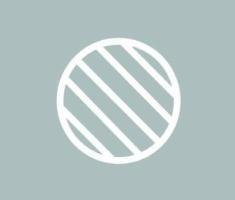
A. prohibitive area
B. cross-hatched marking
C. guide line
D. central circle
Answer: D
4. Whats the meaning of this sign?
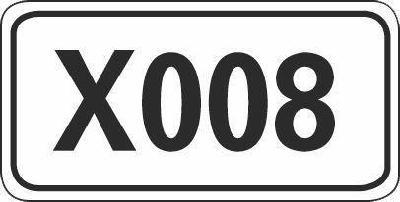
A. provincial highway No.
B. national highway No.
C. county road No.
D. township road No.
Answer: C
5. What marking is the white semicircle in the circle?

A. driving at reduced speed
B. ascertaining the vehicles speed
C. reducing the speed at the intersection
D. ascertaining the distance between the vehicles
Answer: D
6. Whats the meaning of this sign?
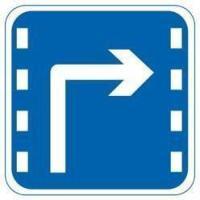
A. right-turn lane
B. U turn lane
C. left-turn lane
D. lanes for going in different directions
Answer: A
7. When a vehicle passes a bumped road, the driver should ________.
A. Speed up and dash over under inertia
B. Change to the neutral gear and slide over
C. Maintain the original speed and pass
D. Pass slowly and steadily
Answer: D
8. When encountering a vehicle coming in the opposite direction on a mountain road, the driver should ______ when crossing each other.
A. Not reduce speed
B. Stick to the center of the road
C. Speed up
D. Reduce speed or stop to yield
Answer: D
9. Driving license will be detained if you allow to drive your car.
A. driver during the period of probation
B. driver who has obtained a driving license
C. one whose driving license been revoked
D. one whose penalty points reach 6 points
Answer: C
10. When following a vehicle on the road, the distance from the vehicle in front is not important. As long as the driver goes forward at the same speed as the vehicle in front does, he can avoid rear-end collision.
A. Right
B. Wrong
Answer: B
11. How to use lights when changing to the left lane on road?
A. turn on the right-turn signal in advance
B. not need to turn on any turn signal
C. turn on the left-turn signal in advance
D. turn on the low beam lights in advance
Answer: C
12. When encountering slow-moving vehicles at an intersection that has no traffic signals, the motorized vehicle should pass alternately.
A. Right
B. Wrong
Answer: A
13. Whats the meaning of this sign?
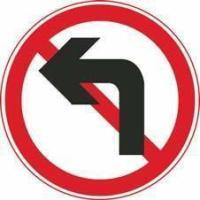
A. no U turn
B. no changing to left lane
C. no turning left
D. no entering the left lane
Answer: C
14. When a vehicle approaches a crosswalk, the driver should ________.
A. Speed up and pass
B. Stop immediately
C. Honk to indicate the pedestrians to yield
D. Observe the movement of pedestrians and non-motorized vehicles, make sure it is safe before passing
Answer: D
15. Whats the meaning of this sign?
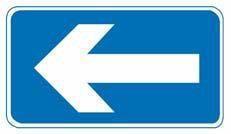
A. yield if going to turn left
B. straight one-way road
C. right one-way road
D. left one-way road
Answer: D
16. At this position, the motorized vehicle can continue to go through if the front wheels have passed the stop line.
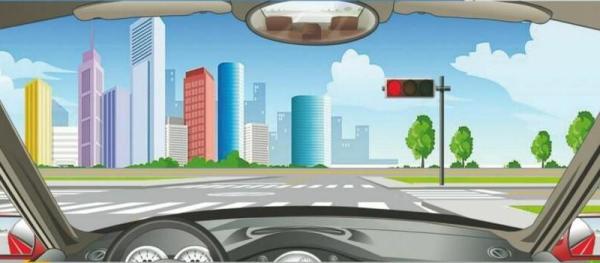
A. Right
B. Wrong
Answer: B
17. When reaching an intersection, a left-turning vehicle may enter the left-turn waiting area anytime.
A. Right
B. Wrong
Answer: B
18. When a vehicle changes lane before an intersection, the driver should do so ______.
A. In the area marked by solid lines before the intersection
B. In the area marked by solid lines in the intersection
C. In the area marked by broken lines as indicated by the guide arrow
D. Before the stop line at the intersection
Answer: C
19. When encountering a vehicle in the opposite direction forcing its way by using his lane, the driver should __________.
A. Force the other side to drive by the right side
B. Use the high beam light to warn the other side
C. Voluntarily yield to the other side
D. Go ahead by the center of the road
Answer: C
20. What kind of violation does the red car have while temporarily stopping here?
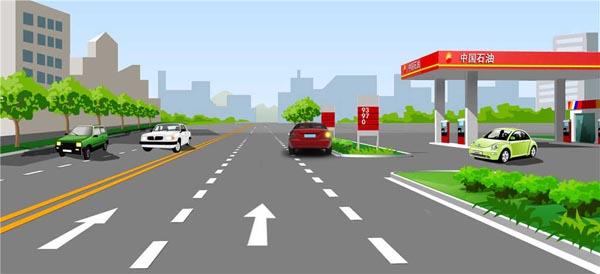
A. more than 30cm from roadside
B. stop in the section with no stopping marking
C. less than 30m from gas station
D. stop occupying the lane for non-motorized vehicles
Answer: C