

1. Whats the meaning of this sign?
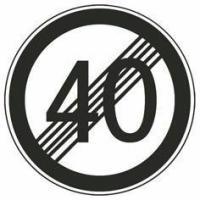
A. driving at reduced speed in the section of 40 meters
B. minimum speed is 40km/hr
C. maximum speed is 40km/hr
D. 40km/hr speed limit ban is lifted
Answer: D
2. In which situation the traffic police may detain the vehicle?
A. no vehicle registration papers
B. no insurance contract
C. no lable of environmental protection
D. no label of insurance
Answer: D
3. What marking is the yellow broken line in the circle?
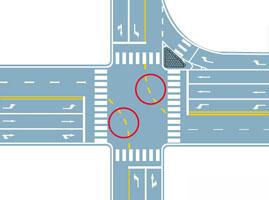
A. non-motorized vehicles guide lines
B. intersection guide line
C. lane connection lines
D. small vehicles turning lines
Answer: B
4. Can leave the expressway into the ramp from this location directly.
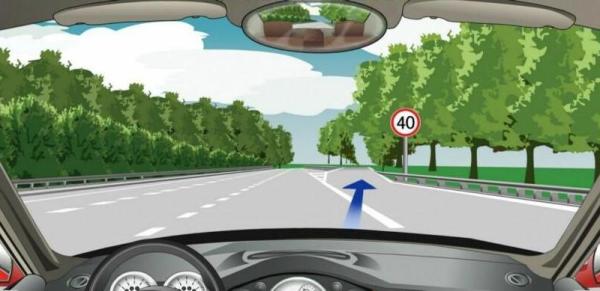
A. Right
B. Wrong
Answer: B
5. To hold the steering wheel like this is correct.

A. Right
B. Wrong
Answer: B
6. When a vehicle passes a narrow road or bridge, it is prohibited from overtaking.
A. Right
B. Wrong
Answer: A
7. Whats the meaning of this sign?
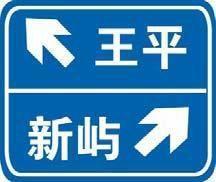
A. ring intersection ahead
B. intersection ahead
C. Y-shaped intersection ahead
D. T-shaped intersection ahead
Answer: C
8. When a vehicle changes lane, the driver should turn on the turn signal in advance,observe traffic conditions, maintain a safe distance and move into the new lane.
A. Right
B. Wrong
Answer: A
9. Driving this kind of vehicle on road is ____
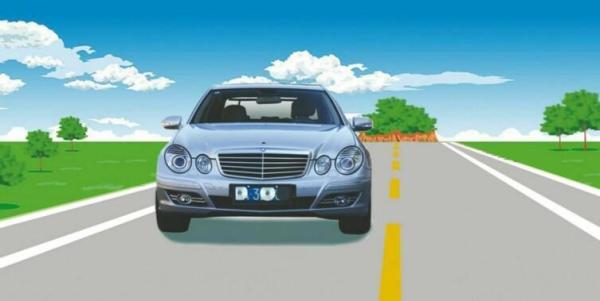
A. rule-breaking act
B. violation of regulations
C. violation of law
D. criminal act
Answer: C
10. You should speed up to change lane in front of the red car.
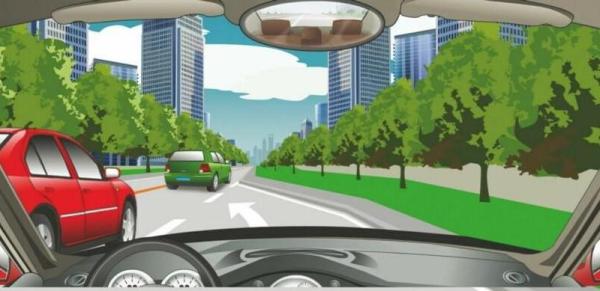
A. Right
B. Wrong
Answer: B
11. When a vehicle has increased its speed to more than 60 kilometers per hour on the ramp of an expressway, it may directly enter the carriageway.
A. Right
B. Wrong
Answer: B
12. A vehicle should try to speed up after starting from the roadside and rapidly turn left into the traffic flow on the road.
A. Right
B. Wrong
Answer: B
13. The front safety bags play a fully protective role when used in conjunction with ______
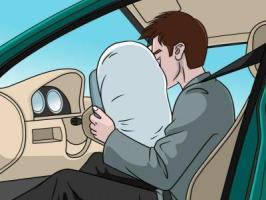
A. ABS system
B. seat belt
C. safety pillow of the chair
D. safety glasses
Answer: B
14. It lights if left door is not closed.

A. Right
B. Wrong
Answer: B
15. When a vehicle goes downhill, it may fully use the neutral gear and slide.
A. Right
B. Wrong
Answer: B
16. Traffic Police can detain the vehicle according to law if it runs on the road failing to place a label of inspection.
A. Right
B. Wrong
Answer: A
17. Whats the meaning of this sign?
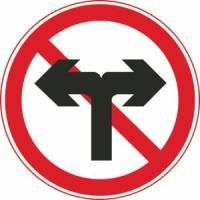
A. no U turn at intersection
B. no changing lane from both sides
C. no left or right turn
D. no going straight
Answer: C
18. What is this traffic sign?
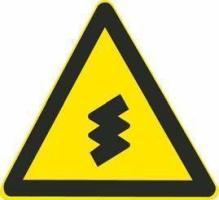
A. slippery section
B. sharp curve
C. inverse curve
D. continuous curves
Answer: D
19. Which is incorrect when a motorized vehicle breaks down on the expressway?
A. place warning sign as required
B. passengers cannot get off
C. call the police at once
D. turn on the hazard lights
Answer: B
20. The passenger in the front seat does not need to buckle up when a motorized vehicle runs.
A. Right
B. Wrong
Answer: B