

1. What is the meaning of this sign?
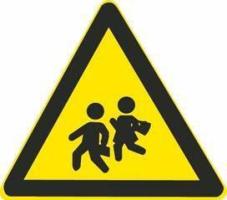
A. School area
B. Watch for children
C. Crosswalk
D. Watch for pedestrians
Answer: B
2. What influence does smoking have upon driving?
A. Harmful for safe driving
B. Increase concentration
C. Help relaxation
D. No effect on driving
Answer: A
3. It is extremely unsafe to take a motorcycle by the side; if the motorcycle sideslips, the passenger may be thrown out and led to death due to an unstable center of gravity.
A. Right
B. Wrong
Answer: A
4. Whats the meaning of the double white solid lines in far front of the intersection?
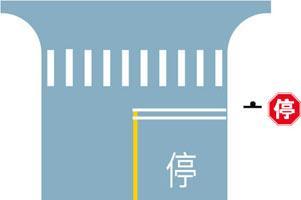
A. Stopping and yield line
B. Slowdown and yield line
C. Left-turn waiting line
D. Waiting to run line
Answer: A
5. Speed up and pass when encountering this traffic light at the intersection
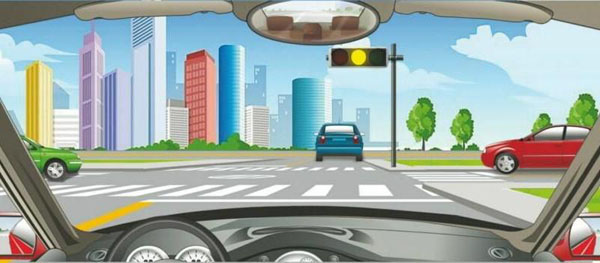
A. Right
B. Wrong
Answer: B
6. When there is bleeding at the bone fracture of a wounded person, the first thing to do is to fix the wounded part in position, then stop the bleeding and dress the wound.
A. Right
B. Wrong
Answer: B
7. Speeding up to go though the intersection before the light turns to red in this case.

A. Right
B. Wrong
Answer: B
8. When approaching another vehicle at night, why should the driver alternate between high-and-low-beam at a distance more than 150 meters?
A. Warn each other before passing
B. Driving habit
C. Easy to observe the situation ahead from either side
D. Courtesy
Answer: C
9. When a tire bursts suddenly on the road, the driver should refrain from violently depressing the brake pedal in panic. Instead, he/she should try his/her best to change to a low gear and use engine braking to reduce the speed of the vehicle.
A. Right
B. Wrong
Answer: A
10. Which lamp should be turned on when motor vehicles pass through a road section at night where the street light condition is good?
A. Front and rear fog lamps
B. Low-beam
C. High-beam
D. Hazard lamp
Answer: B
11. What is the meaning of this sign?
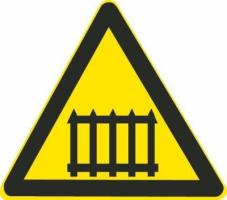
A. A manned level crossing
B. Multi-crossing of railway and road
C. Grade separation level crossing
D. An unmanned level crossing
Answer: A
12. What are the main reason for slow driving of motorized vehicles on rainy days?
A. Braking distance will increase
B. The driver?ˉs view islimited
C. Emergency braking can easily cause side skidding
D. Fast driving increases fuel consumption
Answer: ABC
13. How should lamps be used when a motor vehicle meets an oncoming bicycle on a narrow road or a narrow bridge at night?
A. Continuously change between low-beam and high-beam
B. Use clearance lamp
C. Use high-beam
D. Use low-beam
Answer: D
14. How to do in this situation?
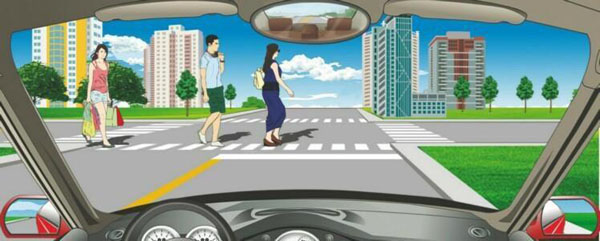
A. Stop and yield to the pedestrians
B. Bypass from the front of the pedestrians
C. Honk to remind the pedestrians
D. Bypass from the rear of the pedestrians
Answer: A
15. Which measures is correct when a motor vehicle intends to overtake
A. Use the high and low beam lights alternately to indicate the intention
B. Honk to indicate the vehicle
C. Speed up and overtake on the right side
D. Turn on the left-turn signal in advance
Answer: ABD
16. What is the meaning of this sign?

A. More vehicles section
B. Passing slowly
C. Jammed section
D. Construction section
Answer: B
17. Motor vehicle drivers may borrow a special lane for other vehicle types, if one exists, to overtake.
A. Right
B. Wrong
Answer: B
18. What should motor vehicle drivers do when parking temporarily on a rainy day?
A. Turn on hazard lamp
B. Turn on front and back fog lamp
C. Turn on low-beam
D. Set up warning sign at the back of the vehicle
Answer: A
19. How to make a U turn in this intersection?
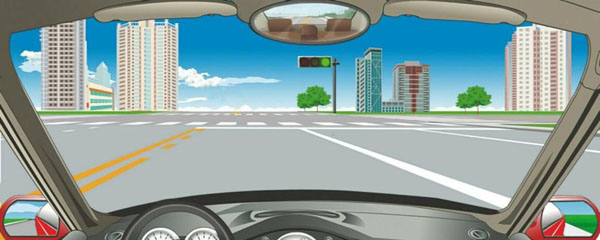
A. broken lines of the central line
B. Make a U turn from the right lane
C. Enter the intersection and make a U turn
D. Make a U turn in the crosswalk
Answer: A
20. What is the meaning of this sign?
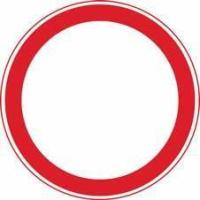
A. No passing
B. Driving at reduced speed
C. Time limit for entering
D. No entering
Answer: A