

1. How long is the period of probation of a motor vehicle driver who has applied for a driver license for the first time?
A. 18 months
B. 16 months
C. 12 months
D. 6 months
Answer: C
2. What is the meaning of this sign?

A. Road narrows on both sides
B. Road narrows on the right side
C. Road narrows on the left side
D. Bridge narrows
Answer: A
3. The driving license of a motorized vehicle driver will be detained after his penalty scores reach 12 points in a scoring circle.
A. Right
B. Wrong
Answer: A
4. The penalty points wil be _____ if violating the traffic lights.
A. 2-point penalty
B. 3-point penalty
C. 6-point penalty
D. 12-point penalty
Answer: C
5. When encountering slow-moving vehicles at an intersection that has no traffic signals, the motorized vehicle should pass alternately.
A. Right
B. Wrong
Answer: A
6. How to use lights when pulling over on road?
A. turn on the hazard lights
B. turn on the right-turn signal in advance
C. use the high and low beam lights alternately
D. not need to use any light to indicate
Answer: B
7. When a motor vehicle moves through water, the driver should try to maintain a constant speed and sufficient power and pass through without stopping.
A. Right
B. Wrong
Answer: A
8. Traffic Police can detain the vehicle according to law if the driver does not carry the ID card.
A. Right
B. Wrong
Answer: B
9. The cycle for recording the accumulated penalty points for violating road traffic safty regulations is ____________.
A. 12 months
B. 24 months
C. 3 months
D. 6 months
Answer: A
10. How to ensure safe driving at night?
A. Drive at speed limit
B. Cut speed and drive carefully
C. Maintain the current speed
D. Drive above the speed limit
Answer: B
11. What is the max speed at sharp curve?
A. 20km/hr
B. 30km/hr
C. 40km/hr
D. 50km/hr
Answer: B
12. What dangerous acts can’t the driver conduct when driving downhill?
A. slide the vehicle in the neutral gear
B. driving in lower gear
C. braking to reduce speed
D. changing to the lower gear in advance
Answer: A
13. What is the meaning of this sign?
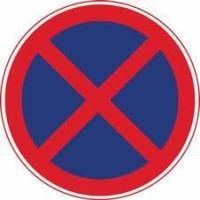
A. stopping temporarily is allowed
B. long stopping is allowed
C. no long stopping
D. no stopping
Answer: D
14. According to regulations, motorcycle driver and passenger should wear helmets.
A. Right
B. Wrong
Answer: A
15. What is the meaning of this sign?
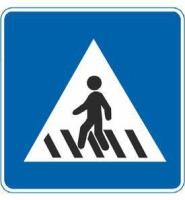
A. crosswalk
B. students’ passage
C. watch for pedestrians
D. children’s passage
Answer: A
16. Driving license will be detained if you allow to drive your car.
A. driver during the period of probation
B. driver who has obtained a driving license
C. one whose driving license been revoked
D. one whose penalty points reach 6 points
Answer: C
17. The driver who chases and races while driving on the road, and commits serious acts is subject to ______
A. a prison term of 6 months
B. a prison term of more than 1 year
C. a criminal restriction and a fine
D. a criminal detention and a fine
Answer: D
18. Before driving, it is necessary to check whether the cooling liquid, engine oil and fuel oil, are leaking.
A. Right
B. Wrong
Answer: A
19. It is not safe for a female driver to wear high heels to drive a vehicle.
A. Right
B. Wrong
Answer: A
20. What is the meaning of this sign?
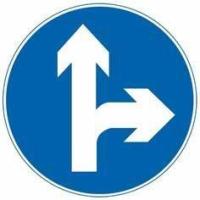
A. going straight and left turn
B. going straight and right turn
C. no going straight and no right turn
D. left turn and right turn only
Answer: B