

1. How to run when encountering this situation at the intersection?
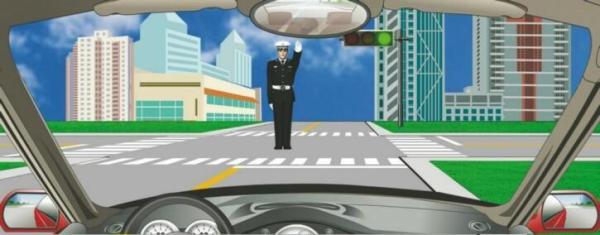
A. stop and wait
B. obey the traffic lights
C. run straight on the right side
D. may turn right
Answer: A
2. Max speed when pass the narrow road or bridge is _______
A. 50km/hr
B. 40km/hr
C. 30km/hr
D. 60km/hr
Answer: C
3. In a vehicle that has safety belts, the driver should request the passengers to buckle up.
A. Right
B. Wrong
Answer: A
4. Whats the meaning of this sign?
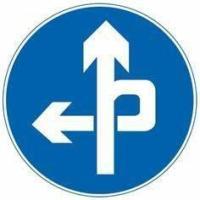
A. going straight and turning left at an interchange
B. going straight and turning right at an interchange
C. going straight and turning left
D. going straight and turning right
Answer: A
5. When driving in a rainstorm and the windscreen wiper cannot totally wipe off the rain water, the driver should ________.
A. Concentrate his attention and drive with care
B. Immediately reduce speed and stop at the road side
C. Maintain the normal speed
D. Drive at a reduced speed
Answer: B
6. Speed up when passing the overflowing road.
A. Right
B. Wrong
Answer: B
7. After a vehicle enters a mountain road, it should pay special attention to the continuous curves sign. In addition, it should voluntarily evade vehicles and pedestrians, reduce speed in a time manner and honk in advance.
A. Right
B. Wrong
Answer: A
8. How to pass this intersection?
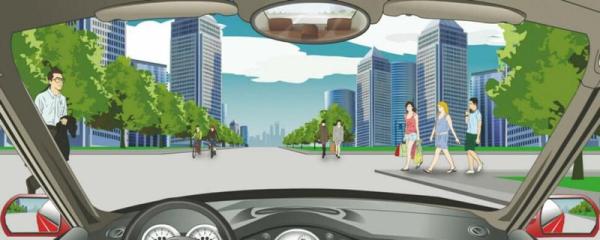
A. keep the speed and go through
B. honk to urge
C. reduce speed and go through slowly
D. speed up and go through
Answer: C
9. When a vehicle changes lane before an intersection, the driver should do so ______.
A. In the area marked by solid lines before the intersection
B. In the area marked by solid lines in the intersection
C. In the area marked by broken lines as indicated by the guide arrow
D. Before the stop line at the intersection
Answer: C
10. Whats the meaning of this mark on the road?
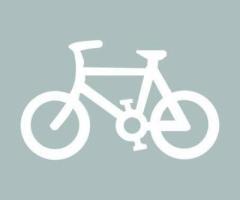
A. the lane for non-motorized vehicles
B. the special lane for motorcycles
C. the special lane for battery bicycles
D. the special lane for bicycles
Answer: A
11. When encountering a traffic accident ahead and help is needed while driving, the driver should ________.
A. Bypass to dodge it as much as possible
B. Immediately report to the police, stop and look on.
C. Help to preserve the scene and immediately report to the police
D. Speed up and pass to ignore it
Answer: C
12. Driving a motorized vehicle on the road should be required to be with a license plate.
A. Right
B. Wrong
Answer: A
13. It lights to indicate enabling the floor and the front windscreen fan.

A. Right
B. Wrong
Answer: A
14. What does this symbol indicate?

A. switch of high beam lights
B. switch of the low beam lights
C. master switch of vehicle lights
D. the switch of tail fog light
Answer: C
15. What device does the switch of this symbol control?

A. the windscreen defrosting
B. the rear window wiper
C. the rear window defrosting
D. the windscreen wiper
Answer: D
16. The child in the motorized vehicle does not need to buckle up when the vehicle runs.
A. Right
B. Wrong
Answer: B
17. Driving a motorized vehicle on the highway which has no central line, the maximum speed can not exceed 70 kilometers per hour.
A. Right
B. Wrong
Answer: B
18. When encountering slow-moving vehicles at an intersection that has no traffic signals, the motorized vehicle should pass alternately.
A. Right
B. Wrong
Answer: A
19. Whats the meaning of this sign?

A. No passing
B. driving at reduced speed
C. time limit for entering
D. no entering
Answer: A
20. When encountering a traffic jam on the expressway, the driver should follow the front vehicle lining up, and immediately turn on the hazard light to prevent rear-end collision.
A. Right
B. Wrong
Answer: A