

1. Whats the meaning of this guide arrow?
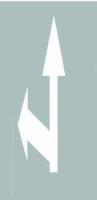
A. going straight or U turn
B. going straight or left turn
C. going straight or changing to left lane
D. left turn or U turn
Answer: B
2. Whats the meaning of the double yellow solid lines?
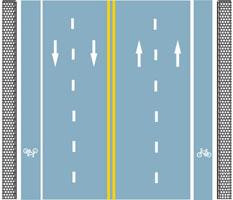
A. opposite direction lanes dividing line that can not be crossed
B. opposite direction lanes dividing line that can be crossed
C. bilateral same direction lanes dividing line that can be crossed
D. one-way lanes dividing line
Answer: A
3. Whats the meaning of this sign?
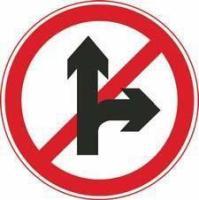
A. no going straight and no changing to left lane
B. no going straight and no left turn
C. allowed to go straight and change to left lane
D. no going straight and no right turn
Answer: D
4. When encountering disabled people obstructing the traffic, the driver should voluntarily reduce speed and yield.
A. Right
B. Wrong
Answer: A
5. When a vehicle is being overtaken by another vehicle, and there is a vehicle following behind, the driver should _____.
A. continue to speed up and run
B. turn slightly to the right side, keep a safe horizontal distance
C. run by road center
D. speed up to the right side to yield
Answer: B
6. It displays the current engine speed is 6000 rev / min.
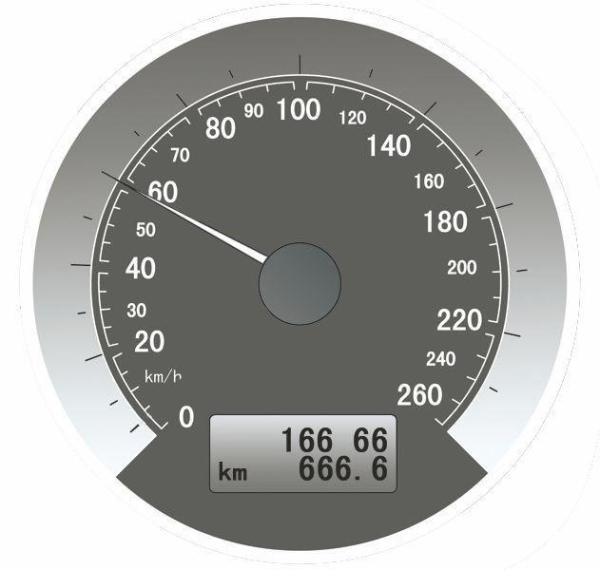
A. Right
B. Wrong
Answer: B
7. How to drive through the intersection without traffic lights?
A. reduce speed and go slowly
B. speed up and pass
C. let large vehicle go first
D. let the left vehicle go first
Answer: A
8. If a motorized vehicle driver drives on the road after getting drunk is subject to a prison term of more than 3 years.
A. Right
B. Wrong
Answer: B
9. A Social vehicle is not allowed to stop in the section 30 meters to the fire hydrant or the fire brigade (station).
A. Right
B. Wrong
Answer: A
10. What is the max speed when visibility is less than 50m due to foggy, rainy or snowy?
A. 70km/hr
B. 50km/hr
C. 40km/hr
D. 30km/hr
Answer: D
11. Traffic Police only imposes a fine if a vehicle is suspected of using the falsified or altered label of inspection.
A. Right
B. Wrong
Answer: B
12. When driving, the driver should be courteous and defensive, instead of being offensive.
A. Right
B. Wrong
Answer: A
13. When finding a vehicle in the opposite direction having difficulty to go forward and needing to borrow road while crossing each other, the driver should ________.
A. Not occupy the road of the other side and should go forward normally
B. Indicate the other side to stop and yield
C. Speed up and go forward by the right side
D. Yield to the other side as much as possible
Answer: D
14. The validity of the driving license is divided into 6-year, 10-year and 20-year.
A. Right
B. Wrong
Answer: B
15. A motorized vehicle is not allowed to stop in the section within
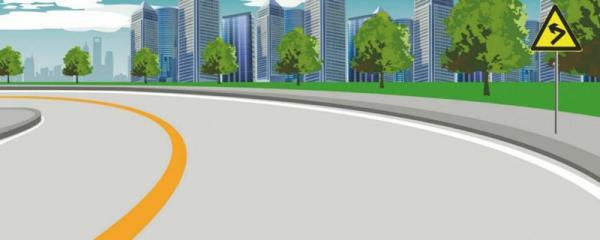
A. 5m
B. 10m
C. 50m
D. 30m
Answer: C
16. May directly turn left in front of the vehicle coming opposite when encountering this traffic light.
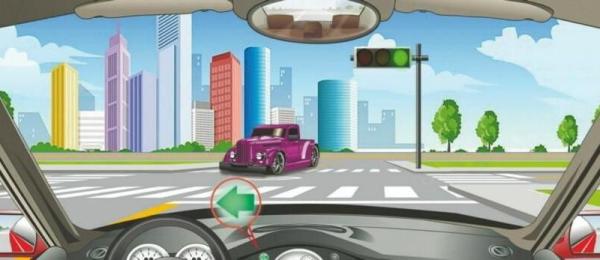
A. Right
B. Wrong
Answer: B
17. Whats the meaning of this sign?
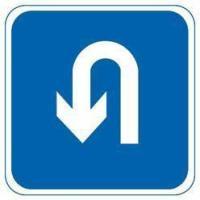
A. U turn
B. reversing
C. left turn
D. bypassing
Answer: A
18. May stop temporarily in the lane for non-motorized vehicles in this section.
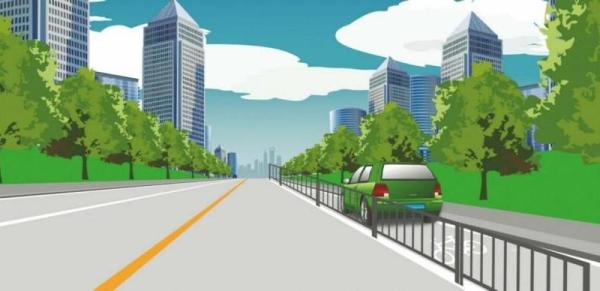
A. Right
B. Wrong
Answer: B
19. The double yellow solid lines in the middle of the road are used to separate the traffic flow in opposite directions, crossing the lines to overtake or make a turn is allowed if it is safe.
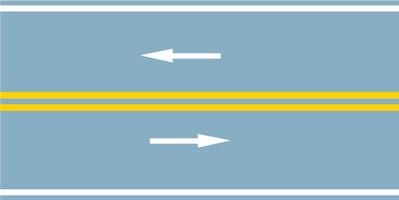
A. Right
B. Wrong
Answer: B
20. The driving license of a motorized vehicle driver will be detained after his penalty scores reach 12 points in a scoring circle.
A. Right
B. Wrong
Answer: A