

1. What should a motorized vehicle has while running on the road?
A. a label of keeping distance
B. a label of reminding danger
C. a label of inspection
D. a label of product qualification
Answer: C
2. How to cross each other on a narrow mountain road without the central dividing line?
A. The vehicle not close to the mountain goes first
B. The vehicle close to the mountain goes first
C. The empty vehicle goes first
D. The slow-moving vehicle goes first
Answer: A
3. The light switch is in this position, front fog lights turn on

A. Right
B. Wrong
Answer: A
4. Going though the intersection according to the traffic lights when traffic lights and command of the traffic police are inconsistency.
A. Right
B. Wrong
Answer: B
5. In the course of making a U turn, the driver should strictly control the speed, carefully observe the road conditions before and behind the vehicle, and may advance or reverse only if it is safe to do so.
A. Right
B. Wrong
Answer: A
6. Which kind of vehicle can be driven if the authorized vehicle applied for is small motor vehicle?
A. low-speed truck
B. midsize bus
C. motor tricycle
D. self-propelled wheeled machinery
Answer: A
7. Reducing the speed when driving in sand, hail, rain, fog, ice and other weather conditions.
A. Right
B. Wrong
Answer: A
8. The driver who drives after drunk is subject to ______
A. a criminal restriction and a fine
B. a prison term of more than 2 years
C. a criminal detention and a fine
D. a prison term of less than 2 years
Answer: C
9. When a vehicle goes down a long slope, it should run at a lower gear and fully use the engine to brake.
A. Right
B. Wrong
Answer: A
10. What device does the switch of this symbol control?

A. the windscreen defrosting
B. the rear window wiper
C. the rear window defrosting
D. the windscreen wiper
Answer: D
11. A Social vehicle is not allowed to stop in the section 30 meters to the fire hydrant or the fire brigade (station).
A. Right
B. Wrong
Answer: A
12. For a driver who drives a commercial motor vehicle after drinking, besides revoking his/her driving license, how long will he/she be banned from re-obtaining a motor vehicle driving license?
A. 1 year
B. 2 year
C. 5 year
D. 10 year
Answer: C
13. It lights when the handbrake is pulled up.

A. Right
B. Wrong
Answer: A
14. How far away should the warning sign be placed in the coming direction when this vehicle breaks down and stops temporarily on the expressway?
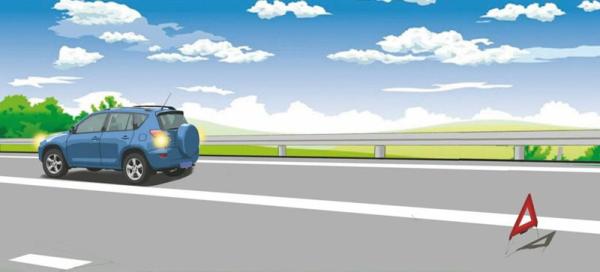
A. beyond 150m
B. 50~150m
C. within 50m
D. 50~100m
Answer: A
15. What kind of behavior of this driver violates the law?
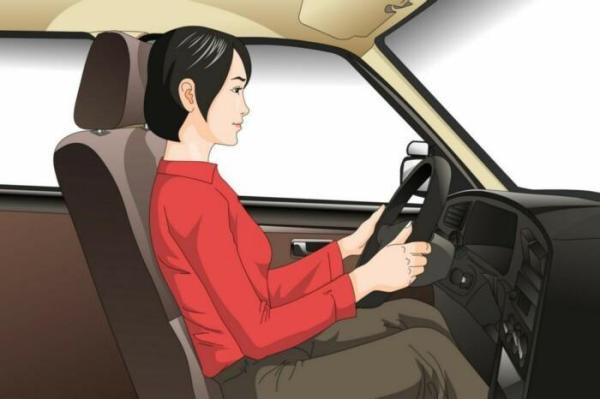
A. not hold the steering wheel according to regulation
B. angle of the seat is not correct
C. not buckled up
D. the driving posture is incorrect
Answer: C
16. Whats the meaning of this sign?

A. special lane for large buses
B. special lane for multi-passenger vehicles
C. special lane for public buses
D. special lane for BRT vehicles
Answer: D
17. Whats the meaning of this sign?
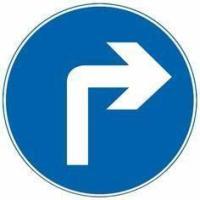
A. turn right
B. one-way road
C. going straight only
D. straight-going lane
Answer: A
18. A motorized vehicle driver who uses falsified and altered vehicle license is subject to a ________.
A. 6-point penalty
B. 3-point penalty
C. 2-point penalty
D. 12-point penalty
Answer: D
19. A motorized vehicle driver who drives the vehicle which permission is different is subject to a ________.
A. 2-point penalty
B. 3-point penalty
C. 6-point penalty
D. 12-point penalty
Answer: D
20. When a vehicle passes a sharp curve, it may overtake if traffic is light.
A. Right
B. Wrong
Answer: B